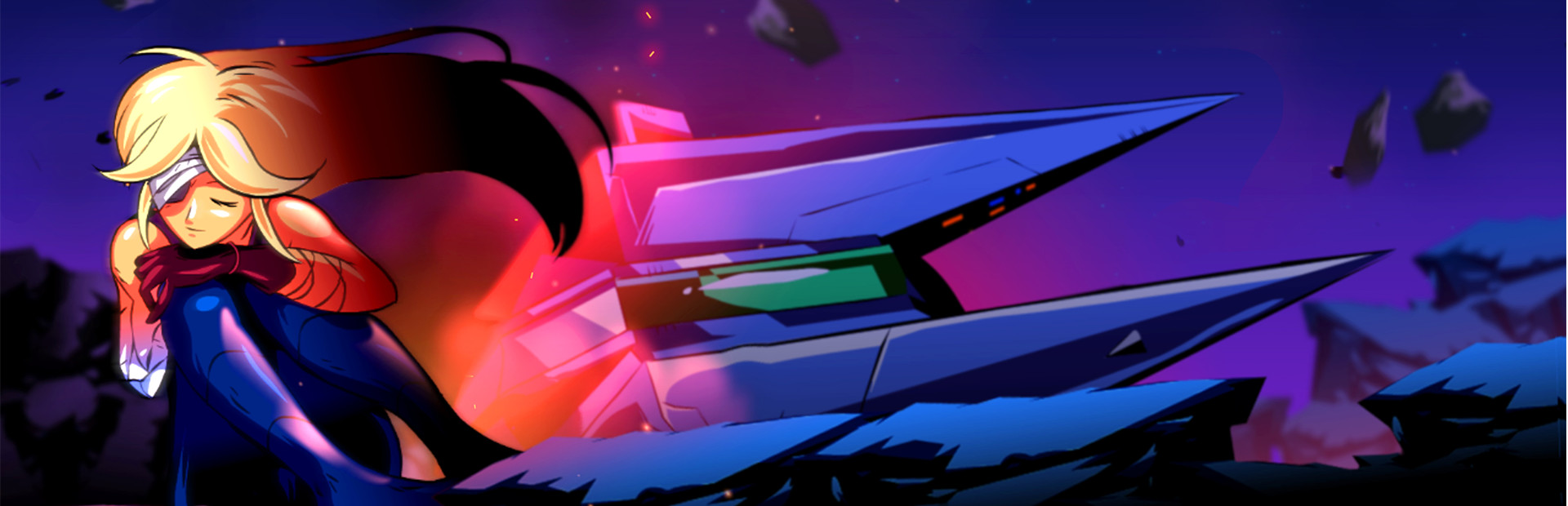

The Next Penelope
Micro Machines meets F-Zero with Greek myth seasoning - a sharp, neon-lit couch racer that burns bright and burns fast, for better and worse.
GamerScout Verdict
Best for couch multiplayer fans and solo players who want a sharp, brief racer-shooter - skip if campaign length matters to you.
Compare Prices(0 stores)
Loading prices...
We may earn a commission when you buy games through links on this page — at no extra cost to you. It never affects our rankings or verdicts.
Price History
Screenshots & Media
About The Next Penelope
My Saturday night crew has a rule: if a game can't survive four players and limited attention spans, it gets benched by round two. The Next Penelope survived. Barely, and for specific reasons worth unpacking. At its core this is a top-down racer built around one genuinely clever idea: every weapon and ability your ship carries draws from the same shared energy bar that also serves as your health. Boost too hard, fire your laser gun too freely, spam the teleporter, and you explode. That single mechanic turns every race into a live negotiation with yourself. Do you fire the grappling hook to cut a corner, or save that energy to survive the next incoming mine? It plays nothing like a pure racer. Critics have called it an adventure game that happens to use racing as a delivery mechanism, and that framing is accurate. Stages rotate between straight races, item-collection runs, survival challenges, and boss fights that sometimes flip the camera orientation entirely and turn the whole thing into a shoot-em-up. The variety is genuinely impressive for a one-man project. The local multiplayer mode supports two to four players, and it runs a elimination format where the last racer to fall off-screen gets knocked out. Weapons are live, tracks have creative hazards, and the chaos ceiling is high enough to keep a couch session lively. It is not a deep competitive mode - there is no online play whatsoever, and the track pool for multiplayer is limited - but for a group who wants something loud and fast between rounds of something else, it punches above its weight. Controller support is solid and an alternative control scheme exists for players unfamiliar with the Micro Machines-style auto-acceleration layout, which is a small but appreciated accessibility touch. The friction points are real, though. The solo campaign can be completed quickly, and that short runtime is the single complaint that follows this game everywhere. Difficulty spikes in later worlds feel steep rather than earned, partly because the AI rubber-banding is aggressive and partly because some boss fights lean on trial-and-error rather than the satisfying puzzle logic that makes the better bosses memorable. There is no control remapping, which irritated reviewers across the board. And while the neon low-poly visual style and thumping techno soundtrack are both excellent, the cutscene pacing occasionally stalls momentum that the racing itself builds up perfectly well on its own. The Steam Deck situation is worth flagging: as of the game's tenth anniversary in 2025, the developer confirmed it runs well via Proton Experimental, so portable couch sessions are now genuinely viable. If you need a forty-hour solo campaign, look elsewhere. If you want a tight, original, mechanically interesting top-down racer that rewards aggressive play and punishes panic-firing, this is one of the better examples of what a single talented developer can do with a focused concept. For couch groups, the value is clear. For solo players, know what you are signing up for before the credits roll.

Sports & racing
Tags
System Requirements
Minimum
- OS
- Windows 7/8
- Memory
- 2 GB RAM
- DirectX
- Version 9.0c
- Storage
- 500 MB available space
- Graphics
- NVIDIA GT/s 4xx or equivalent
- Processor
- 1.8 GHZ
Recommended
- OS
- Windows 7/8
- Memory
- 2 GB RAM
- DirectX
- Version 9.0c
- Storage
- 1 GB available space
- Graphics
- Nvidia Geforce 600 series or higher
- Processor
- 2.4 GHZ
Keep exploring
Community Discussion
Be the first to comment on The Next Penelope.
Reviews & Ratings
Game Info
- Developer
- Aurelien Regard
- Publisher
- Plug In Digital
- Release Date
- May 29, 2015