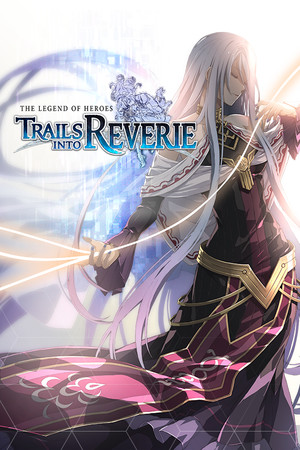
The Legend of Heroes: Trails into Reverie
Thirty hours deep into Zemuria lore and Trails into Reverie still finds ways to gut-punch you with character payoffs that only land because you earned them across nine previous games.
GamerScout Verdict
A deeply rewarding series capstone for committed Trails fans, and a hard skip for anyone who hasn't done the prerequisite nine games.
Compare Prices(6 stores)
Every store in this table quotes us in euros, so the EUR figure is the price the seller actually set, not our arithmetic — which is why EUR is also the currency we rank in. We only list an offer here when the store gives us its price in euros, so nothing in this table is a number we invented.
Pick USD, PLN, GBP, CAD or AUD in the header and we convert from EUR at the European Central Bank reference rate — converted amounts are prefixed with ~. Your bank or the store may apply a different rate at checkout. We never hide offers based on where you are: everyone sees this whole table.
We may earn a commission when you buy games through links on this page — at no extra cost to you. It never affects our rankings or verdicts.
Price History
Screenshots & Media
About The Legend of Heroes: Trails into Reverie
I came into Trails into Reverie already emotionally bruised from Cold Steel IV, half-expecting a bloated victory lap. What I got instead was something tighter and, in many ways, more satisfying than the last two Cold Steel entries combined. This is the tenth mainline game in Nihon Falcom's ongoing Kiseki saga, functioning as a capstone to both the Crossbell duology and the four-game Erebonia arc. If that sentence means nothing to you, stop here. This is not an entry point, it is a reunion, and it rewards patience the way a well-constructed novel rewards re-readers. The structural hook this time is the Trails to Walk system, which lets you switch freely between three parallel story routes starring Lloyd Bannings, Rean Schwarzer, and a new masked protagonist who goes by C. Rather than locking you into one perspective until completion, you can jump between routes at will, though certain chapter gates nudge you toward a specific order to preserve narrative coherence. C's crew in particular is a genuine highlight. A group of former antagonists-turned-reluctant-heroes, their dynamic is immediately engaging, and their route cuts through the series' usual school-field-exercise padding with refreshing focus. There are fewer filler sidequests than in any prior entry, and the writing rewards careful readers who remember the Crossbell political situation, the scars Rean carries, and the lingering threads from the Great Twilight. Combat builds on the Cold Steel framework with some meaningful additions. United Fronts are the key new mechanic: party-wide maneuvers that let at least five characters combine efforts by spending the Assault Gauge, choosing between Strength, Magic, or Healing variants that each apply different stat buffs and CP gains. Brave Orders, Rushes, and Bursts return from Cold Steel III and IV, and the quartz customization system, with its seven regular slots and two Master Quartz per character, still provides enough build expression to keep the pre-battle tinkering genuinely absorbing. That said, the combat is not difficult. Even on higher difficulty settings, the sheer volume of stacked mechanics, Sub-Master Quartz, Break gauges, link attacks, triple-advantage preemptive strikes, tips heavily toward the player. The roster clocks in at roughly fifty playable characters, which sounds impressive until you realize juggling Quartz loadouts across that many party members becomes a spreadsheet job that dilutes the sense of ownership you feel over your team. The True Reverie Corridor is the game's backbone hub, a procedurally generated dungeon accessible between story segments where you grind floors, unlock Daydream side-stories (short narrative vignettes that rival the series' best character writing), play minigames including a card game that is slightly too addictive, craft and upgrade equipment, and chase Phantasmal Shards for combat enhancements. It serves the same structural role as the Phantasma dungeon in Trails in the Sky the 3rd, a comparison the game itself makes with knowing self-awareness. The post-game stretches the Corridor into territory that some players will find excessive, especially the final stretch before the true ending, which asks for grinding long after the emotional climax has already landed. For series veterans, this is the payoff. Character arcs that have been running since 2010 get real closure here. The writing does not always stick the villain's justification, and one or two plot mechanics require some suspension of disbelief, but the character moments are dense with earned feeling. The PC port, handled by PH3, is rock solid with full controller support, cloud saves, and a fast-forward turbo option that makes the longer exposition sequences far more manageable. A completionist run can push past 150 hours. If that number excites rather than exhausts you, Trails into Reverie will likely sit near the top of your year.

RPGs
Tags
System Requirements
Minimum
- OS
- Windows 10
- Memory
- 8 GB RAM
- DirectX
- Version 11
- Storage
- 29 GB available space
- Graphics
- Geforce GTX 650 Ti
- Processor
- Core i3-2100 3.10 GHz
- VR Support
- SteamVR (for optional minigame only)
Recommended
- OS
- Windows 10/11
- Memory
- 16 GB RAM
- DirectX
- Version 11
- Storage
- 29 GB available space
- Graphics
- Radeon R7 370
- Processor
- AMD FX-8320 8-Core
Keep exploring
Community Discussion
Be the first to comment on The Legend of Heroes: Trails into Reverie.
Reviews & Ratings
Game Info
- Developer
- Nihon Falcom
- Publisher
- NIS America, Inc.
- Release Date
- Jul 7, 2023