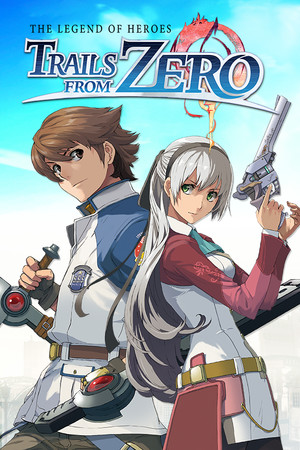
The Legend of Heroes: Trails from Zero
A slow-burn JRPG police procedural with one of the tightest four-person casts in the genre, Trails from Zero rewards patience with a Crossbell story that hits harder than it has any right to.
GamerScout Verdict
Best for JRPG fans who want a tightly written city-drama over combat spectacle and are willing to let a slow first chapter pay off properly.
Compare Prices(6 stores)
Every store in this table quotes us in euros, so the EUR figure is the price the seller actually set, not our arithmetic — which is why EUR is also the currency we rank in. We only list an offer here when the store gives us its price in euros, so nothing in this table is a number we invented.
Pick USD, PLN, GBP, CAD or AUD in the header and we convert from EUR at the European Central Bank reference rate — converted amounts are prefixed with ~. Your bank or the store may apply a different rate at checkout. We never hide offers based on where you are: everyone sees this whole table.
We may earn a commission when you buy games through links on this page — at no extra cost to you. It never affects our rankings or verdicts.
Price History
Screenshots & Media
About The Legend of Heroes: Trails from Zero
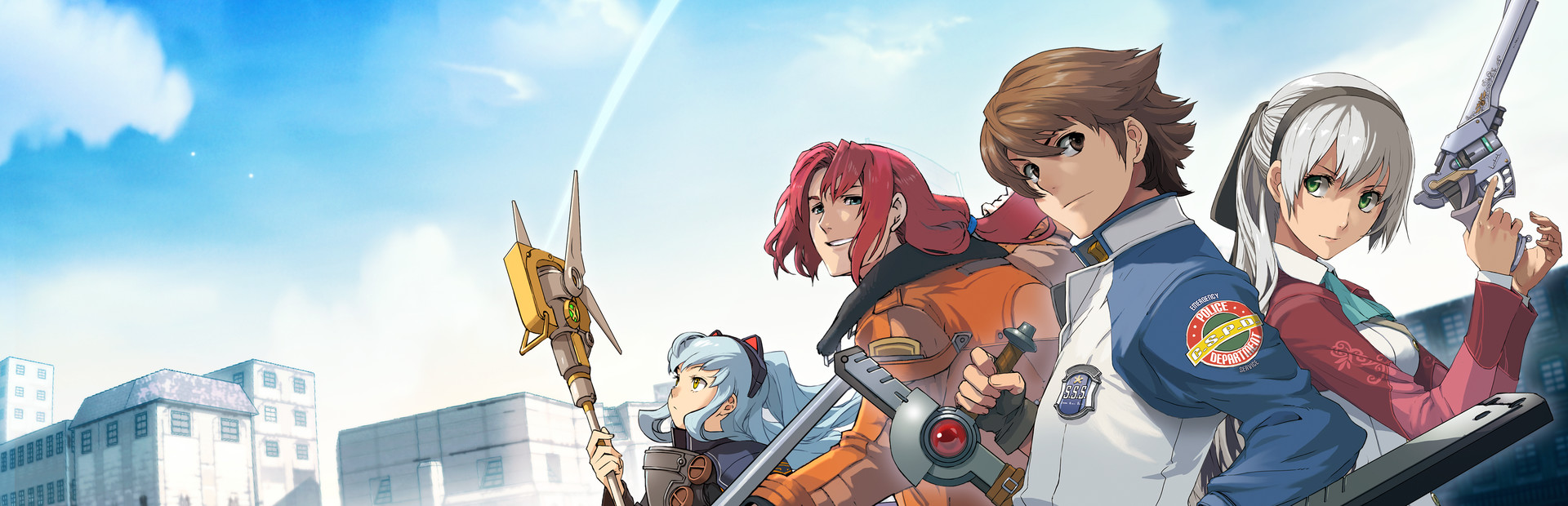
I came into Trails from Zero already neck-deep in the Kiseki lore, and still the Crossbell arc managed to surprise me, which is a harder trick than it looks. What you get here is not the sprawling class-roster chaos of Cold Steel or the duo-road-trip energy of Sky, but something more focused: four misfits handed a desk nobody wanted, in a city that doesn't trust them, trying to figure out whether justice means anything in a place where organized crime, imperial puppeteering, and political rot have eaten the foundations clean through. It is, technically, a PSP game from 2010 that finally got its official Western release in 2022, and yes, you will notice the sprite fidelity if you come from Cold Steel. Notice it, then get over it, because the writing does not care about your texture expectations. The core party of Lloyd Bannings, Elie MacDowell, Tio Plato, and Randy Orlando is genuinely the strongest argument for keeping a fixed four-person cast. You are with these people from the opening minutes to the credits, and Falcom gives them room to breathe past their initial archetypes. Lloyd is earnest in a way that could be insufferable but lands because the game earns it. Tio's arc is quietly devastating if you are paying attention. Elie grows from supportive figure into someone with real backbone. Randy starts as the obvious comic relief and ends up carrying more story weight than you'd expect, even if his jokes wear thin. The chemistry between them makes even the quieter chapters feel alive, and the hundreds of NPCs scattered across Crossbell City update their dialogue every time the plot moves forward, which means talking to absolutely everyone is not just flavor, it is mechanically rewarded and contextually logical because you are, after all, playing a detective. Combat sits on an Active Time bar system with isometric positioning, and the depth arrives in layers. Each character brings a distinct weapon type and their own pool of Crafts, the special abilities that cost CP rather than the arts-based EP. Tio's Analyze Craft, for instance, exposes enemy elemental weaknesses and item drops before you commit to a strategy. Combo Crafts, unique to each character pairing, replace the Sky chain system and feel meaningfully more powerful. Support Crafts let bench members pitch in on green-highlighted turns, which stops the AT bar from feeling static even when you are locked to four active slots. The field encounter system rewards positioning: stun an enemy from behind on the overworld and you can chain into a Max Advantage state with guaranteed crits and a chance at a Team Rush, which lets your whole party pile on at once. None of this is brutally difficult on default settings, but it asks you to think rather than just mash, and a few boss encounters specifically punish players who ignore buffs and debuffs. High-Speed Mode and a message log, carried over from the Geofront fan translation that served as the basis for this localization, keep the pacing from feeling archaic. The legitimate criticisms are real. The early chapters are deliberately slow, and some stretches of NPC dialogue tip from characterful into genuinely tedious. The PSP origins are visible in menu layouts that occasionally feel like they were designed around a device with four fewer buttons than a modern controller. The investigation loop, which sends you gathering clues and piecing together cases across Crossbell's chapters, is more of a structured checklist than a true detective sandbox, so if you arrive expecting Disco Elysium-style agency in how you interrogate the city, dial those expectations back. This is a linear story told very well, not an open-ended procedural. The PC port handled by Durante and PH3 Games is the version to play: cleaner upscaled sprites, improved anti-aliasing, and a 144fps cap that the original hardware could never have dreamed of. For returning Trails fans, this is the missing chapter the series needed in the West, and its payoff resonates harder if you have context from Sky or Cold Steel. For newcomers, it functions well as a starting point for the Crossbell arc specifically, though some cross-series cameos will land flat without prior knowledge. Either way, what Trails from Zero does better than most JRPGs three times its budget is make a city feel like a real place, and make you care whether its four underdogs manage to hold it together. That is a harder thing to manufacture than any combat mechanic, and Falcom has been doing it quietly for decades.

RPGs
Tags
System Requirements
Minimum
- OS
- Windows 8.1
- Memory
- 4 GB RAM
- DirectX
- Version 11
- Storage
- 4 GB available space
- Graphics
- AMD Radeon HD 6570
- Processor
- Intel Core i3
Recommended
- OS
- Windows 10/11
- Memory
- 8 GB RAM
- DirectX
- Version 11
- Storage
- 4 GB available space
- Graphics
- AMD Radeon R7 200 Series
- Processor
- Intel Core i5 (4-core 3.30Ghz)
Keep exploring
Community Discussion
Be the first to comment on The Legend of Heroes: Trails from Zero.
Reviews & Ratings
Game Info
- Developer
- Nihon Falcom
- Publisher
- NIS America, Inc.
- Release Date
- Sep 27, 2022