
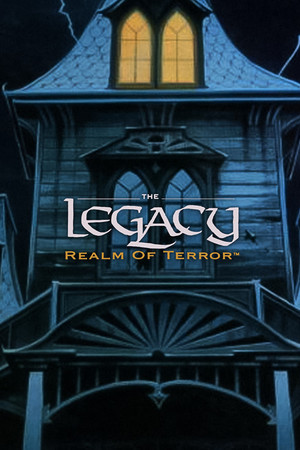
The Legacy: Realm of Terror
A first-person horror RPG from 1993 that predates Resident Evil and still has atmosphere to spare, but its puzzle logic and clunky combat will send impatient players straight to a walkthrough.
GamerScout Verdict
A rewarding horror RPG for patient players who can stomach tile-based movement and old-school puzzle logic in exchange for genuine atmosphere.
Compare Prices(4 stores)
Every store in this table quotes us in euros, so the EUR figure is the price the seller actually set, not our arithmetic — which is why EUR is also the currency we rank in. We only list an offer here when the store gives us its price in euros, so nothing in this table is a number we invented.
Pick USD, PLN, GBP, CAD or AUD in the header and we convert from EUR at the European Central Bank reference rate — converted amounts are prefixed with ~. Your bank or the store may apply a different rate at checkout. We never hide offers based on where you are: everyone sees this whole table.
We may earn a commission when you buy games through links on this page — at no extra cost to you. It never affects our rankings or verdicts.
Price History
Screenshots & Media
About The Legacy: Realm of Terror
I went in expecting a dusty curio, and came out genuinely unsettled. The Legacy: Realm of Terror is a DOS-era haunted-house RPG developed by Magnetic Scrolls after their acquisition by MicroProse, and it is arguably the studio's most ambitious and most unforgiving work. You are the last heir of the Winthrop family, and the second you step through the front door of their Massachusetts mansion, it slams shut behind you. Escape is the only goal. Belthegor, the demonic final boss at the end of ten increasingly nightmarish floors, is what stands between you and daylight. The structure leans heavily adventure, lightly combat. Roughly three quarters of your time goes into exploration, item-hunting, journal-reading, and puzzle-solving across locations like the sanitarium, the observatory, a fish-people lair, and the other realm. The remaining quarter is real-time combat using a clunky but period-appropriate dual-hand interface: one pair of Aim and Hit buttons per hand, whatever weapon you have equipped appears on a paper-doll silhouette, and you click to swing. Weapons range from a baseball bat and pistol to a katana and a chainsaw that will run out of gas at the worst possible moment. The Aim button theoretically lets you target specific body parts, but in practice the hit detection is loose enough that it rarely matters. Combat is the weakest system here, and the game knows it. Magic, sorted into four spell schools called Destructors, Protectors, Enhancers, and Mystics, is described in the manual as the only true path to victory, and building Willpower to unlock those spell pages is where the real character investment lives. Low Willpower is not just a stat penalty here. If your Willpower is insufficient when a new monster appears, your character freezes in paralysed terror until the creature leaves your field of view. That mechanic, the involuntary loss of control, is more unsettling than any jump scare a modern game has managed with a jump-cut and a violin sting. Character selection gives you eight pre-built protagonists (four men, four women) covering archetypes from pure physical bruisers to knowledge-and-magic specialists. You can customise stats before starting, but there is no respec once you are in. Point allocation is permanent, and some puzzles will punish you for dumping into combat stats and neglecting Knowledge. The resource loop is tight throughout: crystals restore spell points, first-aid kits and rest restore Vitality, and bullets are finite. The chainsaw runs dry. That scarcity creates genuine tension on the sanitarium floor and beyond, and it mostly avoids feeling like artificial padding because the mansion's ten areas are dense with readable documents, journals, and environmental storytelling. Ellen Prentiss, the mental patient locked in the private asylum on the third floor, is a highlight. By the time you encounter her, you have already read her brother Robert's correspondence and her own diary entries scattered across earlier rooms. Meeting her in person after all that reading delivers a slow-burn dread that a lot of modern horror games spend entire budgets trying and failing to replicate. The honest caveats: puzzle logic tips into arbitrary territory more than once. Backtracking is frequent and occasionally punishing because a needed item was easy to miss in a dimly lit corridor. The movement system is tile-based with 90-degree rotation, which is period-correct but will feel like driving a tank to anyone who grew up on analogue sticks. And a handful of puzzles are obscure enough that contemporary players will almost certainly want a walkthrough nearby. None of that is a reason to skip it if you have any patience for old-school adventure-RPG design, but it is absolutely a reason to go in with the right expectations. This is a game that rewards curiosity and punishes rushing. It is also, quietly, a piece of horror RPG history that arrived the year after Alone in the Dark and carved out a genuinely distinct niche that no one has really revisited since.

RPGs
Tags
System Requirements
Minimum
- OS
- Windows 7 / 8 / 10
- Memory
- 512 MB RAM
- DirectX
- Version 9.0
- Storage
- 41 MB available space
- Graphics
- DirectX 9 graphics device with WDDM 1.0 or higher driver
- Processor
- 1.8 GHz
Keep exploring
Community Discussion
Be the first to comment on The Legacy: Realm of Terror.
Reviews & Ratings
No ratings available
Game Info
- Developer
- Magnetic Scrolls
- Publisher
- Ziggurat
- Release Date
- Oct 2, 2020