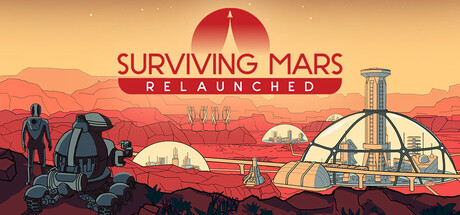
Surviving Mars: Green Planet (DLC)
Add-on / DLC for Surviving Mars key — view full gameThe most-requested Surviving Mars feature finally delivered: a full terraforming layer that turns your late-game colony management into a planet-scale engineering project.
GamerScout Verdict
Essential for existing Surviving Mars fans who want a proper late-game goal; newcomers should grab the base game first.
Compare Prices(1 stores)
Every store in this table quotes us in euros, so the EUR figure is the price the seller actually set, not our arithmetic — which is why EUR is also the currency we rank in. We only list an offer here when the store gives us its price in euros, so nothing in this table is a number we invented.
Pick USD, PLN, GBP, CAD or AUD in the header and we convert from EUR at the European Central Bank reference rate — converted amounts are prefixed with ~. Your bank or the store may apply a different rate at checkout. We never hide offers based on where you are: everyone sees this whole table.
We may earn a commission when you buy games through links on this page — at no extra cost to you. It never affects our rankings or verdicts.
Price History
Screenshots & Media
About Surviving Mars: Green Planet (DLC)
Green Planet is the second major expansion for Haemimont Games' Surviving Mars, and it does something rare for DLC: it adds a completely new phase to a game that already had a clear structure. The base game runs in two recognizable arcs - robotic groundwork, then getting colonists alive inside pressurised domes. Green Planet bolts on a third arc, one that unfolds over hundreds of Sols and demands you rethink every resource priority you set up in act one. The mechanical centrepiece is a four-parameter terraforming system. Atmosphere, Temperature, Water, and Vegetation each run on a 0-100 scale from barren Mars to Earth-like conditions, and every colony decision nudges at least one of them. A new Terraforming research tree adds 20 technologies to unlock, while seven Special Projects give you the big-lever moves: melting the polar caps, capturing ice asteroids and crashing them into the surface (with Marsquake risk attached), launching a space mirror, and seeding the atmosphere with rockets full of plant seeds. These are not cosmetic toggles - capturing an asteroid hard enough can knock out dome production lines, and pumping greenhouse gases carelessly triggers acid rain that degrades your soil quality back toward zero. The systems talk to each other in ways that reward forward planning and punish short-sighted resource dumps. Anyone who likes building optimized mid-game economies will find this is exactly where those habits pay off. Vegetation follows its own progression logic. You start by spreading lichen across low-value terrain to build soil quality, graduate to grass and shrubs, and eventually unlock Forestation Plants and Open Farms that sit outside the domes entirely. Watching craters slowly fill with water and rust-red regolith turn patchy green is genuinely one of the better visual payoffs a strategy sim has produced. The Armstrong free update that launched alongside Green Planet also added landscaping tools - flatten terrain, cut ramps, reshape rock formations - which are available from turn one and have no research gate, a smart choice that lets even early-game players feel the expansion's presence before terraforming is remotely viable. The criticisms are real but mostly inherited. You must start a fresh campaign to engage the DLC properly, which means grinding through the hard early-game again before the new content opens up. The AI rival colonies visible on the Planetary Overview feel undercooked; trading surplus resources with them is occasionally useful but they interact with terraforming not at all, which makes the planetary-scale map feel emptier than it should. Some of the planetary mission menus are sluggish. None of these are expansion-specific failures, they are base-game friction that Green Planet did not fix. New players should know that the terraforming rules can be toggled on or off at campaign start, so if you want to run a pure survival colony and ignore the green stuff, that is a valid path. The Terraforming Initiative sponsor is the obvious pick if you want maximum efficiency on the terraforming arc, and choosing the Geo Engineer commander stacks further bonuses. That kind of build-order decision upfront is exactly the type of planning this DLC rewards. For anyone already invested in Surviving Mars, Green Planet is the expansion that gives the late game a genuine destination. The slow burn is intentional and satisfying, not padding.

Strategy & simulation
Tags
System Requirements
Minimum
- Memory
- 4 GB RAM
- Storage
- 6 GB
- Graphics
- HD 4600/Gece 620/Radeon 6450 GPUs 1 GB RAM
- Processor
- 4th Generation Intel i3 CPU
- System requirements
- Windows 7 64-bit
Recommended
- Memory
- 8 GB RAM
- Storage
- 6 GB
- Graphics
- Gece 750 Ti 4GB RAM
- Processor
- 5th Generation Intel i5 CPU
- System requirements
- Windows 7 64-bit
Keep exploring
Community Discussion
Be the first to comment on Surviving Mars: Green Planet (DLC).
Reviews & Ratings
No ratings available
Game Info
- Developer
- Haemimont Games
- Publisher
- Paradox Interactive
- Release Date
- May 16, 2019