
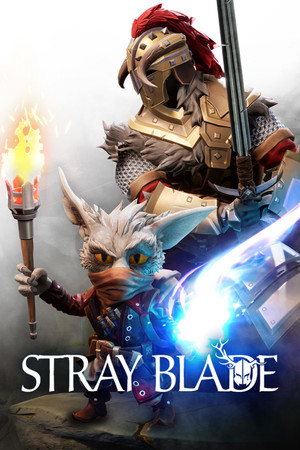
Stray Blade
Gorgeous high-fantasy visuals and a genuinely charming wolf companion carry Stray Blade further than its clunky combat deserves. Worth a look if accessible Souls-adjacent exploration is what you're after.
GamerScout Verdict
Best for players who prioritize worldbuilding and companion chemistry over tight, punishing combat mechanics.
Compare Prices(10 stores)
Every store in this table quotes us in euros, so the EUR figure is the price the seller actually set, not our arithmetic — which is why EUR is also the currency we rank in. We only list an offer here when the store gives us its price in euros, so nothing in this table is a number we invented.
Pick USD, PLN, GBP, CAD or AUD in the header and we convert from EUR at the European Central Bank reference rate — converted amounts are prefixed with ~. Your bank or the store may apply a different rate at checkout. We never hide offers based on where you are: everyone sees this whole table.
We may earn a commission when you buy games through links on this page — at no extra cost to you. It never affects our rankings or verdicts.
Price History
Screenshots & Media
About Stray Blade
I went into Stray Blade hoping for a colorful antidote to the genre's usual grimdark aesthetic, and the world of Acrea absolutely delivers that first impression. Farren West, an anthropologist-turned-adventurer, dies the moment they discover the lost valley, gets resurrected by a sentient wolf named Boji using the power of three Acrean Metals, and is promptly told they can never leave. As premises go, that hooks hard. The relationship between Farren and Boji is the game's emotional core: two misfits who gradually stop tolerating each other and start actually caring, with dialogue that explores loneliness in ways I did not expect from what markets itself as a hack-and-slash. Boji also has his own talent tree, leveled by finding ancient lore fragments rather than combat, which is a neat thematic choice. If that dynamic resonates with you, the roughly 15-to-20-hour runtime is a worthwhile emotional investment. The combat, though, is where things get complicated. On paper the system is clever: enemies flash blue to signal a parryable attack and red to signal a dodge-only strike, with perfect defensive timing restoring stamina and building toward brutal poise-break executions. Each weapon class unlocks its own upgrade branch, so you are mechanically nudged to actually experiment with daggers, greatswords, and everything in between rather than just spam your favorite. The world design carries a light Metroidvania flavor too, with boss-granted traversal abilities gradually opening previously sealed routes in a way that fans of gear-gating will recognize and appreciate. In practice, however, the timing windows for parries and dodges are unreliable: the flash that color-codes an attack does not consistently align with when the strike actually lands, and the stamina bar drains hard enough that a couple of missed reads can lock Farren out of both offense and defense simultaneously. The boss encounters, while visually impressive given the giant-built architecture of Acrea, largely amount to health sponges with phase-change distractions rather than genuinely satisfying puzzles. It is also worth flagging a post-launch wrinkle that divides the community. A significant patch overhauled the combat system from the ground up in response to player feedback, removing the original color-coded system and reworking the defensive mechanics entirely. Depending on which version you experienced, opinions on whether the game improved or lost its identity vary sharply. What you get today is a more conventionally Souls-adjacent experience, though the underlying feel remains looser than genre benchmarks like Sekiro or even Lies of P. What saves Stray Blade from being a frustration-fueled write-off is Acrea itself. The art direction commits hard to vibrant high fantasy: floating islands, overgrown giant-scale ruins, and a day-night cycle that shifts the mood without ever reaching the grey-brown grimness that haunts so many peers. Weapon and armor blueprints are scattered across bandit camps and ancient chests, and the crafting loop, while slightly tedious because pre-built loot drops are rare, at least keeps exploration purposeful. The lore of the three Acrean Metals and the God-Kings who warped the valley is genuinely interesting worldbuilding, delivered more through Boji's ambient commentary than forced codex dumps. Boji will also occasionally over-explain, stopping the action every few minutes for long-winded exposition, which can grate. The skill tree for Farren is functional but thin, mostly passive stat bumps with a handful of active unlocks gated behind weapon-use milestones. Stray Blade lands squarely in the territory of a flawed game with a heart. The writing around Farren and Boji rewards attention, the world is genuinely pleasant to move through, and the accessibility options including difficulty settings make it one of the more forgiving entry points the Souls-adjacent genre offers. If you care deeply about tight, responsive combat as the primary language of a game in this space, the control feel will test your patience before the credits roll. But if worldbuilding, a sincere character dynamic, and exploratory pacing are what you actually play these games for, Acrea has more to offer than its review scores suggest.

RPGs
Tags
System Requirements
Minimum
- OS
- 64-bit Windows 10
- Memory
- 8 GB RAM
- DirectX
- Version 12
- Storage
- 30 GB available space
- Graphics
- Radeon RX 480 (8192 MB) or GeForce GTX 1050 Ti (4096 MB)
- Processor
- AMD FX-9590 (8 * 4700) or equivalent or Intel Core i7-6700 (4 * 3400)
- Sound Card
- Any
- VR Support
- N/A
Recommended
- OS
- 64-bit Windows 10
- Memory
- 12 GB RAM
- DirectX
- Version 12
- Storage
- 30 GB available space
- Graphics
- Radeon RX 6800 XT (16384 MB) or GeForce RTX 2070 Super (8192 MB)
- Processor
- AMD Ryzen 5 5600X (6 * 3700) or equivalent or Intel Core i9-9900k (8 * 3600) or equivalent
- Sound Card
- Any
- VR Support
- N/A
Keep exploring
Community Discussion
Be the first to comment on Stray Blade.
Reviews & Ratings
No ratings available
Game Info
- Developer
- Point Blank Games
- Publisher
- 505 Games
- Release Date
- Apr 20, 2023
