
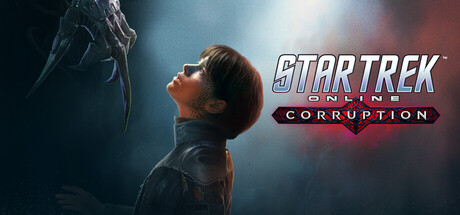
Star Trek Online is free-to-play — free to download and play, with optional paid editions and DLC compared on this page. Developed by Cryptic Studios. Published by Arc Games. Released on 1/31/2012. Available on PC. Genres: Massively Multiplayer, RPG, Free To Play. Metacritic score: 66/100.

Fourteen years old and still breathing, STO rewards patient Trekkies willing to parse its Byzantine economy, but wallet-hostile monetization and a game wheezing under its own technical debt make it a tough sell for anyone without a Federation uniform already in their heart.

I have watched enough MMOs flatline to know the warning signs, and Star Trek Online has been flashing several of them for years. Marvel Heroes, gone. Wildstar, gone. City of Heroes, resurrected by fans because the studio would not. STO is still standing, which is genuinely impressive for a game that launched in 2010, went free-to-play in 2012, and has since accumulated so many layered systems and currency types that veteran players openly describe the underlying codebase as spaghetti nobody fully understands anymore. That context matters before you put a single hour into it. What STO does well, it does in a very specific way. The story campaign is the clear highlight: dozens of hours of episodic content spanning the original series timeline, the Next Generation era, Deep Space Nine, Discovery, and more, with voice acting from recognizable cast members woven throughout. The further you push into the story, the more the missions shift away from the repetitive early-game loop of warp-in, shoot ships, beam down, shoot ground enemies, repeat, toward plot-heavy sequences that actually feel like Star Trek episodes. Space combat, built around managing power allocation between weapons, shields, and engines while cooldown-chaining abilities like Tachyon Beam and auxiliary power bursts, has a satisfying tactical texture that ground combat simply never matches. Your career path, whether Engineering, Science, or Tactical, shapes your captain traits, and the ship class you fly interacts with that in flexible ways: the game is not rigidly class-locked, and mixing a Science captain into an escort hull is a legitimate and effective combination. You pick from factions including Starfleet, the Klingon Defense Force, the Romulan Republic, the Dominion, and two legacy-era Starfleet branches, though in practice the gameplay funnels into Federation or Klingon once the prologue ends. Now for the part I cannot soften for you. The economy is a patience test designed by people who want your credit card. Dilithium ore, the primary in-game progression currency, is hard-capped at 8,000 refined units per character per day. Reputation tracks, which gate end-game gear sets, are deliberately time-gated on top of that daily cap, meaning "grinding" often means waiting, not playing. The top-tier T6 ships that actually hold up in elite Task Force Operations are almost exclusively locked behind the C-Store or lockboxes requiring real-money keys, and the lockboxes are explicit chance-based gambling for specific ships. Players willing to spend can move from nothing to competitive in days; free-to-play players face months of patience for the same result. The lifetime subscription, which sounds like a solution, delivers a ZEN stipend so small it takes roughly six months of accumulation to buy a single C-Store ship. Long-term community sentiment points to a game operating in something close to maintenance mode: new story content has slowed considerably, crash-to-desktop bugs on map transitions remain unresolved for some players, and the studio's capacity to address deep systemic problems is genuinely constrained by years of inherited technical debt. For a committed Star Trek fan who just wants to walk the halls of Deep Space Nine, command a Galaxy-class starship through a Mirror Universe arc, and absorb a surprisingly well-written story that ties together fifty-plus years of franchise lore, STO delivers that in a way nothing else does. It is the only game feeding that particular need. For an MMO player who cares primarily about a healthy live-service loop, fair loot economy, and a developer actively investing in the product, the game's age and monetization structure will frustrate you within weeks. The playerbase remains active at hubs and fleet recruitment channels as of 2025, so the social scaffolding is there if you find an engaged fleet. But fleet tooling is functional, not inspired, and the game does not reward spontaneous grouping the way a well-designed co-op MMO should. Go in with low expectations for live-service health, high tolerance for daily timer gates, and genuine love for the IP, and STO will give you something. Go in expecting anything else and you will be adding it to your own mental list of MMOs that almost made it. Yuki, Scout Team

Star Trek Online

Star Trek Online

Free to Play
Jan 31, 2012Cryptic StudiosArc Games
GamerScout Says

Fourteen years old and still breathing, STO rewards patient Trekkies willing to parse its Byzantine economy, but wallet-hostile monetization and a game wheezing under its own technical debt make it a tough sell for anyone without a Federation uniform already in their heart.

PC
Steam Deck PlayableProtonDB Gold
Free to Play

Star Trek Online is free to download and play. Any optional editions, DLC or in-game add-ons appear in the price table below.

GamerScout Verdict

A story-rich space MMO that belongs to committed Trekkies only; everyone else will bounce off the time-gated economy and aging systems.

Compare Prices(0 stores)

Loading prices...

We may earn a commission when you buy games through links on this page — at no extra cost to you. It never affects our rankings or verdicts.

Price History

Historical low
€50.0010 Jun 2026
Keyshops
€46.00€48.67€51.33€54.0010 Jun21 Jun3 Jul14 Jul25 Jul
10 Jun — 25 Jul
Create alert

Screenshots & Media

About Star Trek Online

I have watched enough MMOs flatline to know the warning signs, and Star Trek Online has been flashing several of them for years. Marvel Heroes, gone. Wildstar, gone. City of Heroes, resurrected by fans because the studio would not. STO is still standing, which is genuinely impressive for a game that launched in 2010, went free-to-play in 2012, and has since accumulated so many layered systems and currency types that veteran players openly describe the underlying codebase as spaghetti nobody fully understands anymore. That context matters before you put a single hour into it. What STO does well, it does in a very specific way. The story campaign is the clear highlight: dozens of hours of episodic content spanning the original series timeline, the Next Generation era, Deep Space Nine, Discovery, and more, with voice acting from recognizable cast members woven throughout. The further you push into the story, the more the missions shift away from the repetitive early-game loop of warp-in, shoot ships, beam down, shoot ground enemies, repeat, toward plot-heavy sequences that actually feel like Star Trek episodes. Space combat, built around managing power allocation between weapons, shields, and engines while cooldown-chaining abilities like Tachyon Beam and auxiliary power bursts, has a satisfying tactical texture that ground combat simply never matches. Your career path, whether Engineering, Science, or Tactical, shapes your captain traits, and the ship class you fly interacts with that in flexible ways: the game is not rigidly class-locked, and mixing a Science captain into an escort hull is a legitimate and effective combination. You pick from factions including Starfleet, the Klingon Defense Force, the Romulan Republic, the Dominion, and two legacy-era Starfleet branches, though in practice the gameplay funnels into Federation or Klingon once the prologue ends. Now for the part I cannot soften for you. The economy is a patience test designed by people who want your credit card. Dilithium ore, the primary in-game progression currency, is hard-capped at 8,000 refined units per character per day. Reputation tracks, which gate end-game gear sets, are deliberately time-gated on top of that daily cap, meaning "grinding" often means waiting, not playing. The top-tier T6 ships that actually hold up in elite Task Force Operations are almost exclusively locked behind the C-Store or lockboxes requiring real-money keys, and the lockboxes are explicit chance-based gambling for specific ships. Players willing to spend can move from nothing to competitive in days; free-to-play players face months of patience for the same result. The lifetime subscription, which sounds like a solution, delivers a ZEN stipend so small it takes roughly six months of accumulation to buy a single C-Store ship. Long-term community sentiment points to a game operating in something close to maintenance mode: new story content has slowed considerably, crash-to-desktop bugs on map transitions remain unresolved for some players, and the studio's capacity to address deep systemic problems is genuinely constrained by years of inherited technical debt. For a committed Star Trek fan who just wants to walk the halls of Deep Space Nine, command a Galaxy-class starship through a Mirror Universe arc, and absorb a surprisingly well-written story that ties together fifty-plus years of franchise lore, STO delivers that in a way nothing else does. It is the only game feeding that particular need. For an MMO player who cares primarily about a healthy live-service loop, fair loot economy, and a developer actively investing in the product, the game's age and monetization structure will frustrate you within weeks. The playerbase remains active at hubs and fleet recruitment channels as of 2025, so the social scaffolding is there if you find an engaged fleet. But fleet tooling is functional, not inspired, and the game does not reward spontaneous grouping the way a well-designed co-op MMO should. Go in with low expectations for live-service health, high tolerance for daily timer gates, and genuine love for the IP, and STO will give you something. Go in expecting anything else and you will be adding it to your own mental list of MMOs that almost made it.

Yuki
Yuki · Scout Team

MMOs & live service

Tags

multiplayermmocoopcontroller-supporttier:aaaEpisodic StorySpace CombatFaction ChoiceDaily Timer GatesLockbox GamblingDuty Officer SystemShip CustomizationReputation GrindDilithium Economy

System Requirements

Minimum

OS
Windows® 10/11 (64-bit)
Processor
Core 2 Duo 2.2Ghz (or equivalent AMD CPU)
Memory
4GB RAM
Graphics
NVidia GeForce GTX 4xx, ATI/AMD Radeon HD 5xxx, or Intel HD Graphics 4xxx (Direct3D Hardware Feature Lev…

Recommended

OS
Windows® 10/11 (64-bit)
Processor
Core i5-6xxx Quad Core or better
Memory
6GB RAM or better
Graphics
NVidia GeForce GTX 9xx or AMD Radeon RX 4xx or better
DirectX
Version 11.0 or better
Network
Broa…

DLC & Add-ons for Star Trek Online1

Expansions, DLC packs and add-on content for this game. Click any item to see store offers.

Keep exploring

Community Discussion

Be the first to comment on Star Trek Online.

Reviews & Ratings

Metacritic
66

Game Info

Developer
Cryptic Studios
Publisher
Arc Games
Release Date
Jan 31, 2012

Price Alert

Get notified when the price drops below your target!

Create Alert

No card? Pay another way

Top up your Steam Wallet or buy crypto with any card — instant delivery, no bank account needed.

More from Cryptic Studios

Buy smarter: helpful guides

Star Trek Online live on Twitch

Looking for more? See games like Star Trek Online →

Frequently asked questions about Star Trek Online

How much does Star Trek Online cost?

Star Trek Online is free-to-play — it costs nothing to download and play on PC. Any optional editions, DLC or in-game add-ons are listed in the price table on this page.

Does Star Trek Online have in-game purchases?

Star Trek Online is free to download and play, and is monetised through optional in-game purchases such as cosmetics, editions or DLC rather than an upfront price. Any paid editions or add-ons available are listed in the price table on this page.

What platforms is Star Trek Online available on?

Star Trek Online is available on PC.

When was Star Trek Online released?

Star Trek Online was released on 31 January 2012.

Who developed Star Trek Online?

Star Trek Online was developed by Cryptic Studios and published by Arc Games.

Is Star Trek Online worth buying?

Star Trek Online holds a Metacritic score of 66/100, making it one of the standout Massively Multiplayer titles. See the full reviews, ratings and how-long-to-beat times on this page to decide.