
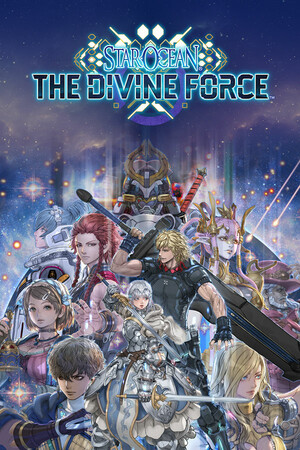
STAR OCEAN THE DIVINE FORCE
A sci-fi JRPG that finally course-corrects after years of stumbles, built around a D.U.M.A.-powered combat engine that rewards tinkerers and punishes anyone who ignores the skill trees.
GamerScout Verdict
Worth it for JRPG fans who prioritize combat depth and build variety over quest quality or a polished PC port.
Compare Prices(7 stores)
Every store in this table quotes us in euros, so the EUR figure is the price the seller actually set, not our arithmetic — which is why EUR is also the currency we rank in. We only list an offer here when the store gives us its price in euros, so nothing in this table is a number we invented.
Pick USD, PLN, GBP, CAD or AUD in the header and we convert from EUR at the European Central Bank reference rate — converted amounts are prefixed with ~. Your bank or the store may apply a different rate at checkout. We never hide offers based on where you are: everyone sees this whole table.
We may earn a commission when you buy games through links on this page — at no extra cost to you. It never affects our rankings or verdicts.
Price History
Screenshots & Media
About STAR OCEAN THE DIVINE FORCE
I came into The Divine Force with the same guarded optimism most Star Ocean fans carry like old scar tissue. After Integrity and Faithlessness left the franchise in a ditch, a full new entry felt almost too good to be true. The good news: the combat system is the best tri-Ace has built in years. The less comfortable news: a lot of the surrounding game still carries the franchise's old bad habits, and the PC port adds a few fresh ones. The structural hook is a dual-protagonist setup where you choose at the start between Raymond Lawrence, a space merchant captain whose freighter just got shot out of the sky by a Pangalactic Federation warship, and Laeticia Aucerius, a warrior princess on a politically troubled pre-industrial planet. The basic story beats stay the same across both routes, but certain party members, scene elaborations, and contextual knowledge shift depending on your pick. There is no New Game Plus, so getting the full picture means a second playthrough, which is a legitimate design incentive rather than padding if you find the cast compelling enough. The writing avoids the franchise's worst melodramatic tendencies this time around; Laeticia's side in particular plays as a grounded political drama, while Raymond's thread leans into the Federation's militaristic scheming. Neither protagonist is especially deep on paper, but the ensemble cast around them, including the knight Albaird Bergholm, is consistently the strongest the series has offered in recent memory. Combat is where the game earns real goodwill. Battles are fully real-time, no transitions, and are built around an AP resource that governs each attack you throw. The D.U.M.A. unit, a floating companion assigned to your active character, enables aerial dashes, 360-degree high-speed movement, blindside attacks, and unique character-specific DUMA moves that open up how you approach each fight. Every character has a distinct skill tree where you spend SP earned from battles, unlocking new attacks, passive resistances, and stat nodes. The trees even allow some role specialization, bending a character toward melee focus, magic builds, or tank configurations. You can also manually chain skills into combo strings per button, and Active Skills functioning as buffs and debuffs layer on top of that. The first fifteen to twenty percent of the game is deceptively shallow because so many tools are locked behind progression, so do not let a slow opening sour you on what the system becomes. The party AI has some well-documented blind spots around telegraphed boss attacks, which can lead to frustrating wipes, and the combat genuinely rewards picking a main character and mastering their AP pool rather than treating everyone equally. The rest of the package is more inconsistent. Open-world areas feel underpopulated, and side quests rarely rise above standard fetch-and-return errands. The Es'owa board game mini-game tucked into the world is a small but pleasant surprise, offering collectable piece-pawns that double as equippable battle accessories, making opponent-hunting feel worthwhile rather than optional filler. Item creation returns and opens early through the menu system, rewarding experimentation especially in the back half. The PC port, however, is a legitimate concern: shader compilation stutters, a 60 FPS cap at launch, no ultrawide support, no DLSS or FSR, and an aggressive depth-of-field implementation that many players found impossible to disable without third-party tools. These are not dealbreakers for a JRPG at a discount, but they are real friction points worth knowing about before you commit. Motoi Sakuraba's soundtrack, as ever, delivers the series' characteristic sound with a few bold detours. The Divine Force is the kind of JRPG that will click hardest for players who care about combat expression and build experimentation over narrative density. If you want a game that rewards reading skill tree tooltips, planning combo chains around AP management, and roaming wide maps vertically with a gliding robot on your shoulder, it delivers. If you need tight quest design, emotionally layered writing on the level of genre contemporaries, or a clean PC port, manage your expectations accordingly.

RPGs
Tags
System Requirements
Minimum
- OS
- Windows® 10 / Windows® 11 64-bit
- Memory
- 16 GB RAM
- DirectX
- Version 11
- Storage
- 70 GB available space
- Graphics
- NVIDIA® GeForce® GTX 1060 6 GB VRAM / AMD Radeon™ RX 580
- Processor
- Intel® Core™ i7-7700 / AMD Ryzen™ 5 1500X
Recommended
- OS
- Windows® 10 / Windows® 11 64-bit
- Memory
- 16 GB RAM
- DirectX
- Version 11
- Storage
- 70 GB available space
- Graphics
- NVIDIA® GeForce® RTX 2070 / AMD Radeon™ RX 5700 XT
- Processor
- Intel® Core™ i7-8700K / AMD Ryzen™ 5 3600X
Keep exploring
Community Discussion
Be the first to comment on STAR OCEAN THE DIVINE FORCE.
Reviews & Ratings
Game Info
- Developer
- Square Enix
- Publisher
- Square Enix
- Release Date
- Oct 27, 2022