Shroud of the Avatar: Forsaken Virtues
Free to PlayRichard Garriott's spiritual Ultima successor splits the MMO community right down the middle - a sandbox that rewards patient crafters and housing obsessives, but punishes anyone expecting a polished live-service experience.
Shroud of the Avatar: Forsaken Virtues is free to download and play. Any optional editions, DLC or in-game add-ons appear in the price table below.
GamerScout Verdict
Worth it only for sandbox housing and crafting devotees willing to overlook flat combat and a thin live population.
Compare Prices(0 stores)
Loading prices...
We may earn a commission when you buy games through links on this page — at no extra cost to you. It never affects our rankings or verdicts.
Price History
Screenshots & Media
About Shroud of the Avatar: Forsaken Virtues
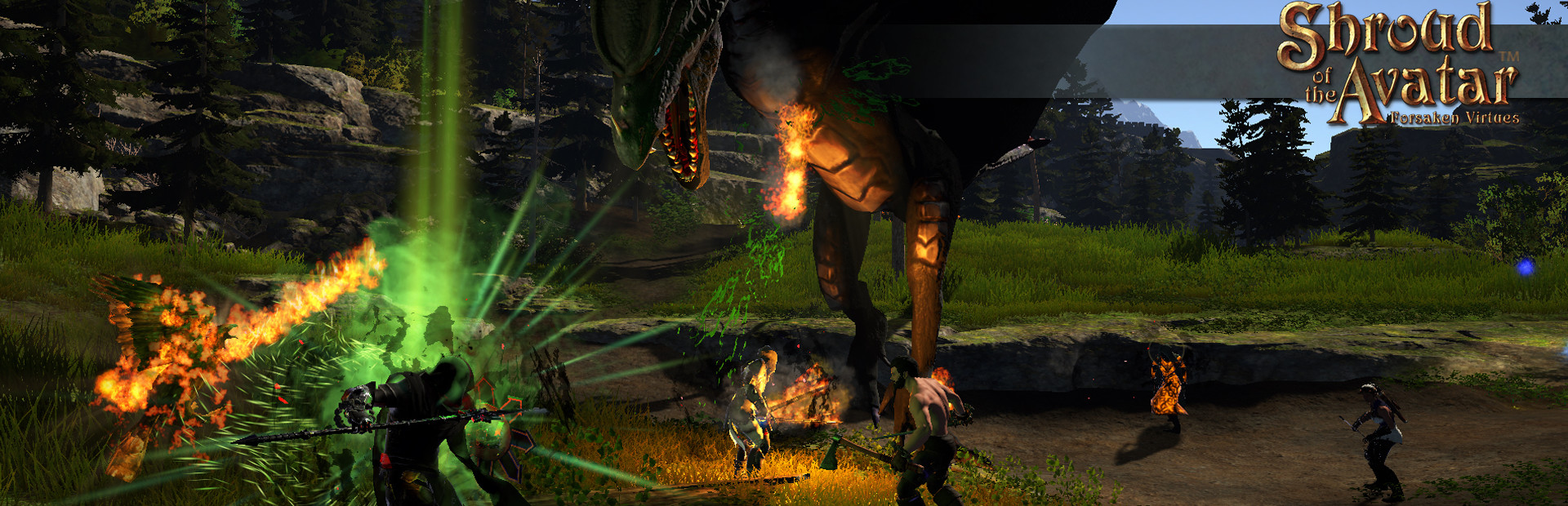
I have watched enough MMOs flicker out to recognize the warning signs, and Shroud of the Avatar sets off most of them from the opening tutorial. That said, it is still running monthly content releases past Release 150, which is more than Tabula Rasa or Wildstar ever managed - so the picture here is more complicated than a clean pass or fail. What Catnip Games is actually selling is a classless sandbox MMO set in New Britannia, a world built around the Eight Virtues framework from the old Ultima lineage. You pick skills across fighter, mage, and ranger trees and assemble your own build rather than committing to a fixed class at character creation. The Oracle guides new players toward a starting archetype, but you can retake her test and redistribute freely. Combat runs on a card-deck system where your equipped skill slots are drawn in rotation, which sounds more interesting in theory than it plays in practice - reviewers and players alike flag the moment-to-moment fighting as flat and repetitive, with damage floaters that look ripped from 2005. The overworld map travel is genuinely distinctive, though, and the story written with Tracy Hickman lands better than the combat surrounding it, presenting real ethical branch points tied to Virtue and Principle choices that shape how each major town's questline resolves. From a live-service economy standpoint, this is where my suspicion radar goes loud. Player-driven crafting is the backbone of the loot system - the best gear in New Britannia is made by other players, not dropped by bosses, which is a philosophy I respect. The trading economy and player-owned towns create genuine social infrastructure if you find a guild worth settling into. Housing, however, is the loaded gun pointed at your wallet. In-game lot deeds earned through gold take months of patient saving, and the cash shop sells premium lot deeds and house styles at prices that have shocked more than a few returning players. PvP is consensual in most of the open world, with specific high-level zones flagging mandatory PvP - so it is avoidable unless you specifically want those harder areas. The matchmaking lets you run Single Player Online, Party Mode, or full open Multiplayer, and critically, offline characters are on a completely separate track and can never be moved to the online world. The technical state is the hardest thing to excuse. Town zones still produce noticeable lag, NPC collision hits your movement like walking into invisible furniture, and performance has never reached the level of a confident retail release despite years of patches. The Steam review split sits near 50/50 across thousands of reviews, and the Metacritic press score of 58 reflects a consensus that the game tries to be a single-player RPG and a full MMO simultaneously and does not fully commit to either identity. The community that remains is tight-knit, genuinely helpful to newcomers, and runs weekly player-organized events - the forum is still active as of mid-2026, which matters. But the population numbers are modest, and anyone coming in expecting the density of a living world will find quieter streets than the ambition promises. If your comfort zone is deep crafting systems, player-run economies, and a housing sandbox where you can own a greenhouse rowhouse or govern an entire player town, there is a real game buried here. If you need responsive combat, a polished UI, or any confidence that the population will be there for group content, look elsewhere. I have seen this archetype thrive - Ultima Online itself is the proof - but SotA never escaped the halfway house between its Kickstarter vision and a sustainable live world.

MMOs & live service
Tags
System Requirements
Minimum
- OS
- Windows 7 64 bit or newer
- Memory
- 12 GB RAM
- DirectX
- Version 11
- Network
- Broadband Internet connection
- Storage
- 30 GB available space
- Graphics
- DirectX 11 Compatible NVIDIA 960 / AMD 560
- Processor
- Quad Core 2.4 GHz or faster
Recommended
- OS
- Windows 10
- Memory
- 16 GB RAM
- DirectX
- Version 11
- Network
- Broadband Internet connection
- Storage
- 30 GB available space
- Graphics
- DirectX11 Compatible AMD Radeon R9 / NVIDIA GeForce GTX 1070
- Processor
- Quad Core 2.8GHz or faster
Keep exploring
Community Discussion
Be the first to comment on Shroud of the Avatar: Forsaken Virtues.
Reviews & Ratings
Game Info
- Developer
- Catnip Games
- Publisher
- Catnip Games
- Release Date
- Mar 27, 2018

