Roguebook Steam Key
A deck-builder roguelite where you paint your own map and fight through a living book. Tight two-hero synergies make every run feel distinct.
GamerScout Verdict
A polished deck-builder roguelite with clever two-hero mechanics; best for genre fans who want more strategy on the map layer.
Compare Prices(7 stores)
Every store in this table quotes us in euros, so the EUR figure is the price the seller actually set, not our arithmetic — which is why EUR is also the currency we rank in. We only list an offer here when the store gives us its price in euros, so nothing in this table is a number we invented.
Pick USD, PLN, GBP, CAD or AUD in the header and we convert from EUR at the European Central Bank reference rate — converted amounts are prefixed with ~. Your bank or the store may apply a different rate at checkout. We never hide offers based on where you are: everyone sees this whole table.
We may earn a commission when you buy games through links on this page — at no extra cost to you. It never affects our rankings or verdicts.
Price History
Screenshots & Media
About Roguebook Steam Key
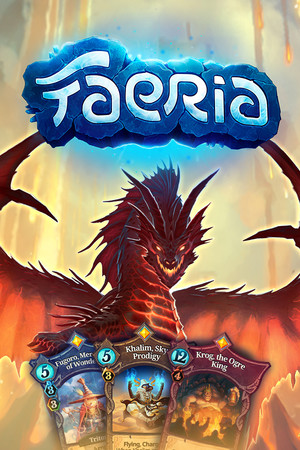
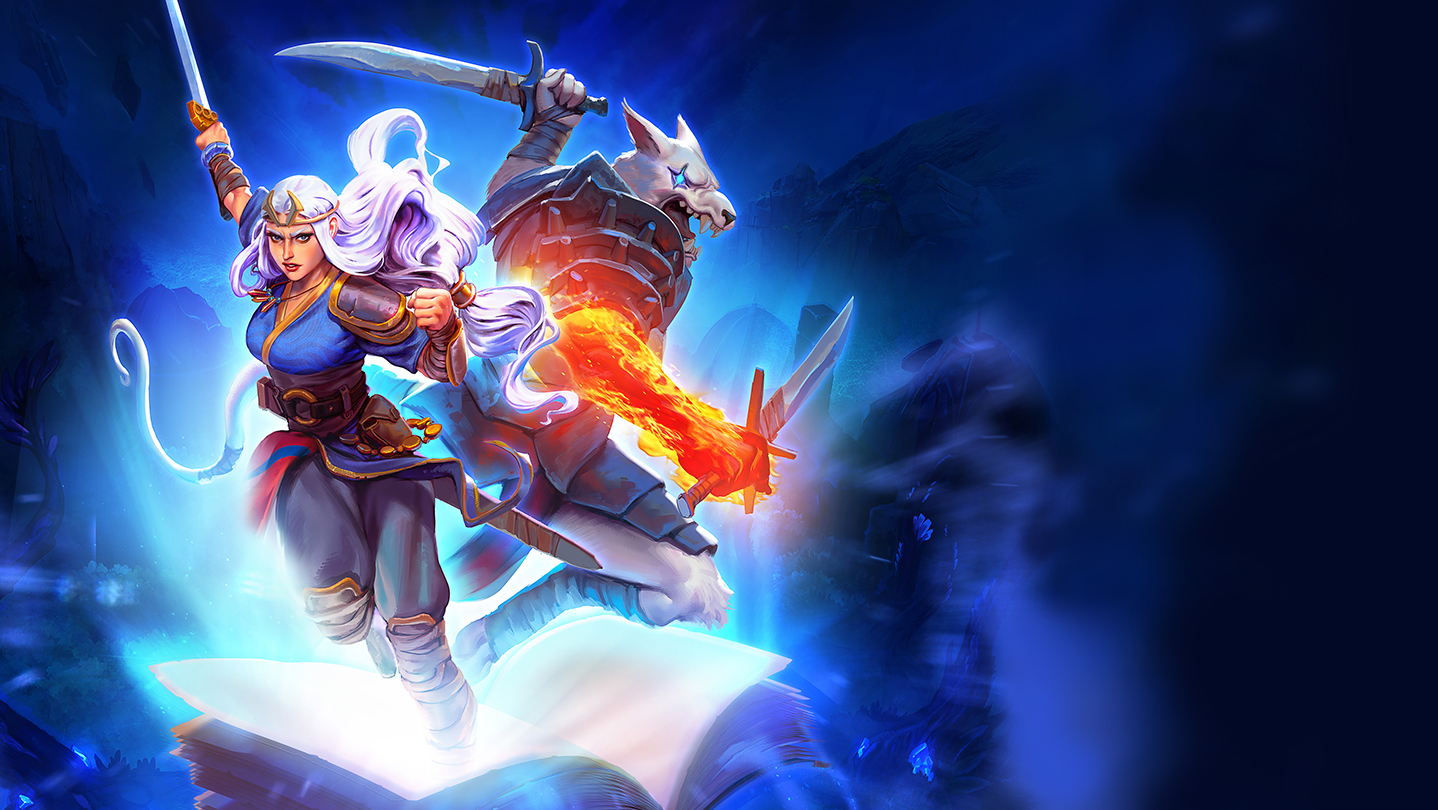
Roguebook is a card-based roguelite RPG from Abrakam Entertainment, the studio behind Faeria, with Richard Garfield (the creator of Magic: The Gathering) credited as a collaborator. You are trapped inside a magical book and must fight your way through procedurally generated pages populated by mythical creatures, elite encounters, and boss guardians. The core hook that separates it from Slay the Spire clones is its map system: you spend ink and gold to literally paint the fog off hex tiles, uncovering encounters, loot, and resources before committing to a path. That exploration layer adds a light resource-management puzzle on top of every run, and it lands well. The hero system is where Roguebook earns most of its goodwill. You pick two characters from a roster that includes Sorocco, a tanky warrior type, and Sharra, a glass-cannon rogue, among others. Each hero has their own deck, their own relic pool, and their own passive ability. The interesting part is that only one hero fights at a time, and the bench character generates a passive effect each turn. Building decks that talk to each other, setting up combos between a frontliner and a support, is the mechanical heartbeat of the game. When a run clicks, it really clicks: chaining Sharra's poison stacks into Sorocco's shield-break feels satisfying in a way that rewards paying attention to card text. The writing is light and largely functional. There is lore baked into the book-as-world conceit and the flavor text on cards is often charming, but do not come here expecting Disco Elysium levels of narrative payoff. Choices are mechanical, not moral. The worldbuilding serves the gameplay loop rather than the other way around, which is fine for the genre but worth knowing upfront. Boss encounters have personality and telegraph their attack patterns clearly enough that losses feel like planning failures rather than cheap shots, which is the right way to handle roguelite difficulty. Where Roguebook stumbles is pacing and replayability depth past the early hours. The unlock tree for new cards and relics is gated behind Roguebook pages you collect mid-run, a system that works, but the early meta-progression can feel slow if you are chasing specific synergy builds. Difficulty scaling through its Cursed Pages system (the equivalent of Ascension levels) does add challenge, but the roster size means you will eventually feel the ceiling of distinct run identities. Compared to the near-infinite build variety of the genre's heavyweights, the replay depth is solid without being exceptional. The 84 percent positive Steam rating and a Metacritic of 78 reflect exactly that: genuinely good, not genre-defining. For fans of card-based roguelites who want something with a warmer visual style (the illustrated-book aesthetic is lovely) and a strategic map layer on top of the standard climb, Roguebook is a well-constructed package. Just do not expect the writing to grip you the way the combat does.

RPGs
Tags
System Requirements
Minimum
- OS
- Windows 7
- Processor
- Intel Core i5-650 | AMD Phenom II X4 965
- Memory
- 6 GB RAM
- Graphics
- Nvidia GeForce GTX 650, 1 GB | AMD Radeon HD HD 6950, 2 GB
- DirectX
- Version 11
- Network
- Broadband Internet connection Storage…
Recommended
- OS
- Windows 10
- Processor
- Intel Core i5-2300 | AMD FX-6300
- Memory
- 8 GB RAM
- Graphics
- Nvidia GeForce GTX 660, 2 GB | AMD Radeon HD 7970, 3 GB
- DirectX
- Version 11
- Storage
- 4 GB available space
DLC & Add-ons for Roguebook Steam Key6
Expansions, DLC packs and add-on content for this game. Click any item to see store offers.
Keep exploring
Community Discussion
Be the first to comment on Roguebook Steam Key.
Reviews & Ratings
Game Info
- Developer
- Abrakam Entertainment SA
- Publisher
- Nacon
- Release Date
- Jun 17, 2021