Post Human W.A.R
Forget RNG crits and fog-of-war excuses. Post Human W.A.R strips turn-based tactics down to pure reads and bluffs, with a secret Champion mechanic that puts poker-style mind games into a hex-grid brawl.
GamerScout Verdict
Best for tactics players who want a clean, chance-free PvP brawl, not a deep solo campaign grind.
Compare Prices(7 stores)
Every store in this table quotes us in euros, so the EUR figure is the price the seller actually set, not our arithmetic — which is why EUR is also the currency we rank in. We only list an offer here when the store gives us its price in euros, so nothing in this table is a number we invented.
Pick USD, PLN, GBP, CAD or AUD in the header and we convert from EUR at the European Central Bank reference rate — converted amounts are prefixed with ~. Your bank or the store may apply a different rate at checkout. We never hide offers based on where you are: everyone sees this whole table.
We may earn a commission when you buy games through links on this page — at no extra cost to you. It never affects our rankings or verdicts.
Price History
Screenshots & Media
About Post Human W.A.R
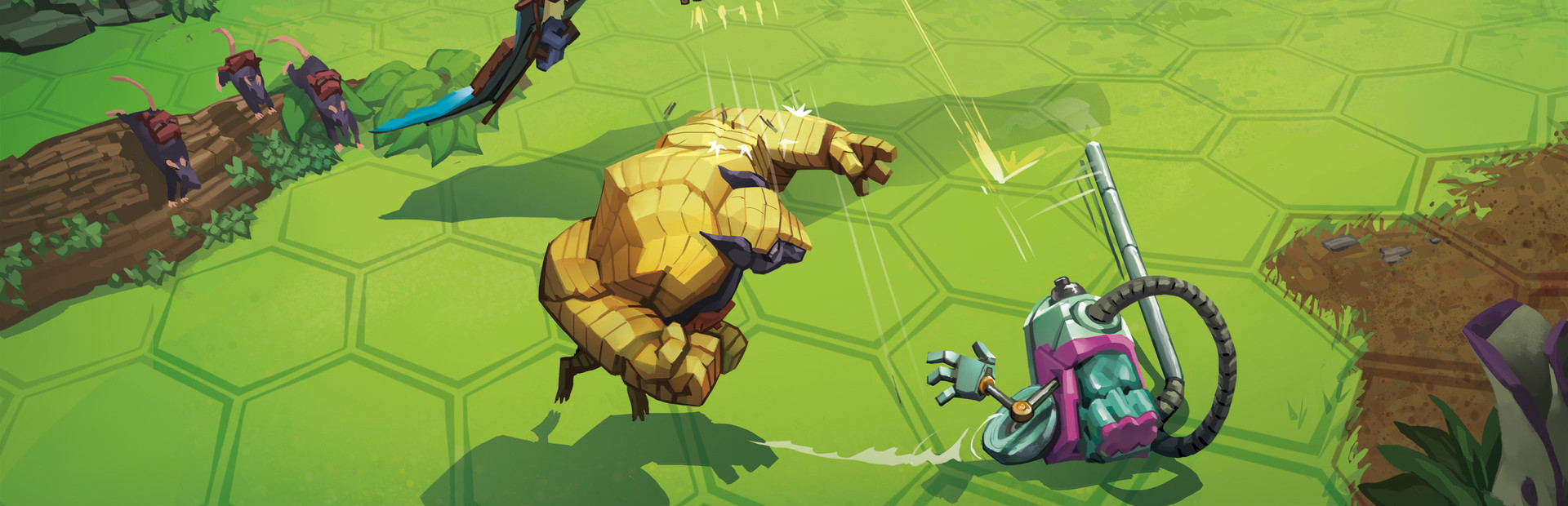
I don't usually warm up to strategy games the way I do to a good shooter, but Post Human W.A.R hooked me specifically because it respects your intelligence in a way most of the genre doesn't. The whole structure is zero-chance. No dice rolls, no critical hit percentages to blame, no fog of war to hide behind. Every stat, every range, every damage number sits in plain view, and the game's undo button on the first phase of any move means your blunders are yours, not the RNG's. That kind of full transparency is genuinely rare and it's the thing that makes this work. The central mechanic is the Champion system. Before a match kicks off, each player secretly designates one of their units as the Champion. Kill the opposing Champion and the match ends immediately, full stop. You can park your Champion safely in the back line, push it up front as a decoy, or pick a tanky melee unit and dare your opponent to guess which one it is. That hidden-information layer on top of a completely deterministic grid game is where most of the skill lives. Reading unit positioning, watching which pieces your opponent protects with unusual care, or deliberately misusing a strong unit to throw the read, these are the decisions that separate players. It functions less like classic hex strategy and more like a tight board game brought to a screen, and that's a compliment. There are three factions across 36 units, covering mutated animals, repurposed household robots (including standouts like a weaponized industrial washing machine and a hoover-bot named D4rth), and tracksuit-wearing monkeys with samurai flair. Unit roles split into melee, ranged, and tank archetypes, which is admittedly not a deep roster by genre standards. Reviewers and community notes both flag the limited unit variety and the small, tile-based hex maps as the game's ceiling. The maps feel cramped if you're used to sprawling grids, and the campaign solo experience is on the shorter side. If you came for a 40-hour single-player grind, you will bounce off this fast. Where it earns its keep is local and online multiplayer. The matchmaking is functional, there is an online leaderboard to climb, and the terrain manipulation layer, creating barricades and destroying obstacles mid-battle, adds enough positional wrinkle that games rarely play identically. The cartoon art style is clean with no frame issues, every unit has a distinct animation set, and the whole thing runs without drama on modest hardware. The community pool is small given the game's age, but the people still playing it tend to actually want a clean competitive match rather than a grind session, which suits this format well. If you are a shooter player who wants something to think with during downtime, this is a genuinely low-friction entry point into competitive tactics. No seniority advantage, no pay-to-progress, no build-order homework. Show up, read your opponent's Champion placement, and outmaneuver them. The campaign thins out fast and the faction roster could be twice as deep, but the core loop is solid and the online play holds up. Worth a session.

Shooters
Tags
System Requirements
Minimum
- OS
- Windows 7+
- Memory
- 4000 MB RAM
- Network
- Broadband Internet connection
- Storage
- 750 MB available space
- Processor
- 2 GHz
Keep exploring
Community Discussion
Be the first to comment on Post Human W.A.R.
Reviews & Ratings
No ratings available
Game Info
- Developer
- Studio Chahut
- Publisher
- Dear Villagers
- Release Date
- Dec 14, 2017