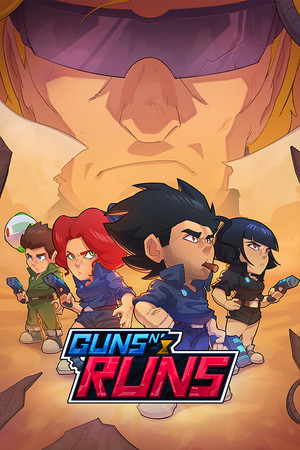

Pocket Bravery
A four-button indie fighter with genuine depth hiding behind chibi sprites, worth your time if you want KoF-style combo work and can find people to play with online.
GamerScout Verdict
Strong offline fighter for KoF-heads willing to hunt for online matches; thin ranked queue keeps it off the must-play list for netplay-first players.
Compare Prices(9 stores)
Every store in this table quotes us in euros, so the EUR figure is the price the seller actually set, not our arithmetic — which is why EUR is also the currency we rank in. We only list an offer here when the store gives us its price in euros, so nothing in this table is a number we invented.
Pick USD, PLN, GBP, CAD or AUD in the header and we convert from EUR at the European Central Bank reference rate — converted amounts are prefixed with ~. Your bank or the store may apply a different rate at checkout. We never hide offers based on where you are: everyone sees this whole table.
We may earn a commission when you buy games through links on this page — at no extra cost to you. It never affects our rankings or verdicts.
Price History
Screenshots & Media
About Pocket Bravery
My honest first reaction to Pocket Bravery was mild suspicion: SD-style chibi sprites, a Brazilian indie studio, a Metacritic score that lands squarely in the "fine, actually" bracket. Then I spent a couple of sessions in the training room and that suspicion dissolved. This is not a cute novelty. Statera Studio built a four-button fighter with two meter gauges, a dedicated Elemental system that re-routes special moves rather than just powering them up, a Break escape mechanic, and character-specific tools that reward real lab time. Arshavin rushes you down like a grappler who forgot he is a grappler. Malika drops trap fireballs that double as teleport anchors. Sebastian boxes you into ice walls. These are not shallow gimmicks; they are genuine gameplan features that change how you approach the spacing game. The controls feel closest to post-2000s King of Fighters in execution priority and combo rhythm, with pinning pressure as a central concept rather than an afterthought. The Elemental gauge is the standout wrinkle: spend it on a special and the move transforms entirely rather than just dealing more damage. Nuno's close fireball burst, for instance, becomes a double-hitting forward strike under Elemental activation. That design choice forces you to actually think about when you want the base version versus the converted version, which adds a layer of in-round decision-making that most budget fighters skip. The Combo Kitchen tutorial mode and a training room with full frame-data display, move recording, and wake-up practice options put the game ahead of several bigger names in terms of teaching infrastructure. Here is where the review gets less cheerful. The online lobby is sparse. Multiple reviewers noted they could not complete a single online match at launch, and the situation has improved only modestly since. Rollback netcode is present and functional when you find a match, but finding the match is the problem. If you are buying Pocket Bravery expecting a steady ranked queue, you are buying the wrong game right now. Your realistic options are local play with a willing friend, or Discord-organized matches with the small but committed community. The roster balance also has visible rough edges: some characters click within minutes, others demand 10 times the investment for comparable results. And the default AI difficulty starts aggressively, so do not expect to coast through arcade on your first sitting. The single-player content is substantial enough to justify the spend on its own terms. Arcade, Survival, Time Attack, character-specific Trials, a story mode that covers each fighter's chapter, Rainbow Edition mode, and a Hot Pursuit side-mode fill out the package in a way that puts several AAA fighting games to shame on content-per-dollar. Two DLC seasons have since expanded the base roster from 12 to 21 fighters in the Ultimate Edition, adding characters like the Taekwondo-trained K-pop fighter Son Ji Sung and shadow-clone ninja Shinji Arashi, each with dedicated stages and arcade endings. The game earned a Best Fighting Game nomination at The Game Awards 2023, which is a signal worth taking seriously when it comes from a first-time studio operating at this scale. Bottom line: the fighting system is more serious than the art style implies, the offline content is generous, and the rollback netcode works when you actually connect. The empty online is a real problem that determines how long this holds your attention past the initial learning curve. If you have local opponents or the patience to organize online sessions through the community, the investment pays off. If you need a busy queue waiting for you at any hour, look elsewhere for now.
Shooters
Tags
System Requirements
Minimum
- OS
- Windows 10 or newer
- Memory
- 4 GB RAM
- DirectX
- Version 11
- Storage
- 16 GB available space
- Graphics
- NVIDIA GeForce GT 620, 1 GB or AMD Radeon HD 6570, 1 GB or Intel HD Graphics 530
- Processor
- Intel Core i3-540 or AMD Phenom II X2 550
Recommended
- OS
- Windows 10 or newer
- DirectX
- Version 11
- Storage
- 16 GB available space
- Graphics
- NVIDIA GeForce GTX 970, 4 GB
- Processor
- Intel Core Core i7-4790
Keep exploring
Community Discussion
Be the first to comment on Pocket Bravery.
Reviews & Ratings
Game Info
- Developer
- Statera Studio
- Publisher
- PQube
- Release Date
- Aug 31, 2023