
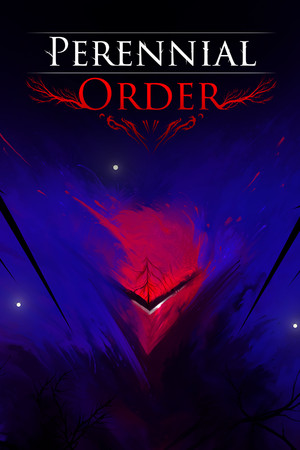
Perennial Order
One bad touch and you're dead, the world looks like a fever dream painted in oils, and the lore rewards people who actually talk to NPCs. Soulslike veterans who don't mind losing to a chess-themed plant monster twenty times will feel right at home.
GamerScout Verdict
Worth it for Soulslike fans who want gorgeous plant horror and clever co-op design, but a few instakill gimmick bosses will test your patience hard.
Compare Prices(4 stores)
Every store in this table quotes us in euros, so the EUR figure is the price the seller actually set, not our arithmetic — which is why EUR is also the currency we rank in. We only list an offer here when the store gives us its price in euros, so nothing in this table is a number we invented.
Pick USD, PLN, GBP, CAD or AUD in the header and we convert from EUR at the European Central Bank reference rate — converted amounts are prefixed with ~. Your bank or the store may apply a different rate at checkout. We never hide offers based on where you are: everyone sees this whole table.
We may earn a commission when you buy games through links on this page — at no extra cost to you. It never affects our rankings or verdicts.
Price History
Screenshots & Media
About Perennial Order
I've spent enough time in Soulsborne worlds to know when a debut studio is swinging for the fences, and Gardenfiend Games, all four of them, absolutely are. Perennial Order drops you into a Dark Age landscape rotting from the inside out, overrun by eldritch plant-flesh hybrids that have torn nature and humanity into something unrecognizable. You play a Perennial Knight: a nameless amalgam of dead body and living wood, animated by a god-like intelligence and pointed at a roster of grotesque bosses. The setup is exactly the kind of oblique, poetry-adjacent lore delivery I like, doled out through NPC conversations scattered across semi-linear areas, each one quietly expanding a picture of a war between nature and mankind that mankind is clearly losing. The combat is the game's sharpest idea and its sharpest double-edged sword. Attacks are mapped to the right analogue stick in a twin-stick melee setup: hold a direction to charge, release to swing, and hit the narrow critical window at the end of the meter to land a hit that actually matters. Three wisp-shaped dodge tokens trail you and replenish over time, making every sidestep a considered spend rather than a panic button. There are no heals. One hit, anywhere, from anything, and you restart the encounter from the doorstep. That rule is narratively justified (your knight is half-dead already) but mechanically it creates a stark divide: bosses with clear telegraphing feel like exquisitely crafted puzzles, while bosses that introduce mechanics cold, like a parry-gated fight that shows you parrying exists for the first time during a fight that requires parrying with perfect consistency, feel like the design tripped over its own ambition. The Instincts system (slottable passive modifiers that tweak your dodge count, damage output, or mobility trade-offs) gives you real build expression within the game's tight constraints, and weapon upgrade paths add another layer, though neither is strictly necessary to finish the run. Skill is the actual currency here. The overworld between fights is worth your time. Branching paths hide lore fragments, Kinoko spirit collectibles that expand your Instinct slots, and the kind of quietly tragic NPCs who exist in a world past its expiry date. The writing favors implication over explanation, which I respect, though players who want a BG3-level narrative payoff should recalibrate expectations: this is environmental storytelling with a capital E, closer to early Dark Souls in density and ambiguity. Co-op, called Bonded Journey mode, adds a fascinating wrinkle to the one-hit death rule: when one player dies, they shift into a support role using five Vestige abilities acquired throughout the game, timing power-ups to the surviving partner's attacks. It keeps both players engaged across the whole fight, which is genuinely clever design. That said, online co-op has drawn some criticism for connection jitter that can make partner movement slightly unpredictable during boss windows, and boss health scaling for two players makes some encounters noticeably more punishing. On the presentation side, the painterly 2D art is the real headline. A single artist and single animator produced visuals that genuinely look like oil paintings that learned to walk, with spine-rigged characters that move like marionettes controlled by something ancient and wrong. It suits the material exactly. The soundtrack is the one area where the game punches below its weight: atmospheric enough to not distract, but thin enough that you probably won't remember a single track afterward. Community reception is warm and fairly earned, sitting at 92% positive on Steam from over 600 reviews, with critics landing in the 75-85 range. The gap between enthusiast scores and more critical takes maps cleanly onto tolerance for instakill gimmick bosses. If you bounced off Furi or Titan Souls for similar reasons, some encounters here will frustrate you in familiar ways. If you loved those games for exactly those reasons, Perennial Order is the lore-drenched, hand-crafted upgrade you did not know existed.

RPGs
Tags
System Requirements
Minimum
- OS
- Windows 10
- Memory
- 8 GB RAM
- Storage
- 11 GB available space
- Graphics
- 1GB Video RAM
- Processor
- Dual Core 2.4Ghz
Recommended
- OS
- Windows 10
- Memory
- 16 GB RAM
- Storage
- 11 GB available space
- Graphics
- 2GB Video RAM
- Processor
- Dual Core 3.0Ghz+
Keep exploring
Community Discussion
Be the first to comment on Perennial Order.
Reviews & Ratings
No ratings available
Game Info
- Developer
- Gardenfiend Games
- Publisher
- SOEDESCO
- Release Date
- Sep 5, 2024