
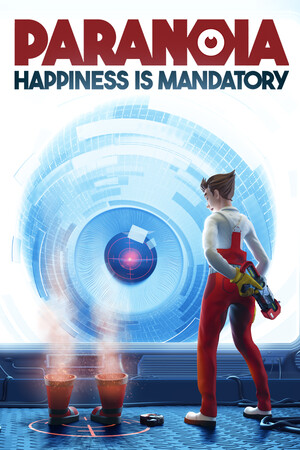
Paranoia: Happiness is Mandatory
A cult tabletop RPG finally gets a CRPG home, and the atmosphere is genuinely inspired. The systems underneath it, though, are a different story entirely.
GamerScout Verdict
Worth a look for Paranoia tabletop fans hungry for the atmosphere, but too shallow to satisfy CRPG players expecting real build depth.
Compare Prices(7 stores)
Every store in this table quotes us in euros, so the EUR figure is the price the seller actually set, not our arithmetic — which is why EUR is also the currency we rank in. We only list an offer here when the store gives us its price in euros, so nothing in this table is a number we invented.
Pick USD, PLN, GBP, CAD or AUD in the header and we convert from EUR at the European Central Bank reference rate — converted amounts are prefixed with ~. Your bank or the store may apply a different rate at checkout. We never hide offers based on where you are: everyone sees this whole table.
We may earn a commission when you buy games through links on this page — at no extra cost to you. It never affects our rankings or verdicts.
Price History
Screenshots & Media
About Paranoia: Happiness is Mandatory
My first reaction stepping into Alpha Complex was genuine delight. The premise, a dystopian society run by a deranged AI called Friend Computer, is among the most inventive in all of tabletop RPG history, and seeing it rendered isometrically, with colour-coded security clearances marking out the hierarchy of Alpha Complex and surveillance cameras tracking your every infraction, felt like a dream finally made real. That opening hour, waking from a cloning vat, being briefed by a cheerfully sociopathic machine intelligence, and watching your treason meter tick up just for asking the wrong question, is one of the sharper CRPG setups I have encountered in years. Then the cracks appear. The core loop has you reporting to Friend Computer each day cycle, assembling a squad of three additional Troubleshooters from a pool of available clones, and heading out on mission-based assignments to hunt traitors, escort rogue cleaning droids, or wipe out suspiciously enthusiastic LARP gangs. Combat uses a real-time-with-pause system and lets you swap weapons on the fly, with your squad drawing on nine skill specialisations and a handful of mutant powers with cooldowns. On paper that sounds workable. In practice the fights drag badly, partly because your Troubleshooters are incompetent by design, and partly because the weapon and armour variety is thin enough to feel punishing rather than tactical. There is exactly one armour slot per tier, weapons have a handful of variations at best, and every item in your tiny inventory evaporates after each mission, so the sense of progression that usually keeps CRPG players invested simply never arrives. Death lets you reallocate skill points on a fresh clone, which is the closest thing to a levelling system, but the mechanic is inconsistent enough that reviewers noted it did not always trigger reliably. The writing, at least, earns real credit. The dialogue is dry, bureaucratic, and genuinely funny when the game leans into the absurdist comedy of the source material. Friend Computer promising to schedule maintenance for a job you just risked your life on, with a delivery window of four thousand day cycles, lands with the deadpan timing the tabletop version is famous for. The treason meter, termination booths, Happy Pills, and the various in-world drugs like SMASH and Brain Bump are all faithful nods that fans of the pen-and-paper original will clock immediately. The balance between oppressiveness and dark humour is handled well, and the atmosphere is among the most distinctive you will find in the indie CRPG space. The problem is that the world never gets deeper. Characters do not develop in any meaningful way, side-quests are almost absent, and the narrative fails to build toward a payoff that the setting clearly has the bones to support. Two structural problems aggravate everything else. First, there is no manual save, only autosave checkpoints at mission boundaries. Dying mid-mission sends you back to the briefing room, which stings badly given how much of the game is spent walking between stubborn NPCs performing bureaucratic fetch tasks. Second, and this is the one that hurt me most as a narrative RPG fan, the tabletop version of Paranoia is fundamentally a game about human betrayal and improvisation among real players. Scripting those surprises for a single-player CRPG strips out the chaotic soul of the design. The treachery feels more like window dressing than a genuine system. If you go in short sessions and treat Alpha Complex as a black-comedy mood piece rather than a CRPG with meaningful build depth, there is something here worth experiencing. Go in expecting Disco Elysium levels of writerly ambition or BG3 levels of systemic depth, and you will be disappointed well before the credits.

RPGs
Tags
System Requirements
Minimum
- OS
- Windows 7 64-bit
- Memory
- 4 GB RAM
- Storage
- 7 GB available space
- Graphics
- NVIDIA GeForce GTX 560 or AMD Radeon HD 6870
- Processor
- Intel Core i5-2300 or AMD FX-4350
Recommended
- OS
- Windows 10 64-bit
- Memory
- 8 GB RAM
- Storage
- 7 GB available space
- Graphics
- GRAPHICS CARD: NVIDIA GeForce GTX 1060 or AMD Radeon RX 580
- Processor
- Intel Core i5-7600 or AMD Ryzen 5 1600
Keep exploring
Community Discussion
Be the first to comment on Paranoia: Happiness is Mandatory.
Reviews & Ratings
No ratings available
Game Info
- Developer
- Black Shamrock
- Publisher
- Nacon
- Release Date
- Dec 21, 2023