
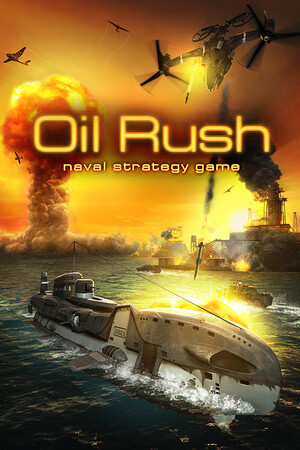
Oil Rush
A flooded-world RTS that ditches unit micromanagement for group-order tactics - genuinely different concept, thin online population, and a dead multiplayer scene that undercuts the whole point.
GamerScout Verdict
Worth grabbing only if you have friends to play with - the solo campaign runs dry fast and public lobbies are effectively empty.
Compare Prices(4 stores)
Every store in this table quotes us in euros, so the EUR figure is the price the seller actually set, not our arithmetic — which is why EUR is also the currency we rank in. We only list an offer here when the store gives us its price in euros, so nothing in this table is a number we invented.
Pick USD, PLN, GBP, CAD or AUD in the header and we convert from EUR at the European Central Bank reference rate — converted amounts are prefixed with ~. Your bank or the store may apply a different rate at checkout. We never hide offers based on where you are: everyone sees this whole table.
We may earn a commission when you buy games through links on this page — at no extra cost to you. It never affects our rankings or verdicts.
Price History
Screenshots & Media
About Oil Rush
I came into Oil Rush expecting a gimmick dressed up in pretty water effects - Unigine Corp. is best known for their Heaven GPU benchmark, so a game from them always felt like tech demo first, design second. Turns out the game has more going on under the hood than that reputation suggests, though not enough to fully escape it. The core loop is a hybrid of RTS and tower defense set across a flooded post-apocalyptic world where every surviving faction is fighting over oil rigs. You do not control individual units. Instead, you send 25%, 50%, or 100% of the forces sitting on a platform toward a target, they transit across the water autonomously, and you deal with the result. Platforms auto-generate naval and air units up to a cap, and you spend oil - earned from captured rigs and storage facilities - to build up to five turret types around each platform, research technologies from a tech tree, and eventually unlock super-weapons like nukes, napalm strikes, submarines, and convertiplane call-ins. The rhythm is: expand fast, secure oil, fortify what you can afford to fortify, and pick your moments to commit overwhelming force. Destructoid called it "easy to learn, hard to master" and that is about right for the first eight hours. After that, the seams show. The strategic ceiling is lower than it looks. Because you cannot reroute a fleet mid-transit, you cannot close off lanes or set up flanking traps the way a proper RTS lets you. The AI in the 16-mission campaign is pushy but readable, and once you figure out the nuke timing - the AI has access to it constantly in skirmish - you stop being surprised. The campaign also suffers from weak voice acting, grammatical rough patches, and a story that does its job of introducing mechanics but not much else. Optimization was a reported issue at launch, with framerate dips during heavy fire sequences, and the console-style control layout drew criticism from PC players who felt the UI was tuned for a gamepad. These are old wounds on a 2012 game, worth flagging without over-dwelling on them. Where Oil Rush actually comes alive is in multiplayer, up to four players across 15 maps with varied terrain gimmicks - a map with no air units, an arctic maze that punishes large fleet movements, two-player scenarios where oil nodes sit in protected coves. The problem is finding a lobby. The online community has been sparse since launch and is effectively ghost-town territory now. If you have two or three friends willing to buy in together, there are genuinely tense games to be had - stealing a production platform while your opponent's fleet is committed elsewhere, or catching a rallied enemy mob with a nuke - but the matchmaking system is barebones and you will not find random games on demand. For the shooter-brained crowd who usually want fast reflexes and responsive netcode, Oil Rush is a different kind of game entirely. There is no aim, no TTK, no movement tech to grind. What it offers is a compact, accessible strategy experience that respects your time (most matches run 20-40 minutes), looks genuinely good for its age thanks to the Unigine engine, and scratches a casual RTS itch without demanding a wiki. The mixed Steam reception (58% positive across over 500 reviews) and a Metacritic score of 67 are accurate enough signals: this is a solid budget-tier concept that ran out of depth before it ran out of content, and whose best feature - PvP multiplayer - requires friends or luck to access in 2025.

Shooters
Tags
System Requirements
Minimum
- OS
- XP
- Memory
- 1 GB RAM
- Graphics
- NVIDIA 9600 256 MB or Intel HD 4000
- Processor
- 2 GHz
- Hard Drive
- 3 GB HD space
Recommended
- OS
- 7
- Memory
- 2 GB RAM
- Graphics
- NVIDIA GTX 460 512 MB
- Processor
- 2.5 GHz dual-core (Intel)
- Hard Drive
- 3 GB HD space
- Other Requirements
- Broadband Internet connection
Keep exploring
Community Discussion
Be the first to comment on Oil Rush.
Reviews & Ratings
Game Info
- Developer
- Unigine Corp.
- Publisher
- Unigine Corp.
- Release Date
- Jan 25, 2012