
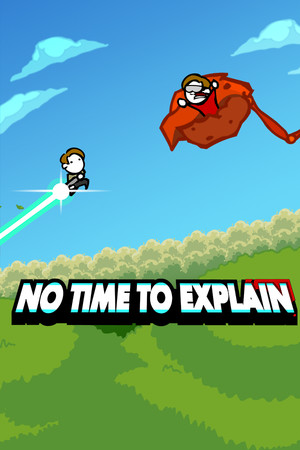
No Time To Explain Remastered
A jetpack-gun platformer that trades precise movement tech for chaotic propulsion physics - fun in short bursts, frustrating in long ones, and genuinely better with a couch co-op partner.
GamerScout Verdict
Best grabbed on sale for a couch co-op session with someone who finds dying to spikes funny.
Compare Prices(5 stores)
Every store in this table quotes us in euros, so the EUR figure is the price the seller actually set, not our arithmetic — which is why EUR is also the currency we rank in. We only list an offer here when the store gives us its price in euros, so nothing in this table is a number we invented.
Pick USD, PLN, GBP, CAD or AUD in the header and we convert from EUR at the European Central Bank reference rate — converted amounts are prefixed with ~. Your bank or the store may apply a different rate at checkout. We never hide offers based on where you are: everyone sees this whole table.
We may earn a commission when you buy games through links on this page — at no extra cost to you. It never affects our rankings or verdicts.
Price History
Screenshots & Media
About No Time To Explain Remastered
My instinct with any platformer is to test the movement ceiling first: how tight is the control, how consistent is the physics, can you actually build skill? No Time To Explain Remastered gives a complicated answer. The core gimmick - using a laser cannon as both weapon and jetpack by firing it at the ground or walls to launch yourself around - is genuinely clever on paper. In practice, the propulsion physics sit somewhere between "satisfying puzzle" and "why did that send me into the spikes again." Reviewers and players consistently flag that the laser rifle will sometimes keep you airborne for the expected duration and sometimes drop you short for no apparent reason. That inconsistency is the game's biggest problem, because the level design asks you to be precise in the same moments the physics feel random. That said, the game earns points for variety. You are not just shooting a laser the whole time. Different worlds swap in different tools: a shotgun that blasts you across the screen at serious distance, a slingshot mechanic that flings you wall to wall, a straitjacket sequence that changes your movement entirely. Each world introduces its own physics variant, which keeps the three-to-four-hour campaign from going completely stale. The checkpointing is generous too - touch a flat surface and you respawn there, so deaths rarely feel like they cost you more than thirty seconds. Boss fights tighten that up with a shared three-life pool per encounter, which is fine until you hit some of the later bosses, where hit detection and borderline random level generation start to undermine otherwise decent fight design. The multiplayer situation needs a clear-eyed look before you buy. The "multiplayer" tag is local-only co-op, two players on the same machine. There is no online play. In local co-op the screen follows whoever is furthest ahead, which creates genuine scramble-energy that the solo mode lacks - platforms get destroyed behind lagging players, boss lives are shared, and the chaos escalates nicely. Steam Workshop support is here too, with a dead-simple level editor that extends the content past the short campaign. Community level quality varies but the toolset works. One hardware note: the game was built in Unity and the resolution options are limited, so if you are running a high-refresh monitor expecting a crisp pixel-art experience, manage those expectations - the Flash-era art style is very much intact. Bottom line on audience: this one is aimed at casual-to-mid platformer fans who want something weird and short, not at anyone looking for the tight movement feel of Super Meat Boy or a competitively replayable game. The humor is genuinely strange in a good way and the absurdist time-travel framing earns its laughs more often than it misses. If you have a friend physically present who enjoys dying repeatedly to spikes while laughing about it, the local co-op mode is the best version of this game by a margin. Solo, it is a decent afternoon, no more.

Shooters
Tags
System Requirements
Minimum
- OS
- Windows XP
- Memory
- 512 MB RAM
- Graphics
- 128 MB
- Processor
- 1 GHz
Keep exploring
Community Discussion
Be the first to comment on No Time To Explain Remastered.
Reviews & Ratings
No ratings available
Game Info
- Developer
- tinyBuild
- Publisher
- tinyBuild
- Release Date
- Jul 17, 2015