
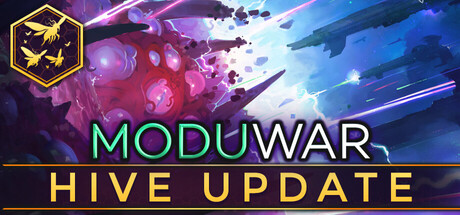
Moduwar
Forget building a barracks. In Moduwar you grow acid glands, split off scouting tentacles, and hurl chunks of your own body at the enemy. It's the weirdest RTS hook in years, and it mostly works.
GamerScout Verdict
Solid Early Access pick for RTS vets hungry for a genuinely new loop, but PvP-only MP and missing QoL keep it from being a sure thing right now.
Compare Prices(8 stores)
Every store in this table quotes us in euros, so the EUR figure is the price the seller actually set, not our arithmetic — which is why EUR is also the currency we rank in. We only list an offer here when the store gives us its price in euros, so nothing in this table is a number we invented.
Pick USD, PLN, GBP, CAD or AUD in the header and we convert from EUR at the European Central Bank reference rate — converted amounts are prefixed with ~. Your bank or the store may apply a different rate at checkout. We never hide offers based on where you are: everyone sees this whole table.
We may earn a commission when you buy games through links on this page — at no extra cost to you. It never affects our rankings or verdicts.
Price History
Screenshots & Media
About Moduwar
I cover shooters for a living, so when an RTS lands on my desk I approach it the same way I clock a new battle royale: what's the core loop, how high is the skill ceiling, and will the multiplayer still have a pulse in six months. Moduwar gave me one genuinely unexpected answer to all three. The core loop is unlike anything currently on the market. You start as a single heart floating in water on the alien world of Arkadia, then tile by tile you grow organs off your body, acid glands, frost glands, electric emitters, eye-bulb stems, cutting tentacles, each one slotting onto your living frame like biomechanical Lego. When you want to attack you literally detach pieces of yourself, send them across the map to flank or distract, and snap them back when you're done. Smaller detached chunks move faster than your main body, so split aggression is a legitimate micro skill, not just a gimmick. The merge mechanic is mouse-over-and-command simple, which means the barrier to entry is low even for people who never touched a Zerg macro. The mode spread is solid for an Early Access title. Campaign is there with live-action FMV cutscenes that lean hard into a retro Command-and-Conquer aesthetic, campy delivery and all. Skirmish pits you against an AI opponent that follows the same growth rules you do, which is a nice design touch even if the AI is not going to stress test a veteran RTS player. Survival and Arena add wave-defense variety, though both modes are APM-heavy and get repetitive faster than the main modes. The big caveat for multiplayer is that it is currently PvP only, no co-op available yet. Up to four players can compete, which should give the PvP side some legs, but co-op fans will need to wait for a future update. Multiplayer lobby options are also limited right now, something the community has flagged and the devs appear aware of. Quality-of-life is the honest rough edge in this build. There is no attack-move command to speak of, tooltips do not fully explain what each organ combination actually unlocks, and the APM demand during large engagements spikes in a way that feels unmanaged rather than intentional. Players have specifically called out the need for pathfinding improvements and a tactical pause or slow-motion option, both fair asks. There is also a notable audio balancing issue where cutscene and narration volumes jump wildly between levels, which headphone users should know about before they get surprised at high volume. These are fixable things, and the development team is actively communicating with the community, but they are real frictions right now, not hypothetical ones. No unit cap or platform size limit in skirmish is a genuine sandbox freedom that partially offsets the polish gaps. For strategy players the concept earns its buzz. The organ tree and split-merge system create real build decisions: do you stack acid glands for sustained pressure, lean into frost glands to slow and control, or build a hive-organ swarm and flood the map? Each answer plays differently. For the multiplayer-first crowd, the PvP side is early and the playerbase is still forming, so queue health is an open question. The Linux native version is confirmed functional with an ongoing cursor bug having already been patched, which is a good sign for dev responsiveness. At its current price point and EA state, the concept alone justifies interest from RTS enthusiasts who are genuinely tired of every new entry playing like a StarCraft mod.

Shooters
Tags
System Requirements
Minimum
- OS
- Windows 10
- Memory
- 8 GB RAM
- DirectX
- Version 11
- Network
- Broadband Internet connection
- Storage
- 2 GB available space
- Graphics
- Nvidia GTX 860 M or AMD HD 5870
- Processor
- Core i7-4710HQ or AMD FX 8800P
Recommended
- OS
- Windows 11
- Memory
- 16 GB RAM
- DirectX
- Version 12
- Network
- Broadband Internet connection
- Storage
- 2 GB available space
- Graphics
- Nvidia GTX 960 or Radeon RX 470
- Processor
- Core i3-9100 or Ryzen 3 1300X
Keep exploring
Community Discussion
Be the first to comment on Moduwar.
Reviews & Ratings
Game Info
- Developer
- Biohex Studios
- Publisher
- Firesquid
- Release Date
- Jun 3, 2025