
Mahokenshi - The Samurai Deckbuilder
A clever hex-grid deckbuilder that grafts samurai mythology onto board-game tactics, but runs out of steam well before you run out of interest in its systems.
GamerScout Verdict
Tactics-focused deckbuilder fans will get a solid 20-hour campaign from it, but narrative seekers and replayability chasers should temper expectations.
Compare Prices(7 stores)
Every store in this table quotes us in euros, so the EUR figure is the price the seller actually set, not our arithmetic — which is why EUR is also the currency we rank in. We only list an offer here when the store gives us its price in euros, so nothing in this table is a number we invented.
Pick USD, PLN, GBP, CAD or AUD in the header and we convert from EUR at the European Central Bank reference rate — converted amounts are prefixed with ~. Your bank or the store may apply a different rate at checkout. We never hide offers based on where you are: everyone sees this whole table.
We may earn a commission when you buy games through links on this page — at no extra cost to you. It never affects our rankings or verdicts.
Price History
Screenshots & Media
About Mahokenshi - The Samurai Deckbuilder
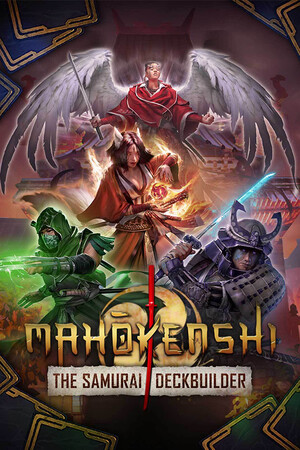
My first impression of Mahokenshi was genuine surprise: this is not the Slay the Spire reskin the genre-fatigue part of my brain expected. The central hook is that movement and card play share the same energy pool. You get four energy per turn, and spending it to cross a mountain tile is energy you are not spending to slash an Oni with a blade-wind card. That tension is genuinely interesting, and the hex map layers in terrain effects so that forest tiles grant passive defense while mountains are nearly impassable unless you have a mobility card that lets you scale them. Enemies have alert radii and will actively reposition onto favorable terrain, which means positional thinking matters in a way most deckbuilders quietly ignore. Four samurai houses anchor the build variety. Ayaka of the House of Ruby flies and dashes across the map, trading her own health for explosive burst damage. Kaito of Sapphire is a slow-moving tank who can reflect incoming hits back at opponents and force enemies to cluster around him. Sota of Jade leans into stealth and poison, chaining free attacks through his card pool. Misaki of Topaz teleports, summons mystical wards, and functions as a ranged attacker with high mobility. Each house has its own dedicated card set on top of a shared common pool, which means the four characters feel genuinely different rather than palette-swapped. The persistent progression also helps: each Mahokenshi levels up through played missions and earns points for a skill tree that unlocks better cards, relics, and equipment that carries forward between missions. Where the game wobbles is in balance and content depth. Character parity is uneven, with some builds snowballing into triviality once you identify the broken card synergies, while others feel underpowered past the mid-campaign. The missions themselves are handcrafted rather than procedurally generated, which is actually a considered design choice that pays off in clarity and puzzle-like tension, but it also means replay value takes a hit once you have solved each map. There is no endless mode, no difficulty slider, and completing the campaign with all side objectives lands you at roughly 20 to 25 hours before the content well runs dry. A small subset of players have also reported corrupted save states in later missions, a bug that had lingered without a fix for an extended period after launch, so cloud saves are worth enabling before you start. The presentation sits comfortably in the "nice but not remarkable" bracket. Card artwork is individually attractive and steeped in Japanese folklore, featuring Oni, Yokai, and Yurei with genuine aesthetic care. Map textures read as slightly blurry at higher resolutions, and the audio is functional classical Japanese instrumentation that sets the mood without demanding your attention. None of it undermines the game, but it does not elevate it either. For an RPG specialist like me who wants narrative payoff alongside mechanics, the story is the weakest link: the plot of cultists summoning demons across floating islands is coherent but thin, and the writing never reaches for anything beyond functional setup. If you need a Disco Elysium level of textual reward, look elsewhere. If you want a tightly designed tactics puzzle with meaningful card choices and four distinct samurai archetypes to master, Mahokenshi delivers a focused, satisfying package for as long as its content holds.

RPGs
Tags
System Requirements
Minimum
- OS
- Windows 10 or higher
- Memory
- 8 GB RAM
- DirectX
- Version 11
- Storage
- 3 GB available space
- Graphics
- Nvidia GeForce GTX 770 series or AMD equivalent graphics card
- Processor
- 1st gen Intel i5 or AMD equivalent
Recommended
- OS
- Windows 10 or higher
- Memory
- 16 GB RAM
- DirectX
- Version 11
- Storage
- 3 GB available space
- Graphics
- Nvidia RTX 2080 or AMD equivalent graphics card
- Processor
- 2nd gen Intel i7 or Ryzen equivalent
DLC & Add-ons for Mahokenshi - The Samurai Deckbuilder1
Expansions, DLC packs and add-on content for this game. Click any item to see store offers.

Keep exploring
Community Discussion
Be the first to comment on Mahokenshi - The Samurai Deckbuilder.
Reviews & Ratings
Game Info
- Developer
- Game Source Studio
- Publisher
- Iceberg Interactive
- Release Date
- Jan 24, 2023