Little Goody Two Shoes
Twelve hours, ten possible endings, and a Suspicion Meter that will quietly ruin your run if you say the wrong thing to the wrong villager. AstralShift's fairy-tale horror hybrid earns every one of its 83 Metacritic points.
GamerScout Verdict
Ideal for narrative-focused players who want branching consequences and gorgeous 90s anime horror, and can tolerate some trial-and-error puzzle frustration.
Compare Prices(7 stores)
Every store in this table quotes us in euros, so the EUR figure is the price the seller actually set, not our arithmetic — which is why EUR is also the currency we rank in. We only list an offer here when the store gives us its price in euros, so nothing in this table is a number we invented.
Pick USD, PLN, GBP, CAD or AUD in the header and we convert from EUR at the European Central Bank reference rate — converted amounts are prefixed with ~. Your bank or the store may apply a different rate at checkout. We never hide offers based on where you are: everyone sees this whole table.
We may earn a commission when you buy games through links on this page — at no extra cost to you. It never affects our rankings or verdicts.
Price History
Screenshots & Media
About Little Goody Two Shoes
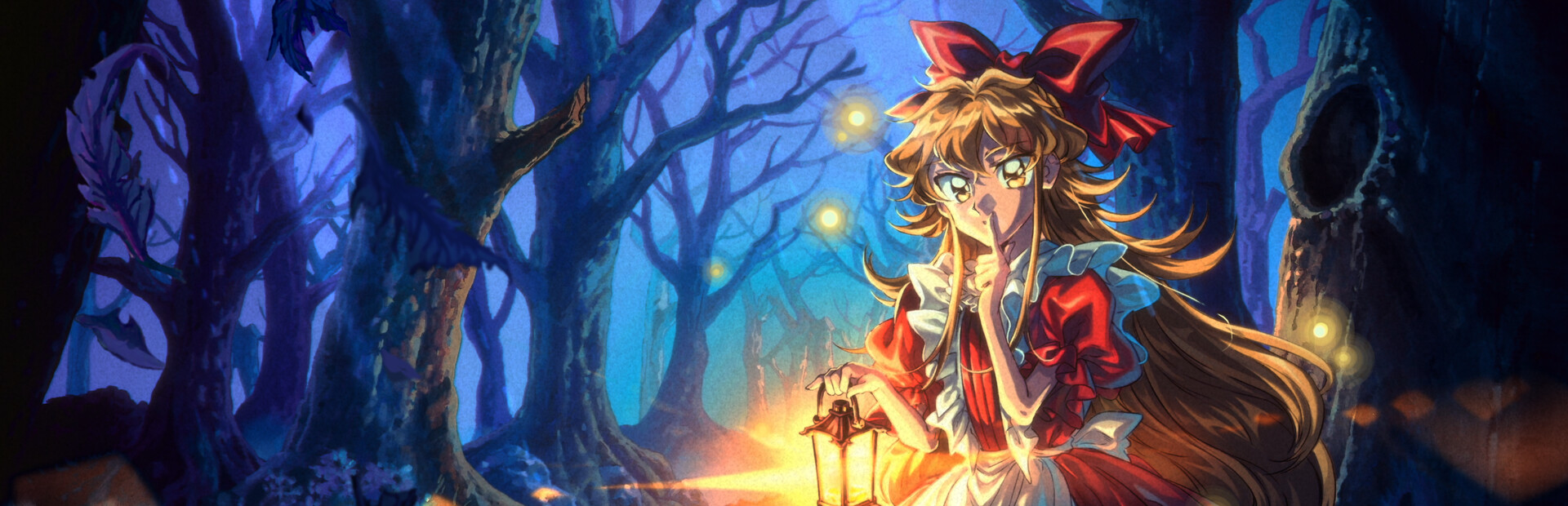
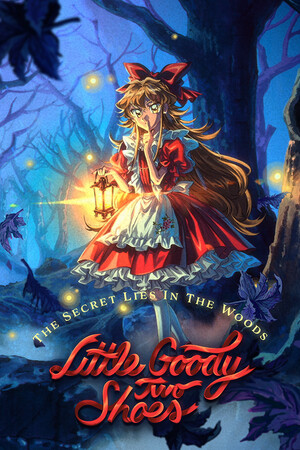
My first hour with Little Goody Two Shoes felt like finding an unmarked VHS tape in a relative's attic: the opening is all bright colors, pointed shoujo noses, and chirpy village life, and then the floor drops out from under you. The game is genuinely hard to slot into a single genre box, and that is largely the point. Structurally, days in the village of Kieferberg are split into roughly six time periods, and every action you take burns one of them. You play Elise, a broke, bracingly selfish protagonist who wants out of her rural life badly enough to cut a deal she probably should not have cut. During daylight hours the game plays like a lean life-sim: pick up odd jobs from villagers, execute them through chunky little retro arcade minigames with chiptune scores, pocket the coin, spend it on food to keep your Hunger bar alive. Alongside that you are managing a Sanity meter that ticks down in the nightmare sequences, and a Suspicion meter that climbs whenever you say something too honest or fail to keep the local gossip well-fed. Let that last one max out and Elise burns at the stake. The three romance routes, Rozenmarine, Freya, and Lebkuchen, are not optional flavor: who you commit to and how diligently you court them directly gates which of the ten endings you can reach. That is real consequence design, and it works. Once the Witching Hour hits, the game pivots hard into horror-puzzler territory. These nighttime sequences are atmospheric and often genuinely unsettling, built around exploration, environmental puzzles, and occasional chase sequences where a wrong turn costs Elise health she cannot easily recover. Critics and players broadly agree this is where the game is at its best and, simultaneously, its most frustrating. The puzzles lean toward trial-and-error rather than logical deduction, save points exist per room but unskippable dialogue on repeat deaths grinds patience down, and at least one late-game boss drew consistent complaints about text you cannot fast-forward through. The game warns you upfront to save constantly across its available slots. Listen to it. From a narrative standpoint, the writing rewards attention. Elise is not a sympathetic protagonist in the conventional sense: she is ambitious, prickly, and occasionally a jerk, which makes her arc land harder when it does. The story layers a Salem-adjacent witch-hunt paranoia over a Brothers Grimm folktale skeleton, and the sapphic romance routes are genuinely well-written rather than token inclusions. The game was nominated at the 35th GLAAD Media Awards for Outstanding Video Game, which tells you something about the care that went into them. Minor characters also pull their weight, every named villager in Kieferberg serving some mechanical or narrative function rather than existing as background decoration. The one honest criticism on the story side is that several endings feel rushed at the finish line, the village and its people evaporating from the resolution faster than the investment in them deserved. Presentation is where AstralShift plays its strongest hand. The art is a loving recreation of early-90s shoujo anime, all washed-out palette, dramatic shading, and hand-painted environments that shift from warm and cozy to deeply wrong with minimal warning. The soundtrack runs 64 original tracks and several players have reportedly added OST cuts to personal playlists, which is a decent barometer of quality. The whole thing clocks in at roughly 10 to 12 hours per run, short enough to encourage replays, long enough to feel complete. RPGFan named it the best adventure game and visual novel of 2023. Steam English-language user reviews currently sit at 94 to 95 percent positive across over 1,500 votes. That consensus is not accidental. If you need dense combat systems or build variety to stay engaged, step away now. There are no builds here, no skill trees, no loot. What Little Goody Two Shoes offers instead is a mechanically dense web of interlocking resource systems that translate directly into narrative outcomes, wrapped in some of the most confident visual storytelling an indie studio has produced in years. The Witching Hour puzzles will occasionally make you want to close the laptop. Push through anyway.

RPGs
Tags
System Requirements
Minimum
- OS
- Windows 10
- Memory
- 8 GB RAM
- DirectX
- Version 11
- Storage
- 16 GB available space
- Graphics
- NVIDIA GeForce GT 640, 2 GB or AMD Radeon R7 240, 2 GB
- Processor
- Intel Core i3-540 or AMD Phenom II X4 965
Recommended
- OS
- Windows 10
- Memory
- 8 GB RAM
- DirectX
- Version 11
- Storage
- 16 GB available space
- Graphics
- NVIDIA GeForce GTX 750 Ti, 2 GB or AMD Radeon HD 7770, 2 GB
- Processor
- Intel Core i5-2300 or AMD FX-4350
Keep exploring
Community Discussion
Be the first to comment on Little Goody Two Shoes.
Reviews & Ratings
Game Info
- Developer
- AstralShift
- Publisher
- Square Enix
- Release Date
- Nov 7, 2023