
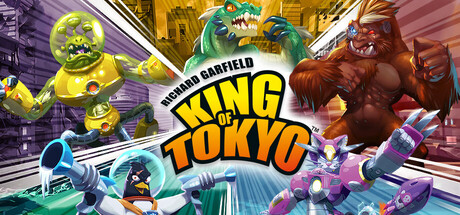
King of Tokyo - Richard Garfield
A Yahtzee-brained kaiju brawl for the couch crowd - solid if you have bodies to fill those local seats, thin if you're coming in solo.
GamerScout Verdict
Best for groups of 3-5 who want a fast, chaotic couch brawl - solo players and online-only crowds should look elsewhere.
Compare Prices(5 stores)
Every store in this table quotes us in euros, so the EUR figure is the price the seller actually set, not our arithmetic — which is why EUR is also the currency we rank in. We only list an offer here when the store gives us its price in euros, so nothing in this table is a number we invented.
Pick USD, PLN, GBP, CAD or AUD in the header and we convert from EUR at the European Central Bank reference rate — converted amounts are prefixed with ~. Your bank or the store may apply a different rate at checkout. We never hide offers based on where you are: everyone sees this whole table.
We may earn a commission when you buy games through links on this page — at no extra cost to you. It never affects our rankings or verdicts.
Price History
Screenshots & Media
About King of Tokyo - Richard Garfield
I'll be straight with you: I cover shooters, not dice games. But local multiplayer PvP is local multiplayer PvP, and when someone at the Scout desk needs to know whether this thing holds up as a competitive experience, that question lands on my desk. King of Tokyo is a digital conversion of Richard Garfield's 2011 tabletop classic - the same guy behind Magic: The Gathering - and Breakfirst hasn't tried to reinvent the ruleset. Whether that's a strength or a missed opportunity depends entirely on who you're playing with. The core loop is a Yahtzee-style dice system. You roll six custom dice and get up to two rerolls per turn, choosing which faces to keep after each throw. The six face types cover attack, heal, energy (spent on power cards), and direct victory point grabs labeled 1, 2, and 3. If you're sitting in Tokyo at the start of your turn you bank two VP automatically, but you can't heal from dice while you're in there, and every other monster at the table is swinging at you. That tension - hold the city and accumulate points against absorbing punishment you can't recover from without yielding the seat - is genuinely good design. Timing your exit and forcing a rival to walk into the hot zone is the closest this game gets to a skill expression moment, and it works. First to 20 VP wins, or you eliminate everyone else. Games stay around 30 minutes which is the right length for what this is. The power card layer adds a bit of texture. You spend energy to buy cards off a rotating three-card market, and the draws can meaningfully bend your strategy: glass cannon aggression via damage amplifiers, VP snowballing through point-generating keep effects, or survivability tools that let you grind out healing. The digital version includes monsters like Gigazaur, Cyber Kitty, and Alienoid, though the base tabletop design intentionally treats kaiju as cosmetically distinct rather than mechanically differentiated - so don't walk in expecting asymmetric faction depth on the level of a proper strategy game. The card pool is what provides variance, not the monster choice. Here's where I have concerns from a competitive standpoint. The local multiplayer cap is six players via couch co-op, and four is reportedly the sweet spot where the king-of-the-hill tension actually functions properly. Two-player sessions reportedly lose a lot of that dynamic pressure. There is a solo mode with AI opponents if you need to practice, but with only 10 Steam reviews currently sitting at a 50-50 mixed split, the community verdict is genuinely unclear this early. No online multiplayer has been confirmed from what I can find, which in 2026 is a notable gap for a competitive game with this kind of structure. If you're buying this to play remotely with friends, that's a real problem. For the audience this actually suits, it's a competent translation. The rules onboard fast - a five-minute explanation and anyone aged eight-plus is in. Sessions don't overstay their welcome. If your regular game night crowd already knows the tabletop version, the digital edition removes setup friction and handles the fiddly token accounting automatically, which is the main practical win here. If you've never touched the physical game and want a party game with a bit of aggression and push-your-luck gambling, there's a functional loop here. Just make sure you have two or three warm bodies ready to sit down with you, because the solo AI mode is a training tool, not the point.

Shooters
Tags
System Requirements
Minimum
- OS
- Windows 10 64bits
- Memory
- 8 GB RAM
- DirectX
- Version 12
- Storage
- 5 GB available space
- Graphics
- GeForce GTX 1050Ti
- Processor
- Intel Core i5 / AMD Ryzen 5 2600
Recommended
- OS
- Windows 10 or above
- Memory
- 8 GB RAM
- DirectX
- Version 12
- Storage
- 5 GB available space
- Graphics
- Geforce GTX 1650
- Processor
- Intel Core i5 10400
Keep exploring
Community Discussion
Be the first to comment on King of Tokyo - Richard Garfield.
Reviews & Ratings
No ratings available
Game Info
- Developer
- Breakfirst
- Publisher
- Microids
- Release Date
- May 21, 2026