Inkulinati
Medieval manuscript chaos turned into a legitimate tactics game, and the rabbit mooning your knight is the least weird thing that will happen to you.
GamerScout Verdict
Solid medieval tactics roguelite for single-player and couch-PvP fans; skip if you need online matchmaking.
Compare Prices(10 stores)
Every store in this table quotes us in euros, so the EUR figure is the price the seller actually set, not our arithmetic — which is why EUR is also the currency we rank in. We only list an offer here when the store gives us its price in euros, so nothing in this table is a number we invented.
Pick USD, PLN, GBP, CAD or AUD in the header and we convert from EUR at the European Central Bank reference rate — converted amounts are prefixed with ~. Your bank or the store may apply a different rate at checkout. We never hide offers based on where you are: everyone sees this whole table.
We may earn a commission when you buy games through links on this page — at no extra cost to you. It never affects our rankings or verdicts.
Price History
Screenshots & Media
About Inkulinati
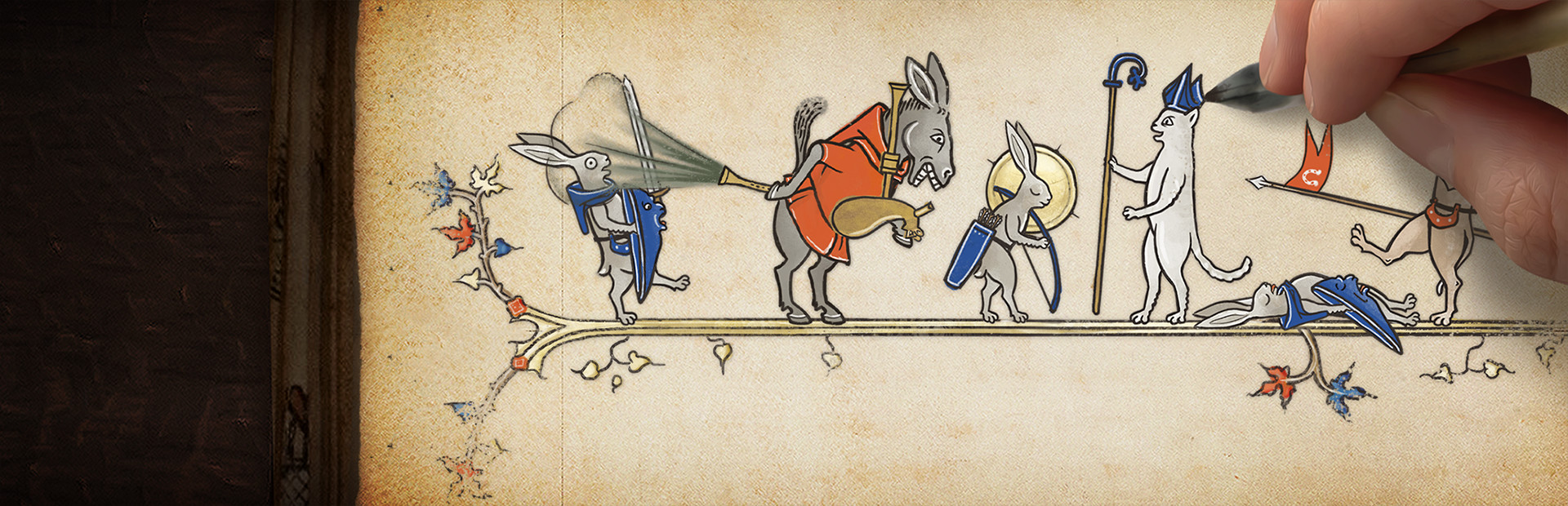
My first hour with Inkulinati was mostly confusion: a medieval scribe figure, a 2D side-view battlefield that looks like someone's monastery doodle pad, and a tutorial that really, really wants to hold your hand. Stick with it. What's underneath is a turn-based tactics game with more layered decision-making than the silly art style suggests, and once it clicks, you stop caring that a donkey just farted into a trumpet to debuff your entire left flank. The core loop places you as an Inkulinati Master on a 2D parchment battlefield. You spend ink to summon beasts from a pre-selected roster of five, then command them across a side-view map where fall damage is instant death, fire creeps in from the edges if the fight drags, and the terrain itself is littered with exploding pots of beans and wandering Hell's Maws. Your Master can also intervene directly each turn with Hand Actions: shoving units around, striking enemies bare-handed, drawing obstacles, or healing allies. Both players have this power, so every positioning decision has to account for the other scribe's giant finger reaching onto the field. The push mechanic especially rewards sharp spatial thinking. One well-timed shove sends a unit off a ledge for an instakill, no matter how much health it has left. That is the kind of resource-efficient move that separates good players from bad ones, and chasing it gives the game actual teeth. Unit variety is broader than you'd expect. Dogs, rabbits, and foxes come in melee, spear, and bow variants as a baseline. Fox units steal enemy ink on hit. Rabbits moon opponents to stun them (yes, this is historically accurate medieval manuscript content). Snails are slow but hit like freight wagons. Cat bishops can attack and heal and punish anyone who damages them. Wolf pilgrims don't attack at all but offer defensive buffs if they reach their destination. There's a boredom system that raises ink costs on any beast you summon too frequently, which forces genuine roster rotation instead of finding one combo and riding it for the entire run. It's a smart piece of design that keeps you honest. The Journey mode campaign also throws in boss encounters with unique gimmicks: Dante Alighieri shows up with fire immunity and an army of devils, for instance, and the fight around his specific kit is a completely different strategic challenge than a standard duel. The weaknesses are real. The tutorial is genuinely too long and front-loaded, running the risk of killing momentum before the actual game starts. The multiplayer situation is the biggest thing that will matter to people who came here from a competitive angle: there is no online matchmaking. PvP is strictly local hot-seat, which feels like a missed opportunity in 2024 and the main reason a player like me, who came in looking for a ranked ladder type experience, will walk away partially unsatisfied. The Journey mode requires multiple playthroughs to reach the true ending, and not everyone will have the patience for the repeated early-act content even with different stage layouts. Some players also flag that the UI buries key information and that tooltips require deliberate input to surface, which is a friction point when you are trying to read a board quickly. What it does right, it does with genuine craft. The Steam user score sits at a very positive 87 percent across nearly 700 reviews, and the Metacritic score of 78 lines up with a game that punches slightly above its budget in execution, even if it has rough edges. If you have someone local to play the Duel mode with, the value goes up significantly. The local PvP is where the depth really shows. Solo, it is a satisfying tactics roguelite with around 7-10 hours for a first Journey run and more on repeat playthroughs as you unlock additional beasts and build new rosters from scratch.

Shooters
Tags
System Requirements
Minimum
- OS
- Microsoft® Windows® 10
- Memory
- 6 GB RAM
- DirectX
- Version 11
- Storage
- 5 GB available space
- Graphics
- GeForce GTX 750 Ti or AMD RX 560
- Processor
- Intel Core i5 6400 or AMD equivalents
Recommended
- OS
- Microsoft® Windows® 10
- Memory
- 8 GB RAM
- DirectX
- Version 11
- Storage
- 5 GB available space
- Graphics
- GeForce GTX 1060 or AMD RX 580
- Processor
- Intel Core i7 8700 or AMD equivalents
DLC & Add-ons for Inkulinati1
Expansions, DLC packs and add-on content for this game. Click any item to see store offers.

Keep exploring
Community Discussion
Be the first to comment on Inkulinati.
Reviews & Ratings
Game Info
- Developer
- Yaza Games
- Publisher
- Daedalic Entertainment
- Release Date
- Feb 22, 2024