
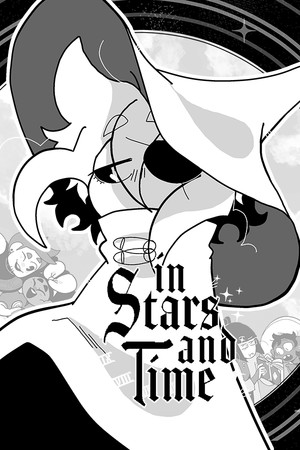
In Stars And Time
Stuck in a time loop only you remember, watching your friends' hope slowly grind you down from the inside out - In Stars And Time earns every gut-punch it delivers, if you can survive the backtracking to get there.
GamerScout Verdict
Ideal for story-first RPG fans who can weather repetitive combat and backtracking in exchange for a genuinely affecting emotional payoff.
Compare Prices(6 stores)
Every store in this table quotes us in euros, so the EUR figure is the price the seller actually set, not our arithmetic — which is why EUR is also the currency we rank in. We only list an offer here when the store gives us its price in euros, so nothing in this table is a number we invented.
Pick USD, PLN, GBP, CAD or AUD in the header and we convert from EUR at the European Central Bank reference rate — converted amounts are prefixed with ~. Your bank or the store may apply a different rate at checkout. We never hide offers based on where you are: everyone sees this whole table.
We may earn a commission when you buy games through links on this page — at no extra cost to you. It never affects our rankings or verdicts.
Price History
Screenshots & Media
About In Stars And Time
I walked into In Stars And Time expecting another Undertale-adjacent indie with a quirky coat of paint. What I got instead was a slow-burn character study that left me staring at the ceiling at midnight, quietly processing what had just happened to Siffrin and their found family. Solo developer Adrienne Bazir (insertdisc5) built this entirely in RPG Maker, in black and white, and somehow made it feel more emotionally dense than games with ten times the budget. That alone is worth respecting before you touch the first menu. The setup drops you at the end of a standard fantasy quest - five adventurers storming the House of Change to defeat the King of Vaugarde. Then a boulder kills you in the first corridor and the loop begins. Siffrin is the only one who remembers, and the entire game's mechanical and emotional engine runs on that isolation. Combat uses a Rock-Paper-Scissors triangle where enemy hand-sign shapes telegraph their weakness type, and while that system is clean and readable, it is also genuinely shallow. You will figure out the optimal pattern for most enemy types within two loops and spend the rest of the game executing it. The writing knows this is a problem - and uses it. Siffrin's growing rote numbness in battle mirrors your own autopilot at the controls, which is either genius design integration or a convenient excuse, depending on your patience threshold. There is also a "pray to the Change God" loop-persistent upgrade system that carries small stat boosts between resets, and memories you can equip as armor, but neither adds the build variety I'd want past the first dozen hours. Where the game earns every hour you give it is in its cast. Mirabelle, Isabeau, Odile, and Bonnie are written with the kind of specificity that makes incidental dialogue worth reading twice. Each loop opens new conversation branches - things Siffrin knows but couldn't have asked before - and those unlocked threads are consistently the best content in the game. The investigation structure, piecing together why the loop exists and what the King actually is, is compelling enough to pull you through the repetition. The problem is that the back half of the game stops generating new spatial content while still demanding you comb through the same rooms of the House again and again for one more trigger, one more book. Reviewers called it "long in the teeth" and that is fair. The pacing frays noticeably around the 15-to-20 hour mark, and the linearity - you cannot return to earlier floors without dying - makes dead-end loops feel punitive rather than investigative. The presentation is a genuine surprise. The black-and-white hand-drawn aesthetic reads as a limitation until the game starts doing deliberate, pointed things with it. The chiptune soundtrack is well-crafted and thematically tied to the loop's emotional state. Content warnings are issued upfront, and they matter - this game deals with mental health, self-worth, and the particular psychological corrosion of having to repeatedly instrument your friends' hope while hiding your own despair. It handles those themes with more seriousness than most AAA games that gesture at them from a safe distance. Steam players have rated it overwhelmingly positive across nearly 7,000 reviews, and the critical consensus from specialist RPG outlets lands firmly in the "recommended with caveats" range, which matches exactly how I'd put it. If you are the kind of player who reads every dialogue line, replays scenes to catch new branches, and forgives a thin combat loop when the story payoff is real, this is absolutely your game. If you need mechanical depth to stay engaged through 20-plus hours and hate the feeling of retreading empty corridors, the back half will test you hard. Go in knowing the repetition is the point - and that the point is worth it.

RPGs
Tags
System Requirements
Minimum
- OS
- Windows 7 x64
- Memory
- 4 GB RAM
- Storage
- 500 MB available space
- Graphics
- GeForce GT 440 (1024 MB) or Radeon HD 7750 (1024MB)
- Processor
- Intel Core i3-530 (2 * 2930), AMD Phenom 9650 Quad-Core (4 * 2300), or equivalent
Recommended
- OS
- Windows 7 x64
- Memory
- 4 GB RAM
- Storage
- 500 MB available space
- Graphics
- GeForce GT 440 (1024 MB) or Radeon HD 7750 (1024MB)
- Processor
- Intel Core i3-530 (2 * 2930), AMD Phenom 9650 Quad-Core (4 * 2300), or equivalent
Keep exploring
Community Discussion
Be the first to comment on In Stars And Time.
Reviews & Ratings
No ratings available
Game Info
- Developer
- insertdisc5
- Publisher
- Armor Games Studios
- Release Date
- Nov 20, 2023
