
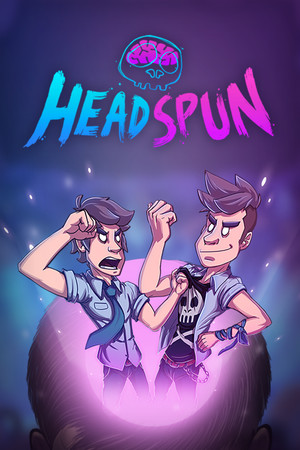
Headspun
A genuinely clever premise about logic versus emotion inside a broken brain, let down by hollow minigames, buggy systems, and choices that change nothing.
GamerScout Verdict
Worth a discounted look for FMV fans curious about the premise, but don't expect your choices to matter or your minigames to engage.
Compare Prices(5 stores)
Every store in this table quotes us in euros, so the EUR figure is the price the seller actually set, not our arithmetic — which is why EUR is also the currency we rank in. We only list an offer here when the store gives us its price in euros, so nothing in this table is a number we invented.
Pick USD, PLN, GBP, CAD or AUD in the header and we convert from EUR at the European Central Bank reference rate — converted amounts are prefixed with ~. Your bank or the store may apply a different rate at checkout. We never hide offers based on where you are: everyone sees this whole table.
We may earn a commission when you buy games through links on this page — at no extra cost to you. It never affects our rankings or verdicts.
Price History
Screenshots & Media
About Headspun
My first thought loading up Headspun was that someone had finally committed to the Inside Out metaphor in a way that could actually land. You step into the role of Ted, the rational CEO of Cortex - a literal brain-office belonging to Theo Kavinsky, a 25-year-old who has just woken from a five-week coma after a car accident. Most of Cortex's staff are dead, departments like the Memory Bank and Dream Cinema are gutted, and your foil Teddy, the primal emotional counterpart to Ted's careful logic, is running loose and picking fights. On paper, the tension between those two characters is the backbone of a genuinely interesting RPG-adjacent story about recovery, identity, and what we choose to remember. The FMV sequences - shot in first-person to simulate Theo's hospital-bed perspective - are where the game is most alive. Visitors arrive: a neurologist, friends, family. You feed Theo dialogue choices and watch the world outside the Cortex unfold. The acting is modest-budget but committed, the dry British wit in the Cortex dialogue actually lands more often than not, and the hand-painted 2D art style, all purples and blues with Gorillaz-adjacent character designs, gives the whole thing a distinctive visual identity. The synthwave soundtrack adds atmosphere without overwhelming the sparse FMV audio. These moments are genuinely worth seeing. The problem is the architecture around those moments. The bulk of your time is spent running minigames - button-mashing to simulate weight-lifting, timing prompts for reading, basic arithmetic puzzles - to earn Neurocredits, which fund Cortex repairs and staff hires. These minigames are repetitive from the second loop and never deepen. The economy is simultaneously breakable and vague: it is easy to amass far more Neurocredits than you can meaningfully spend, while other upgrade systems hide their functionality so completely that you can finish the game without knowing they existed. Worse, the FMV dialogue choices carry no real narrative weight - the story moves the same way regardless of what Theo says, which is a particular sting in a game that pitches itself as being about the war between logic and emotion. Players expecting meaningful branching will leave frustrated. Bugs compound every frustration. Subtitle timing is unreliable, some side sequences auto-complete because the upgrade pacing outruns the story triggers, and there are documented moments where the game locks progression entirely until a reload. The control scheme is a hybrid mess: the minigames feel better on a controller, the menus demand a mouse, and the two never comfortably coexist. There is also a structural issue worth flagging: the game presents what feels like an ending around the six-hour mark, and many players will close it there. Those who push on reportedly find a more complete resolution to the Ted-versus-Teddy arc, but nothing in the game communicates this. A hidden better ending is not a design feature if it requires accident to find. Headspun is the kind of indie that makes you want to write a strongly-worded note to an alternate-universe version of it where the minigame loop was designed with the same care as the premise. The concept of a consciousness-as-management-sim, told through FMV and a character conflict between reason and instinct, is legitimately original. What shipped in 2019 at a Metacritic of 51 is a game that runs out of gameplay before it runs out of story, and runs out of story before it runs out of runtime. If you are drawn to experimental narrative games and can forgive rough edges, the FMV vignettes and the Ted-Teddy dynamic offer enough to justify a discounted look. If choices mattering to you is a baseline requirement, this will leave you cold.

RPGs
Tags
System Requirements
Minimum
- OS
- Windows 8.1 64-bit
- Memory
- 2 GB RAM
- DirectX
- Version 11
- Storage
- 7500 MB available space
- Graphics
- NVIDIA GeForce GTX 260 / AMD Radeon HD 5750. OpenGL 3.3
- Processor
- Core i3 / AMD A6 2.4Ghz
Recommended
- OS
- Windows 10 64-bit
- Memory
- 4 GB RAM
- DirectX
- Version 11
- Storage
- 7500 MB available space
- Graphics
- Direct X 11.0 compliant video card with 2GB RAM (NVidia GeForce GTX 750 or AMD Radeon HD 7850)
- Processor
- Quad Core 2.3GHz or equivalent processor
Keep exploring
Community Discussion
Be the first to comment on Headspun.
Reviews & Ratings
Game Info
- Developer
- Superstring
- Publisher
- Superstring
- Release Date
- Aug 28, 2019