GRAVIATORS
Think top-down Rocket League but stripped to physics fundamentals and crammed onto a shared screen with a friend. Tight idea, thin content, lives or dies by who you bring to the lobby.
GamerScout Verdict
Worth a look for couch gaming nights with 2-4 players; solo or online-only buyers will hit the content wall fast.
Compare Prices(8 stores)
Every store in this table quotes us in euros, so the EUR figure is the price the seller actually set, not our arithmetic — which is why EUR is also the currency we rank in. We only list an offer here when the store gives us its price in euros, so nothing in this table is a number we invented.
Pick USD, PLN, GBP, CAD or AUD in the header and we convert from EUR at the European Central Bank reference rate — converted amounts are prefixed with ~. Your bank or the store may apply a different rate at checkout. We never hide offers based on where you are: everyone sees this whole table.
We may earn a commission when you buy games through links on this page — at no extra cost to you. It never affects our rankings or verdicts.
Price History
Screenshots & Media
About GRAVIATORS
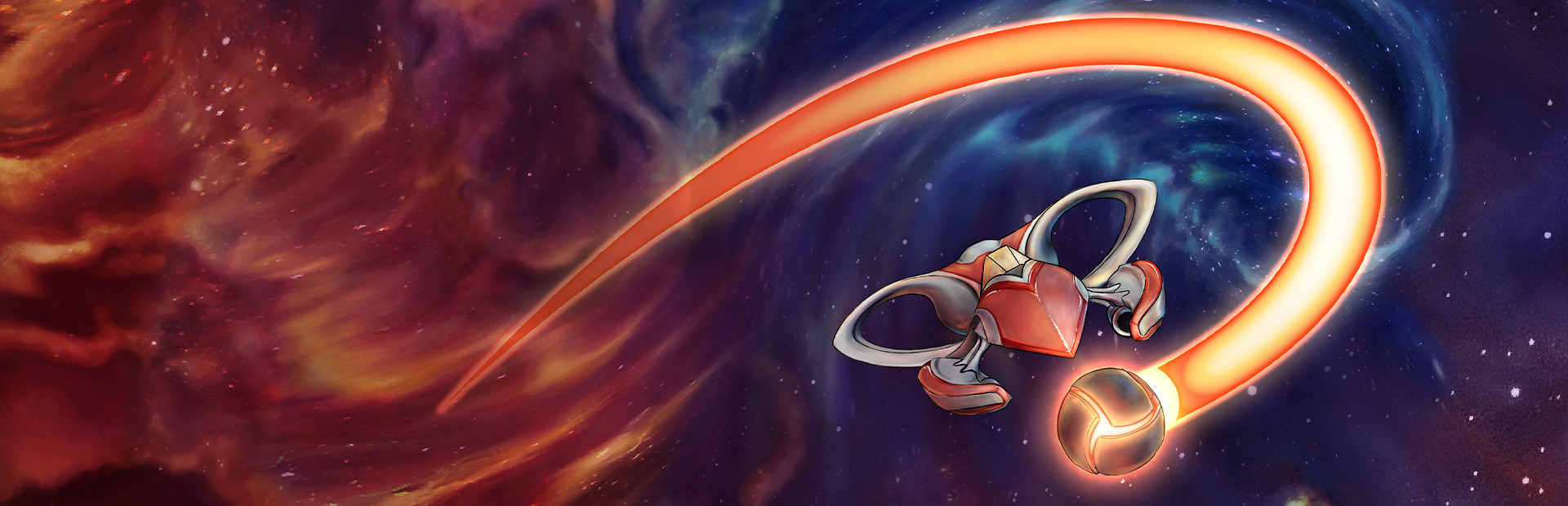
I came to GRAVIATORS the way I come to any party-adjacent game: skeptical, controller in hand, one friend on the couch and another on standby online. The pitch is genuinely interesting. Three abilities, that's it. Your space pod pulls the ball into orbit with a gravity pull, repels nearby objects with a shield burst, and punches across the arena with a boost. Four buttons of actual interaction, physics doing the rest. On paper that sounds elegant. In practice it plays out as organized chaos that occasionally tips into the unreadable kind. The three modes give you different flavors of the same engine. Versus Arena is the baseline: two teams, shielded goals, you strip the shields before you can score, which adds a satisfying first-blood layer before the actual point. Planetary Arena flips the scale, making each team's entire side of the screen the goal and dropping a black hole barrier down the middle. Fire the ball through that hole and it accelerates to a genuinely threatening pace, which is the most mechanically interesting moment the game has. Meteor Shower is the co-op wave mode where you bat incoming asteroids away from your planet and stack a score multiplier. It is actually the most playable mode solo because the chaos is directional rather than human-inflicted. Here is where I stop nodding along. The AI in the PVP modes does not aim. It locks on to the ball and nothing else, so playing against bots feels like herding a roomba rather than learning the game. The arenas are small enough that tracking your own pod through a four-player scrum requires more attention than the physics complexity probably warrants. One reviewer noted it reads as "almost like a top-down Rocket League, but a little more chaotic" and that comparison is accurate but also a little damning. Rocket League earns its chaos because ball control skill has a clear ceiling to chase. Here, the ceiling arrives fast and the content underneath it is thin: three modes, a handful of arenas, no progression system visible from the outside. On the input side, this is one of those games where you will notice the difference between mouse-and-keyboard and a pad. Continuous omnidirectional movement with three mapped abilities just sits better on a thumbstick and bumpers. Do not go in expecting precise aim. The physics engine is doing most of the work and your job is positioning and timing your ability pops, not flicking crosshairs. The neon-lit top-down presentation is clean enough. The space pod models are reportedly low-res when seen up close and feel out of step with the otherwise tidy UI, but you are never looking at them during gameplay so the annoyance is cosmetic. Who this is actually for: you have a sofa, you have one or two friends who do not need a twenty-minute tutorial, and you want something running in under two minutes after boot. Local co-op or local versus is where the game breathes. Online play exists and Meteor Shower was later patched to support it, which is a legitimate addition. But the player base is small, no ranked ladder, and no structured progression to keep a solo grind alive. If your crew is gone, the game has almost nothing to offer you.

Shooters
Tags
System Requirements
Minimum
- OS
- Windows 7
- DirectX
- Version 11
- Storage
- 300 MB available space
- Graphics
- N/A
- Processor
- N/A
- Sound Card
- N/A
Recommended
- OS
- N/A
- DirectX
- Version 11
- Storage
- 300 MB available space
- Graphics
- N/A
- Processor
- N/A
- Sound Card
- N/A
Keep exploring
Community Discussion
Be the first to comment on GRAVIATORS.
Reviews & Ratings
No ratings available
Game Info
- Developer
- Couch in the Woods Interactive
- Publisher
- Bonus Stage Publishing
- Release Date
- Aug 31, 2023