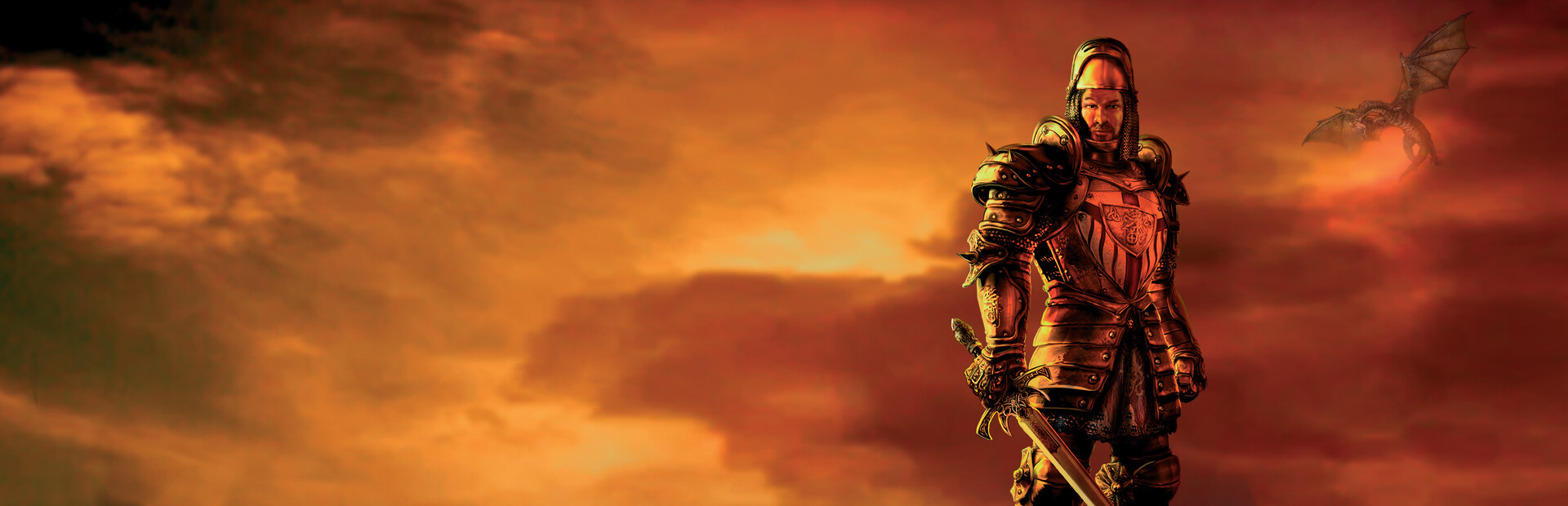
Gothic II: Gold Edition
Starts you off as a powerless nobody in Khorinis and refuses to apologize for it, stick with the friction and you get one of the most rewarding open-world RPGs PC has ever produced.
GamerScout Verdict
Best for patient RPG fans who want a world that pushes back, just expect a rough first two hours before it clicks.
Compare Prices(6 stores)
Every store in this table quotes us in euros, so the EUR figure is the price the seller actually set, not our arithmetic — which is why EUR is also the currency we rank in. We only list an offer here when the store gives us its price in euros, so nothing in this table is a number we invented.
Pick USD, PLN, GBP, CAD or AUD in the header and we convert from EUR at the European Central Bank reference rate — converted amounts are prefixed with ~. Your bank or the store may apply a different rate at checkout. We never hide offers based on where you are: everyone sees this whole table.
We may earn a commission when you buy games through links on this page — at no extra cost to you. It never affects our rankings or verdicts.
Price History
Screenshots & Media
About Gothic II: Gold Edition
I have a strong theory that Gothic II separates RPG fans into two camps the moment the first goblin puts you on the ground in Chapter 1: the ones who close the game and never return, and the ones who become lifelong evangelists. I belong firmly to the second group, and the Gold Edition, which bundles the base game with the Night of the Raven expansion, is the version everyone should play. The setup is classically thin on paper. You crawl out of a tower, stripped of all your former skills, and have to claw your way back up through the city of Khorinis and its surrounding wilderness. What makes it work is the world design. Khorinis has an almost documentary texture: NPCs keep schedules, hold grudges, and gatekeep training behind social relationships rather than a simple gold transaction. Want to get strong enough to wield a decent blade? You need to find the right master, earn their trust, and have the learning points to spend, a currency that never feels abundant. Skill trees cover melee combat with dodge-and-combo mechanics, bow and crossbow use, magic schools including fire and healing circles, and supporting crafts like lockpicking, potion brewing, and animal skinning. Joining one of the game's guilds, the militia, the mercenaries, the fire mages, or the paladins, meaningfully reshapes which trainers will even talk to you, which is the closest this game gets to branching narrative. Night of the Raven is where things get genuinely contentious. The expansion is fully integrated rather than bolted on, which means you start a fresh character with all of NotR's changes baked in from the first minute. The difficulty rebalance is aggressive: the scaling on learning points now makes raising attributes past certain thresholds punishingly expensive, herbs like King's Sorrel become genuinely rare rather than roadside scenery, and the strongest weapons require magical enhancement aids rather than raw stat investment alone. The new region of Jharkendar, an ancient, deserted city accessible via a Water Mage portal, adds a pirate faction, the villain Raven returning from the first game, and Beliar's Claw as a late-game artifact. Community opinion on Jharkendar is split. Veterans who find Khorinis itself a bit thin in early Chapter 2 appreciate the alternative content path. First-time players sometimes find the area interrupts momentum and lacks the personality of the main island. Both readings are defensible. The combat is the honest sticking point for modern players. It runs on a timing-based system of dodges, blocks, and combo strings that predates the Souls-from-behind-the-shoulder template. It is not pretty by today's standards, and the camera will fight you at least once per session near geometry. The writing sits a notch below the characterization depth of something like Planescape or the first Divinity, but the world's internal logic is strong enough that filler quests are the exception rather than the rule. Most tasks connect back to Khorinis's social fabric, and the game quietly rewards players who read every log and note rather than skipping to the map marker. For anyone coming in fresh: do not expect modern UI comforts, a quest compass, or enemy level indicators. The game communicates danger through environmental design and NPC warnings, and it means it. Completionist runs reliably push past 80 hours. The Steam user base sits overwhelmingly positive across tens of thousands of reviews, which for a twenty-year-old PC RPG says something real about long-term hold.

RPGs
Tags
System Requirements
Minimum
- OS
- Windows XP/2000/ME/98/Vista/7/8/10
- Memory
- 256 MB RAM
- DirectX
- Version 8.1
- Storage
- 5 GB available space
- Graphics
- 3D graphics card with 32 MB Ram
- Processor
- Intel Pentium III 700 MHz
- Sound Card
- DirectX compatible
Keep exploring
Community Discussion
Be the first to comment on Gothic II: Gold Edition.
Reviews & Ratings
Game Info
- Developer
- Piranha Bytes
- Publisher
- THQ Nordic
- Release Date
- Nov 29, 2005