
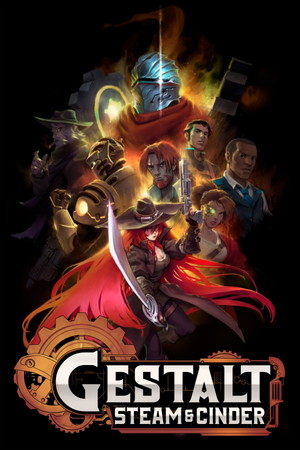
Compare Gestalt: Steam & Cinder prices across trusted key stores and find the best deal. Developed by Metamorphosis Games. Published by Fireshine Games. Released on 7/16/2024. Available on PC. Genres: Action, Adventure, Indie, RPG.

A handcrafted steampunk Metroidvania with genuinely gorgeous pixel art and snappy sword-and-gun combat, just don't go in expecting branching choices or a runtime that stretches past eight hours.

I went into Gestalt: Steam & Cinder carrying the particular skepticism of someone who has watched the Metroidvania genre balloon to the point where releasing one feels almost routine. What I did not expect was to spend most of that time genuinely impressed by how clean everything feels. Metamorphosis Games' debut title is not a genre reinvention, but it is a remarkably polished first outing set inside Canaan, a vast underground steam-city teetering on the edge of collapse. You play Aletheia, a Soldner, the world's term for a mercenary, who gets tangled up in a city-wide conspiracy involving clockwork golems, a faction of corrupt overseers called the Comitium, and a mysterious energy force she absorbs early in the story. The premise is genuinely interesting, and the worldbuilding carries real atmosphere: Canaan reads as equal parts grimy industrial city and rust-eaten ruin, which is a harder aesthetic balance to pull off than it looks. The combat is where the game earns its Very Positive rating most convincingly. Aletheia's core loop pairs sword melee combos with a pistol whose bullet meter refills as you slash enemies, so you are constantly cycling between pressing in and unloading at range. A dodge-roll on a cooldown keeps you honest in tougher encounters. As you spend experience points in the skill tree, you unlock extended combo strings, heavy blade attacks, charged pistol shots that stun enemies and trigger environmental switches, a double jump and air dash, and passive boosts to health and critical chance. The kinetic feel of movement, particularly once the air dash clicks in, is legitimately satisfying, and the level design is smart enough not to demand pixel-perfect execution. The complaint from multiple reviewers that the pistol eventually outscales the sword is fair: a fully upgraded ranged build can trivialize late-game bosses in ways that make the melee tree feel vestigial, and the difficulty curve has a frustrating habit of inverting itself, with early bosses putting up real resistance while the final encounters fold too easily. The narrative is the game's most divisive element, and I can see both sides. The story is told through portrait-based cutscenes that freeze the action and throw a lot of proper nouns at you very fast, Akhaians, the Comitium, the Gate to the Abyss, the Calamity. Some of those threads are genuinely compelling, especially the political machinations involving Canaan's officials, and the writing has punchy, confident dialogue. But Gestalt also leans on extended exposition in the early hours before you have enough context to care, and several story threads arrive at resolutions that feel abrupt given the roughly seven-to-eight-hour runtime. For a game that clearly has narrative ambitions, there is a mismatch between how much it wants to say and how much space it actually gives itself to say it. Side quests help fill in the world, but not enough to paper over the pacing gaps. What is beyond argument is the craft on display visually. The pixel art is exceptional, evoking Symphony of the Night-era Castlevania while adding more colour and environmental variety than most retro-styled Metroidvanias dare to attempt. Animations are smooth enough that movement feels expressive even in the quieter platforming sections. The map design, however, is a legitimate weak point, rooms are poorly delineated, and the map screen gives you very little information about internal paths even after you have explored an area fully. The accessory and gear system adds some build flexibility without overwhelming, but the skill tree's smaller stat-boost nodes (minor HP increases, fractional damage bumps) do nothing to generate excitement in the way that a well-structured ability unlock should. As a debut from a new studio, though, this is a stronger foundation than most first entries in the genre manage. Gestalt: Steam & Cinder suits players who prioritise feel and visual presentation over mechanical depth or replay variety. If you need a game to sustain forty hours of build experimentation, look elsewhere. If you want a tight, gorgeous, atmospheric Metroidvania that respects your time and actually gives its world a distinct identity, this is a very solid eight hours. Monika, Scout Team

Gestalt: Steam & Cinder

Gestalt: Steam & Cinder

Jul 16, 2024Metamorphosis GamesFireshine Games
GamerScout Says

A handcrafted steampunk Metroidvania with genuinely gorgeous pixel art and snappy sword-and-gun combat, just don't go in expecting branching choices or a runtime that stretches past eight hours.

PC
Best Price Available
€0.00
at N/A

GamerScout Verdict

Ideal for Metroidvania fans who want a polished, story-forward debut with great combat feel and exceptional art, but limited replayability.

Compare Prices(0 stores)

Loading prices...

We may earn a commission when you buy games through links on this page — at no extra cost to you. It never affects our rankings or verdicts.

Screenshots & Media

About Gestalt: Steam & Cinder

I went into Gestalt: Steam & Cinder carrying the particular skepticism of someone who has watched the Metroidvania genre balloon to the point where releasing one feels almost routine. What I did not expect was to spend most of that time genuinely impressed by how clean everything feels. Metamorphosis Games' debut title is not a genre reinvention, but it is a remarkably polished first outing set inside Canaan, a vast underground steam-city teetering on the edge of collapse. You play Aletheia, a Soldner, the world's term for a mercenary, who gets tangled up in a city-wide conspiracy involving clockwork golems, a faction of corrupt overseers called the Comitium, and a mysterious energy force she absorbs early in the story. The premise is genuinely interesting, and the worldbuilding carries real atmosphere: Canaan reads as equal parts grimy industrial city and rust-eaten ruin, which is a harder aesthetic balance to pull off than it looks. The combat is where the game earns its Very Positive rating most convincingly. Aletheia's core loop pairs sword melee combos with a pistol whose bullet meter refills as you slash enemies, so you are constantly cycling between pressing in and unloading at range. A dodge-roll on a cooldown keeps you honest in tougher encounters. As you spend experience points in the skill tree, you unlock extended combo strings, heavy blade attacks, charged pistol shots that stun enemies and trigger environmental switches, a double jump and air dash, and passive boosts to health and critical chance. The kinetic feel of movement, particularly once the air dash clicks in, is legitimately satisfying, and the level design is smart enough not to demand pixel-perfect execution. The complaint from multiple reviewers that the pistol eventually outscales the sword is fair: a fully upgraded ranged build can trivialize late-game bosses in ways that make the melee tree feel vestigial, and the difficulty curve has a frustrating habit of inverting itself, with early bosses putting up real resistance while the final encounters fold too easily. The narrative is the game's most divisive element, and I can see both sides. The story is told through portrait-based cutscenes that freeze the action and throw a lot of proper nouns at you very fast, Akhaians, the Comitium, the Gate to the Abyss, the Calamity. Some of those threads are genuinely compelling, especially the political machinations involving Canaan's officials, and the writing has punchy, confident dialogue. But Gestalt also leans on extended exposition in the early hours before you have enough context to care, and several story threads arrive at resolutions that feel abrupt given the roughly seven-to-eight-hour runtime. For a game that clearly has narrative ambitions, there is a mismatch between how much it wants to say and how much space it actually gives itself to say it. Side quests help fill in the world, but not enough to paper over the pacing gaps. What is beyond argument is the craft on display visually. The pixel art is exceptional, evoking Symphony of the Night-era Castlevania while adding more colour and environmental variety than most retro-styled Metroidvanias dare to attempt. Animations are smooth enough that movement feels expressive even in the quieter platforming sections. The map design, however, is a legitimate weak point, rooms are poorly delineated, and the map screen gives you very little information about internal paths even after you have explored an area fully. The accessory and gear system adds some build flexibility without overwhelming, but the skill tree's smaller stat-boost nodes (minor HP increases, fractional damage bumps) do nothing to generate excitement in the way that a well-structured ability unlock should. As a debut from a new studio, though, this is a stronger foundation than most first entries in the genre manage. Gestalt: Steam & Cinder suits players who prioritise feel and visual presentation over mechanical depth or replay variety. If you need a game to sustain forty hours of build experimentation, look elsewhere. If you want a tight, gorgeous, atmospheric Metroidvania that respects your time and actually gives its world a distinct identity, this is a very solid eight hours.

Monika
Monika · Scout Team

RPGs

Tags

auto-admittedSword-and-Gun CombatStory-Driven PlatformerAbility Unlock ProgressionSteampunk WorldConspiracy NarrativeSkill TreeGuided ExplorationBoss EncountersShort Runtime

System Requirements

Minimum

Processor
Intel Core2 Duo E8400 or AMD Phenom II x2 550
Memory
4 MB RAM
Graphics
GeForce GTX 260 or Radeon HD 4850
Storage
4 GB available space
Sound Card
N/A

Keep exploring

Community Discussion

Be the first to comment on Gestalt: Steam & Cinder.

Reviews & Ratings

Steam
80%(2,206)

Game Info

Developer
Metamorphosis Games
Publisher
Fireshine Games
Release Date
Jul 16, 2024

Features

Single-playerSteam AchievementsFull controller supportGamepad RecommendedDualShock Controller SupportDualSense Controller SupportSteam CloudFamily Sharing

Price Alert

Get notified when the price drops below your target!

Create Alert

No card? Pay another way

Top up your Steam Wallet or buy crypto with any card — instant delivery, no bank account needed.

Buy smarter: helpful guides

Looking for more? See games like Gestalt: Steam & Cinder →

Frequently asked questions about Gestalt: Steam & Cinder

How much does Gestalt: Steam & Cinder cost?

Gestalt: Steam & Cinder pricing changes often and varies by store, edition and region. The live price table on this page compares the cheapest in-stock offers from trusted key stores like Eneba and Kinguin, so you always see the current lowest price before you buy.

Where can I buy Gestalt: Steam & Cinder cheapest?

Compare Gestalt: Steam & Cinder prices across every verified store in the price table on this page. We list the cheapest in-stock key and store offers, updated regularly, so you always see the best current deal before you buy.

What platforms is Gestalt: Steam & Cinder available on?

Gestalt: Steam & Cinder is available on PC.

When was Gestalt: Steam & Cinder released?

Gestalt: Steam & Cinder was released on 16 July 2024.

Who developed Gestalt: Steam & Cinder?

Gestalt: Steam & Cinder was developed by Metamorphosis Games and published by Fireshine Games.