
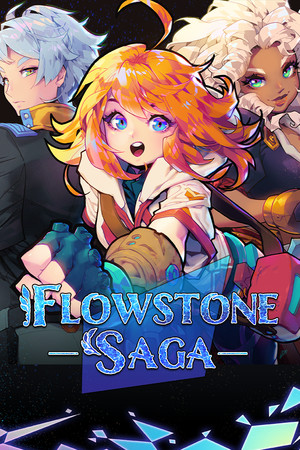
Flowstone Saga
If your idea of a good time is Tetris fused with a JRPG, Flowstone Saga delivers exactly that hook, but your tolerance for the block-drop loop will determine whether it feels like a genre revelation or a pleasant one-trick pony.
GamerScout Verdict
Solid pick for JRPG fans craving a genuinely novel combat system, just don't expect the writing to match the mechanical creativity.
Compare Prices(4 stores)
Every store in this table quotes us in euros, so the EUR figure is the price the seller actually set, not our arithmetic — which is why EUR is also the currency we rank in. We only list an offer here when the store gives us its price in euros, so nothing in this table is a number we invented.
Pick USD, PLN, GBP, CAD or AUD in the header and we convert from EUR at the European Central Bank reference rate — converted amounts are prefixed with ~. Your bank or the store may apply a different rate at checkout. We never hide offers based on where you are: everyone sees this whole table.
We may earn a commission when you buy games through links on this page — at no extra cost to you. It never affects our rankings or verdicts.
Price History
Screenshots & Media
About Flowstone Saga
I went into Flowstone Saga expecting a gimmick dressed up in 16-bit nostalgia and came out the other side genuinely surprised by how long the central conceit held my attention. The core premise is disarmingly weird: every single combat encounter in this JRPG is resolved by playing a modified falling-block puzzle. You play as Mirai, a young adventurer on the Ocean's End archipelago, and instead of selecting Attack from a menu, you're dropping tetromino-adjacent shapes onto a grid. Clearing lines deals damage, matching Link Crystals builds up Heat for amplified hits, clearing Orbs heals you or fires off special attacks, and you can throw Flask items directly onto the board for status effects. Enemies meanwhile charge action bars that tick up in real time, or, if you enable Hold Mode, only advance when you lock a piece. That Hold Mode distinction matters enormously. The real-time default works fine for players with quick hands, but switching to Hold Mode transforms the whole thing into something tactical and deliberate, where you can actually read the board, count enemy action bars, and plan two pieces ahead. Multiple reviewers singled it out as the recommended way to play, and I'd agree. The RPG scaffolding around that puzzle core is respectably complete. Mirai gains job classes, equips gear, builds up a passive perk tree, and carries a customizable Flask that applies item effects mid-battle. The elemental system, fire, ice, lightning powers that infuse the board, adds a layer of matchup thinking that keeps early encounters from feeling identical. Enemies are visible on the overworld rather than triggering random encounters, and crucially they don't respawn, which means grinding is simply off the table. That's a design choice I respect. It keeps the pacing brisk and forces you to engage with the actual content rather than loop the same screen for XP. The main story runs roughly ten hours; completionists chasing every dungeon puzzle, fishing minigame, and town-building side quest can stretch that to thirty. Where the game's seams show is in its writing and late-game combat feel. The narrative setup is genuinely interesting, Mirai's amnesia-adjacent origins, a pirate faction fleeing the militaristic Byzankar Republic, a village under siege, but the dialogue gets overwritten in the middle hours, and several reviewers noted that the character interactions feel slightly artificial rather than earned. The story does reward patience with some decent payoff around Mirai's past, but if you're coming in expecting Disco Elysium-level prose or BG3-tier character arcs, dial that back considerably. The writing does its job; it doesn't transcend it. On the combat side, enemy health pools inflate noticeably in the back half, and the puzzle loop, charming in hour two, can grind against you by hour eight when even trash enemies require extended board sessions. The developer has shipped post-launch patches that added BFF Perks for villager relationships and squashed bugs, which suggests active support, but the fundamental pacing issue is baked into the design. Visually, Flowstone Saga is genuinely pretty. The pixel art environments are rich and detailed, calling back to Squaresoft-era 16-bit work, and composer Andrew Luers' soundtrack absolutely earns its keep, battle themes, town music, all of it sits in that sweet spot between nostalgic and distinctive. Character portrait art in dialogue scenes is expressive and handsome even where the writing beneath it undersells the cast. The combat visuals can get visually noisy with effects stacking on the board, but performance stays solid throughout. Bottom line: this game is for you if you have genuine affection for both JRPGs and puzzle games and can accept a narrative that's serviceable rather than special. The puzzle-battle system is the real star, Hold Mode makes it accessible to non-Tetris veterans, and the whole package is short enough that it earns its ending before the loop fully exhausts itself. Genre completists and players who want something genuinely unlike their last twenty RPGs will find it worthwhile. Story-first players who measure a JRPG by its writing will be less satisfied.

RPGs
Tags
System Requirements
Minimum
- OS
- Windows 7 (SP1+) and Windows 10
- Memory
- 4 GB RAM
- Storage
- 1 GB available space
- Graphics
- DX10, D11, DX12 capable graphics
- Processor
- x64, x64 architecture with SSE2 support
Keep exploring
Community Discussion
Be the first to comment on Flowstone Saga.
Reviews & Ratings
No ratings available
Game Info
- Developer
- Impact Gameworks
- Publisher
- Impact Gameworks
- Release Date
- Sep 26, 2024