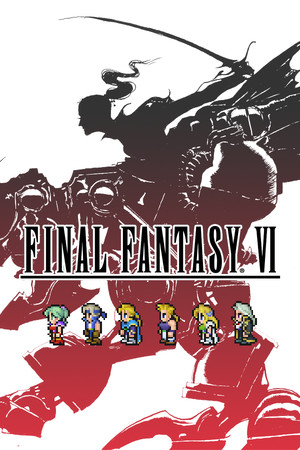
FINAL FANTASY VI
Widely called the secret best Final Fantasy, this Pixel Remaster is the cleanest way to find out if that reputation is earned, and it mostly is.
GamerScout Verdict
The cleanest PC entry point to one of the JRPG genre's most enduring stories, with enough quality-of-life options to satisfy newcomers and patient returning fans.
Compare Prices(5 stores)
Every store in this table quotes us in euros, so the EUR figure is the price the seller actually set, not our arithmetic — which is why EUR is also the currency we rank in. We only list an offer here when the store gives us its price in euros, so nothing in this table is a number we invented.
Pick USD, PLN, GBP, CAD or AUD in the header and we convert from EUR at the European Central Bank reference rate — converted amounts are prefixed with ~. Your bank or the store may apply a different rate at checkout. We never hide offers based on where you are: everyone sees this whole table.
We may earn a commission when you buy games through links on this page — at no extra cost to you. It never affects our rankings or verdicts.
Price History
Screenshots & Media
About FINAL FANTASY VI
I went into FINAL FANTASY VI Pixel Remaster with a checklist in my head: fourteen party members, a villain who actually wins at the midpoint, an opera scene, and thirty years of internet arguments to settle. The game delivers on almost all of it. What surprised me was how confidently the narrative earns its reputation even through a remaster that plays it safe rather than ambitious. The setup is steampunk-adjacent: a crumbling empire trying to weaponize magic in a world that mostly forgot it exists. That premise sounds familiar, but the execution is anything but. The story rotates its lead, splitting focus between Terra, a conscripted magic-user trying to reclaim her identity, and Celes, an imperial general who defects. Both women's arcs are the load-bearing columns of the whole narrative. The ensemble cast around them is enormous, and not every member gets equal development, but the game's second half opens into something close to a semi-open world where you choose which character reunions to pursue before the finale. That structure still feels bold. The final dungeon asks you to split your roster into three separate parties and navigate them simultaneously, which is the kind of mechanical storytelling I wish more JRPGs still tried. Combat runs on the Active Time Battle system: up to four characters per fight, with individual ATB gauges filling in real time while enemies are also charging their actions. Each character brings a unique command on top of the standard attack and item slots. Locke steals from enemies. Edgar fires off mechanical tools like the Bioblaster or Chainsaw. Gau mimics enemy Rage patterns. Strago learns Blue Magic from monsters. The variety is genuinely impressive for a game this old. Magic customization arrives through Espers, summoned beings that teach spells and grant stat bonuses tied to specific creatures at level-up, so there is real build thinking available if you want it. That said, honest warning: routine battles can blur together in the first half, and the Esper stat system rewards players who engage with it actively rather than just equipping whatever is available. Filler-combat haters will appreciate the Boost toggle, which lets you multiply EXP and AP gains or turn random encounters off entirely. The Pixel Remaster version adds a fully orchestrated score supervised by original composer Nobuo Uematsu, with vocals added to the opera scene in multiple languages. Opinion is split on the orchestration versus the original SNES chiptunes, and the game lets you switch between them freely, which is exactly the right call. Sprite art was revised by original series artist Kazuko Shibuya, and the water and spell effects received a visible upgrade. The world map now includes a detailed location log. What it does not include is the Soul Shrine bonus dungeon from the GBA and PS1 ports, which will matter to completionists who already know the game. The default font shipped with a lot of criticism at launch, though a subsequent PC update added a classic pixel typeface option that fixes the worst of it. For newcomers to FFVI, this is the most accessible and visually coherent version available on PC right now. For returning players, whether the modest visual delta justifies a revisit depends on how much you want that orchestrated soundtrack. The underlying game, the cast, Kefka's unhinged villainy, the World of Ruin's quiet devastation, holds up with almost no asterisks.

RPGs
Tags
System Requirements
Minimum
- OS
- Windows 8.1 64-bit / Windows 10 64-bit (ver.1909 and above)
- Memory
- 4 GB RAM
- Storage
- 1 GB available space
- Graphics
- AMD Radeon™ R7 Graphics / Intel® HD Graphics 3000
- Processor
- AMD A8-7600 / Intel® Core™ i3-2105
DLC & Add-ons for FINAL FANTASY VI1
Expansions, DLC packs and add-on content for this game. Click any item to see store offers.
Keep exploring
Community Discussion
Be the first to comment on FINAL FANTASY VI.
Reviews & Ratings
No ratings available
Game Info
- Developer
- Square Enix
- Publisher
- Square Enix
- Release Date
- Feb 23, 2022
