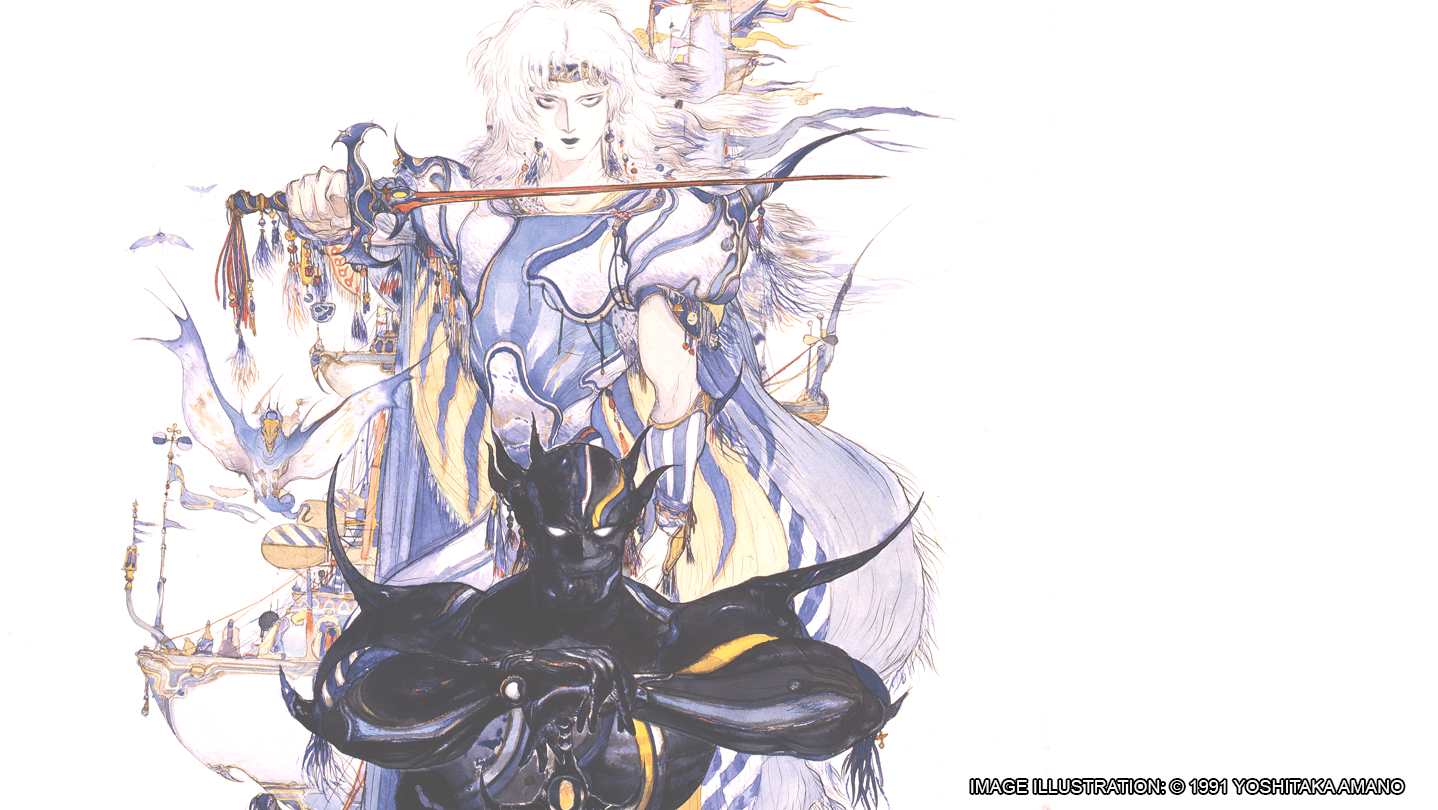
Final Fantasy IV
The 2D pixel remaster of a JRPG classic: Cecil's dark-knight-to-paladin arc, active-time battles, and a story that still lands punches decades on.
GamerScout Verdict
Best for JRPG fans who want a story-first classic with polished presentation and no patience for bloat.
Compare Prices(6 stores)
Every store in this table quotes us in euros, so the EUR figure is the price the seller actually set, not our arithmetic — which is why EUR is also the currency we rank in. We only list an offer here when the store gives us its price in euros, so nothing in this table is a number we invented.
Pick USD, PLN, GBP, CAD or AUD in the header and we convert from EUR at the European Central Bank reference rate — converted amounts are prefixed with ~. Your bank or the store may apply a different rate at checkout. We never hide offers based on where you are: everyone sees this whole table.
We may earn a commission when you buy games through links on this page — at no extra cost to you. It never affects our rankings or verdicts.
Price History
Screenshots & Media
About Final Fantasy IV
Final Fantasy IV is the pixel remaster of the 1991 SNES classic, rebuilt from the ground up with redrawn 2D sprites, rearranged music, and a cleaned-up translation. If you somehow missed this one, it follows Cecil Harvey, a dark knight who serves an increasingly murderous king, decides he has a conscience, and then spends roughly 20-25 hours atoning for it in spectacular fashion. For 1991, the plot was genuinely ambitious. Replayed today, it still holds up better than most JRPGs three times its length. The Active Time Battle system is the engine everything runs on. Characters act on individual speed timers, so the game never fully lets you breathe, but it is not so fast that it becomes a reflex test rather than a strategy puzzle. Cecil eventually promotes from dark knight to paladin, trading self-damage attacks for white magic, and that mechanical shift is one of the tidiest pieces of storytelling-through-systems in the franchise. The rest of the party rotates frequently, which is either a feature or a bug depending on how attached you get to characters before the story boots them. Rosa the white mage, Rydia the summoner, Kain the dragoon with the perpetually questionable loyalty, Edge the ninja throwing shurikens and bluster in equal measure - the cast is large but everyone has a moment that earns their slot. The remaster specifically adds auto-battle, a run toggle, and a bestiary, all of which are quality-of-life wins. The encounter rate in the original was punishing by modern standards, and while the remaster does not gut it, the run button alone saves hours of tedium. The font and UI got a refresh too, and this time the script actually reflects what the Japanese original said, which matters for a few plot beats that were softened or scrambled in older Western releases. The orchestrated soundtrack is optional - you can switch back to the original chiptune versions in the settings, and honestly both are worth hearing. What does not work as well: the back half of the game leans hard on a parade of dungeons stacked on top of each other, and the pacing drags before the finale. The party also has limited build customisation compared to later entries. Equipment and level scaling do the heavy lifting, and if you come from Final Fantasy VI or V expecting job systems or deep gear theorycrafting, the mechanical ceiling here is lower. This is a story-forward game with functional combat, not a build-puzzle game with a story attached. The challenge mode added in the remaster helps if you want the combat to bite back, but veteran JRPG players will still find it gentle on default settings. For anyone who wants to understand why the series became what it became, or who simply likes a clean, emotionally coherent JRPG with a beginning, middle, and end that all connect, this remaster is a solid way to do it. The Steam version runs without fuss, the graphical upgrade is tasteful rather than garish, and 91% positive reviews from over two thousand players suggests the goodwill toward this one has not faded.

RPGs
Tags
System Requirements
Minimum
- Processor
- Pentium 4 2.4 GHz
- Memory
- 2 GB RAM
- DirectX
- Version 10 Hard Drive: 750 MB available space
Recommended
- Processor
- AMD A8-7600 / Intel® Core™ i3-3225
- Memory
- 4 GB RAM
- Graphics
- AMD Radeon™ R7 Graphics / Intel® HD Graphics 4000
- DirectX
- Vers…
DLC & Add-ons for Final Fantasy IV1
Expansions, DLC packs and add-on content for this game. Click any item to see store offers.
Keep exploring
Community Discussion
Be the first to comment on Final Fantasy IV.
Reviews & Ratings
Game Info
- Developer
- Square Enix
- Publisher
- Square Enix
- Release Date
- Sep 8, 2021