
Fellowship
Skip the leveling slog, skip the fetch quests, skip the open-world padding - Fellowship hands you a dungeon key and asks if you brought a competent tank.
GamerScout Verdict
Built for dungeon-obsessed MMO veterans who have a reliable group - solo queue players and narrative-seekers will tap out early.
Compare Prices(6 stores)
Every store in this table quotes us in euros, so the EUR figure is the price the seller actually set, not our arithmetic — which is why EUR is also the currency we rank in. We only list an offer here when the store gives us its price in euros, so nothing in this table is a number we invented.
Pick USD, PLN, GBP, CAD or AUD in the header and we convert from EUR at the European Central Bank reference rate — converted amounts are prefixed with ~. Your bank or the store may apply a different rate at checkout. We never hide offers based on where you are: everyone sees this whole table.
We may earn a commission when you buy games through links on this page — at no extra cost to you. It never affects our rankings or verdicts.
Price History
Screenshots & Media
About Fellowship
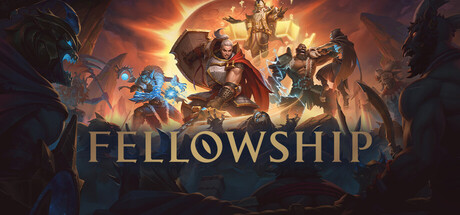
I've spent enough hours in WoW's Mythic+ system to recognise exactly what Chief Rebel is chasing with Fellowship, and I'll be upfront: the ambition here is real. The studio, staffed by veterans of games like World of Warcraft, Diablo, Helldivers 2, and Battlefield, built what they call a "Multiplayer Online Dungeon Adventure" - a MODA, not an MMO - and the thesis is refreshingly disciplined: cut every part of the MMO that isn't a dungeon, and ship the part that actually is. No overworld questing, no kill-ten-rats, no thirty-hour prologue before you see the good stuff. From session one you are queuing into four-player runs, clearing mobs toward a kill-count percentage threshold, and facing bosses that demand real coordination between your tank, healer, and two DPS slots. The hero roster is where the mechanical texture lives. Rather than freeform character creation, Fellowship gives you a curated bench of pre-built heroes, each locked to one Trinity role but distinctly different in execution. Helena the tank generates Toughness through basic attacks and cooldown cycling. Meiko, the other tank, plays a combo-and-finisher style closer to a fighting game character. On the healer side, Sylvie leans on pet Flutterflies and healing-over-time, while Aeona - added in Season 2 - manipulates time itself, delaying incoming damage rather than reacting to it. DPS options range from a fire-DoT specialist feeding Cinders into Burning Embers before detonating, to a melee assassin building Combo Points for Queen's Fang finishers. Each kit runs a builder-spender engine under the hood, and learning to ride that rhythm during a chaotic trash pull is genuinely satisfying. The talent tree unlocks gradually across difficulty tiers, free-respec between runs removes punishment for experimentation, and swapping heroes entirely costs nothing except the progression tied to each individual hero. Progression climbs through Contender, Adept, Champion, and Paragon Leagues, with each bracket introducing new mob abilities, dungeon curses, and tighter timer pressure. Shorter Adventure runs clock in at around twelve minutes; three-boss Capstone Dungeons stretch to nearly thirty and gate your access to the next League tier. Beat Eternal after Paragon and the difficulty ceiling disappears entirely into leaderboard-climbing territory. Gear drops tied to dungeon difficulty follow a colour rarity system - Uncommon through to Champion - with secondary stats like Haste, Crit, Expertise, and Spirit letting you lean into each hero's unique proc mechanics. It is, structurally, a competent progression spine. The honest caveat is that Fellowship's greatest strength and most significant weakness are the same thing: it is nothing but dungeons. Players craving narrative payoff, worldbuilding they can sink into between runs, or a hub town that feels like a living place will leave disappointed. The lore implied by the dungeon environments - ancient demon lords impaled by colossal blades, deathless star-worshippers in shifting sands - is genuinely evocative, but it stays surface-level decoration rather than story you interact with. Writing depth is thin, secondary characters have little personality, and mission variety does thin out after a few hours of repeated runs. The matchmaking experience also splits sharply depending on your group: friends coordinating on voice is a tight co-op strategy game; public matchmaking inherits all the classic sins of MMO pug culture, including early rage-quits after a single wipe and no backfill to replace leavers. Season 2 added a leaver penalty system and the Woodland Glade onboarding zone, which helps new players learn hero kits without the pressure of a live dungeon - both meaningful course corrections that show Chief Rebel is actually listening. Whether the content cadence can sustain a live-service playerbase long-term is the question Early Access still has to answer.

RPGs
Tags
System Requirements
Minimum
- OS
- Windows 10 64-bit
- Memory
- 16 GB RAM
- Network
- Broadband Internet connection
- Storage
- 20 GB available space
- Graphics
- NVIDIA GeForce GTX 1650 or AMD Radeon RX 570
- Processor
- Intel Core i3-10100 or AMD Ryzen 5 1600
Recommended
- OS
- Windows 10 64-bit
- Memory
- 16 GB RAM
- Network
- Broadband Internet connection
- Storage
- 20 GB available space
- Graphics
- NVIDIA GeForce GTX 2060 or AMD Radeon RX 6600XT
- Processor
- Intel Core i5-11600K or AMD Ryzen 7 3700X
DLC & Add-ons for Fellowship6
Expansions, DLC packs and add-on content for this game. Click any item to see store offers.
Keep exploring
Community Discussion
Be the first to comment on Fellowship.
Reviews & Ratings
No ratings available
Game Info
- Developer
- Chief Rebel
- Publisher
- Coffee Stain Publishing
- Release Date
- Oct 16, 2025

