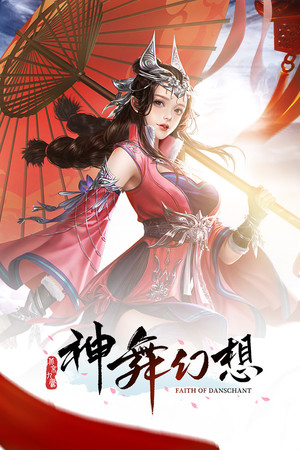
神舞幻想 Faith of Danschant
A turn-based RPG rooted in Chinese mythology with combat ideas that genuinely spark, dragged down by a story that keeps tripping over its own emotional ambitions and a camera that fights you harder than the bosses.
GamerScout Verdict
Best for fans of Chinese mythology RPGs who read Mandarin or can source the fan translation and forgive dated UX.
Compare Prices(3 stores)
Every store in this table quotes us in euros, so the EUR figure is the price the seller actually set, not our arithmetic — which is why EUR is also the currency we rank in. We only list an offer here when the store gives us its price in euros, so nothing in this table is a number we invented.
Pick USD, PLN, GBP, CAD or AUD in the header and we convert from EUR at the European Central Bank reference rate — converted amounts are prefixed with ~. Your bank or the store may apply a different rate at checkout. We never hide offers based on where you are: everyone sees this whole table.
We may earn a commission when you buy games through links on this page — at no extra cost to you. It never affects our rankings or verdicts.
Price History
Screenshots & Media
About 神舞幻想 Faith of Danschant
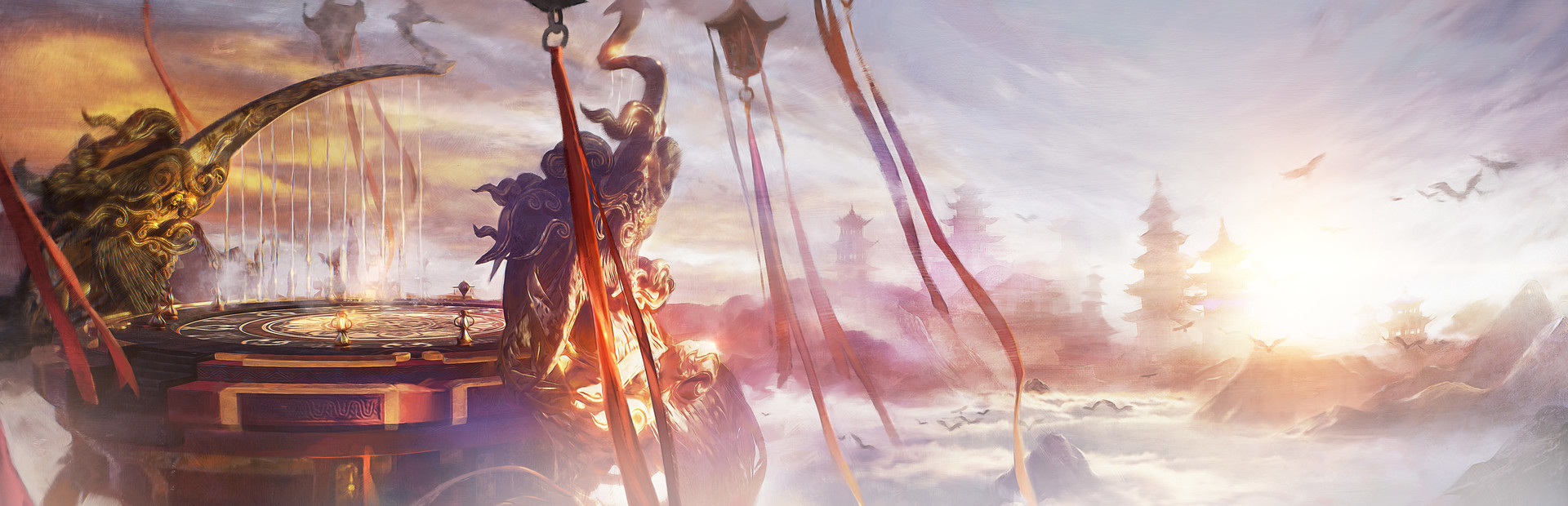
I went into Faith of Danschant hoping for the kind of mythologically dense, character-driven RPG that the Chinese game development scene can absolutely deliver when it commits. The premise hooked me: protagonist Feixing is essentially catnip for minor gods, and objects shatter around him not from a curse but because lower deities are irresistibly drawn to his presence. That is a legitimately fascinating setup, and for a brief stretch the game wears it well. Then it discards the idea almost as fast as it introduced it and pivots to a relentless cycle of trauma beats that never quite earns the tears it keeps demanding. The turn-based combat is where the game actually holds its own. The battle system layers a weakness connection mechanic, a spirit pledge system, a friends assistance mode, and positional movement on top of the standard RPG skill rotation. You can field three main party members and pull in a fourth as a support, including story NPCs, which adds situational texture to harder fights. There is also a clever tension mechanic tied to certain boss phases: the screen telegraphs a devastating incoming technique, and you have a fixed number of turns to either deal enough damage or reposition out of range. In the early and mid game, that creates genuinely tense encounters. The problem is that the late game inflates enemy health pools to the point of tedium, and several bosses can regenerate significant chunks of their life bar mid-fight, which turns those tense countdowns into exhausting attrition wars rather than satisfying puzzles. Outside of combat, the experience gets rougher. Camera control requires holding the mouse button to rotate in third-person view, which becomes genuinely tiresome over hours of play. Movement is stiff enough that getting stuck on geometry or wrestling with item pickup angles is a recurring annoyance, not an occasional one. Navigation leans on a 3D glyph in the world space for main quest direction and provides no minimap or waypoint system for side content, so tracking down optional quests means talking to every NPC in a zone and hoping for the best. Players with a strong tolerance for that old-school approach will be more forgiving than I was. The aesthetic case for the game is real. Built on Unreal Engine 4 with motion capture and a score that draws on traditional Chinese instrumentation, it still holds up visually in quiet moments. The art direction across environments and character designs leans into Chinese mythological iconography with evident care. Fans of Sword and Fairy or Xuan Yuan Sword will recognise the creative lineage immediately. The English localization is community-produced via a fan mod rather than official, so Western players wanting to follow the story need to track that down separately, which is a meaningful barrier. If you read Chinese or are willing to hunt down the fan translation, and you can tolerate mid-2000s console RPG ergonomics in a 2017 wrapper, there is something here worth experiencing in the first two-thirds. The combat system has more ideas than it gets credit for, and the mythological world has genuine atmosphere. Just know that the story loses its nerve when it should be swinging for the fences, and the final stretch is a slog by almost any measure.

RPGs
Tags
System Requirements
Minimum
- OS
- Windows 7/8/10 (64-bit)
- Memory
- 8 GB RAM
- DirectX
- Version 10
- Graphics
- NVIDIA GeForce GTX 750 Ti
- Processor
- Intel Core i5 4590 @ 3.30GHz (4 Cores)
Recommended
- OS
- Windows 7/8/10 (64-bit)
- Memory
- 16 GB RAM
- DirectX
- Version 10
- Graphics
- NVIDIA GeForce GTX 970
- Processor
- Intel Core i7 6700 @ 3.40GHz (4 Cores)
Keep exploring
Community Discussion
Be the first to comment on 神舞幻想 Faith of Danschant.
Reviews & Ratings
No ratings available
Game Info
- Developer
- 北京九鳳信息科技有限公司
- Publisher
- 北京网元圣唐娱乐科技有限公司
- Release Date
- Dec 21, 2017