DUNGEON ENCOUNTERS
Pure ATB mechanics, 99 floors, zero narrative hand-holding: Hiroyuki Ito strips the JRPG genre to its skeleton and dares you to find the story yourself.
GamerScout Verdict
Built for JRPG mechanics purists who can tolerate near-zero narrative in exchange for one of the sharpest ATB systems ever shipped.
Compare Prices(6 stores)
Every store in this table quotes us in euros, so the EUR figure is the price the seller actually set, not our arithmetic — which is why EUR is also the currency we rank in. We only list an offer here when the store gives us its price in euros, so nothing in this table is a number we invented.
Pick USD, PLN, GBP, CAD or AUD in the header and we convert from EUR at the European Central Bank reference rate — converted amounts are prefixed with ~. Your bank or the store may apply a different rate at checkout. We never hide offers based on where you are: everyone sees this whole table.
We may earn a commission when you buy games through links on this page — at no extra cost to you. It never affects our rankings or verdicts.
Price History
Screenshots & Media
About DUNGEON ENCOUNTERS
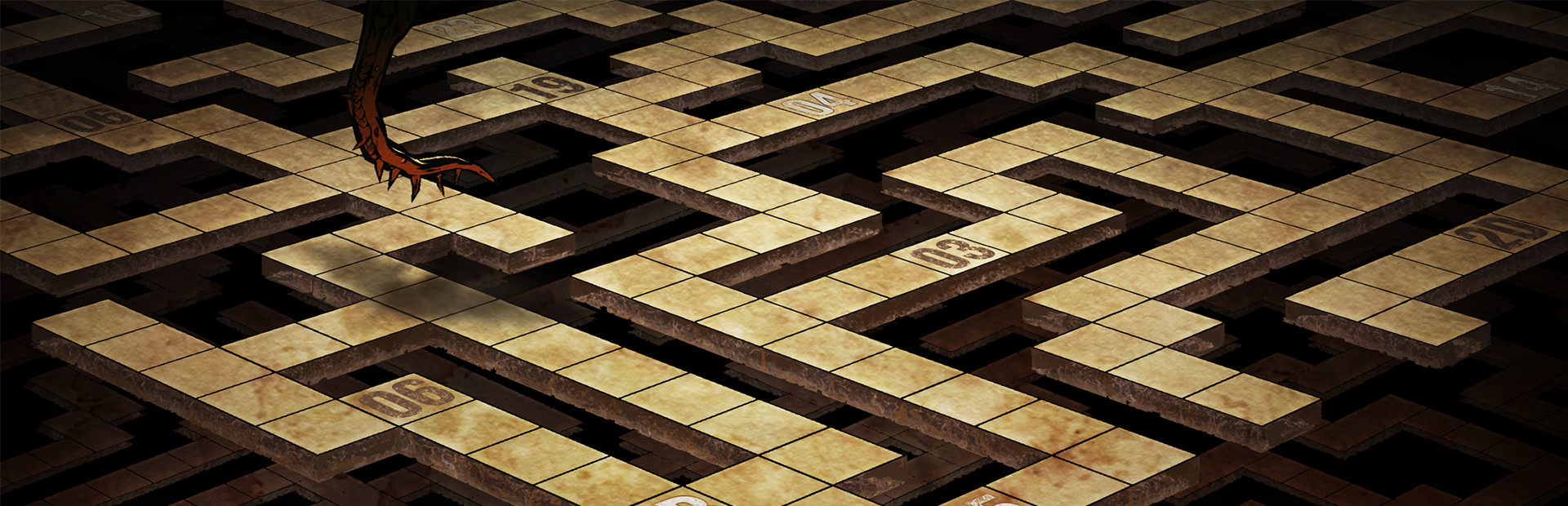
I'll level with you: when I first saw the screenshots for this one, I assumed it was a prototype that had accidentally shipped. A grid of hexadecimal numbers on beige parchment. Half-drawn character portraits. No opening movie, no sweeping orchestral intro, no dialogue. As someone who has spent weeks inside Disco Elysium's psyche and BG3's sprawling act structures, my instinct was to bounce hard. I did not bounce. I lost a weekend. Here is what Dungeon Encounters actually is: a 100-floor grid-based dungeon crawler directed by Hiroyuki Ito, the Final Fantasy veteran who also invented the Active Time Battle system, with Nobuo Uematsu overseeing the soundtrack. The ATB system is not window dressing here. It is the entire point. Battles strip every Final Fantasy comfort blanket away and leave you with the raw engine: speed stats determine turn order, each party member equips two attack slots from swords, bows, spells, or gadgets, and enemy defenses work as hard numerical soaks where Physical Defense and Magical Defense must be reduced to zero before you can touch HP at all. Flying enemies shrug off melee entirely, forcing you to pack ranged or magical options. A stray pitfall can scatter your party across three different floors. Status ailments like petrification demand precise routing to specific cure tiles. Early floors feel breezy. By the mid-twenties, a wrong square can wipe a party you spent hours equipping. The dungeon itself is a pre-mapped series of floors, each tile coded by a hexadecimal value that you learn to read like a language. White numbers hold shops, healing outposts, ability unlock tiles, and the recruitable adventurers scattered deep in the labyrinth waiting to be rescued. Black numbers are enemy encounters that get logged in a compendium the first time you fight them, turning knowledge into power on every subsequent run. Ability Points, earned by literally stepping on every tile on a floor, gate your access to healing abilities and buffs, which means map completionism is not optional padding but load-bearing game design. The puzzles layered on top, treasure map riddles and coordinate math problems, add a tabletop RPG quality that had me reaching for paper and pencil more than once. The honest criticism is this: if choices mattering to you means branching dialogue, companion arcs, or a reason to care about the world outside of pure survival math, Dungeon Encounters offers almost none of that. Character lore is a single paragraph buried in a status screen. The story fits on one opening screen and that is it. The battle music, guitar arrangements of public-domain classical pieces, jars against the game's otherwise meditative atmosphere, and thankfully you can turn it off and keep the ambient sound. Steam reviews sit at around 70 percent positive, and the PC version drew more mixed critical notices than the console versions, partly because the game's note-taking, deliberate pacing suits a handheld session better than a desk setup. Some players hit a wall where unwinnable encounters feel punishing rather than instructive, and that frustration is real and fair. What Dungeon Encounters delivers, for the right player, is a rare thing: a mechanics-first RPG with almost no filler, made by people who understood those mechanics deeply enough to build something coherent with almost nothing else. The character roster includes a sword-wielding dog and a Totoro-lookalike. I am not elaborating further. Completionists are reporting 40 to 50 hours of content. Bring a notebook.

RPGs
Tags
System Requirements
Minimum
- OS
- Windows® 10 64-bit
- Memory
- 4 GB RAM
- DirectX
- Version 10
- Storage
- 2500 MB available space
- Graphics
- AMD Radeon™ R7 240 / NVIDIA® GeForce® GT 730
- Processor
- AMD A8-7600 / Intel® Core™ i3-3210
Recommended
- OS
- Windows® 10 64-bit
- Memory
- 4 GB RAM
- DirectX
- Version 10
- Storage
- 2500 MB available space
- Graphics
- AMD Radeon™ R7 260X / NVIDIA® GeForce® GTX 750
- Processor
- AMD A8-7600 / Intel® Core™ i3-3210
Keep exploring
Community Discussion
Be the first to comment on DUNGEON ENCOUNTERS.
Reviews & Ratings
No ratings available
Game Info
- Developer
- Square Enix
- Publisher
- Square Enix
- Release Date
- Oct 14, 2021