DRAGON QUEST MONSTERS: The Dark Prince
Playing an antihero who builds a monster army because his father cursed him out of a sword fight is a better premise than it sounds, and the synthesis system behind it will eat your evenings whole.
GamerScout Verdict
Best for monster-building obsessives who can stomach a grindy mid-game in exchange for one of the genre's deepest fusion systems.
Compare Prices(7 stores)
Every store in this table quotes us in euros, so the EUR figure is the price the seller actually set, not our arithmetic — which is why EUR is also the currency we rank in. We only list an offer here when the store gives us its price in euros, so nothing in this table is a number we invented.
Pick USD, PLN, GBP, CAD or AUD in the header and we convert from EUR at the European Central Bank reference rate — converted amounts are prefixed with ~. Your bank or the store may apply a different rate at checkout. We never hide offers based on where you are: everyone sees this whole table.
We may earn a commission when you buy games through links on this page — at no extra cost to you. It never affects our rankings or verdicts.
Price History
Screenshots & Media
About DRAGON QUEST MONSTERS: The Dark Prince
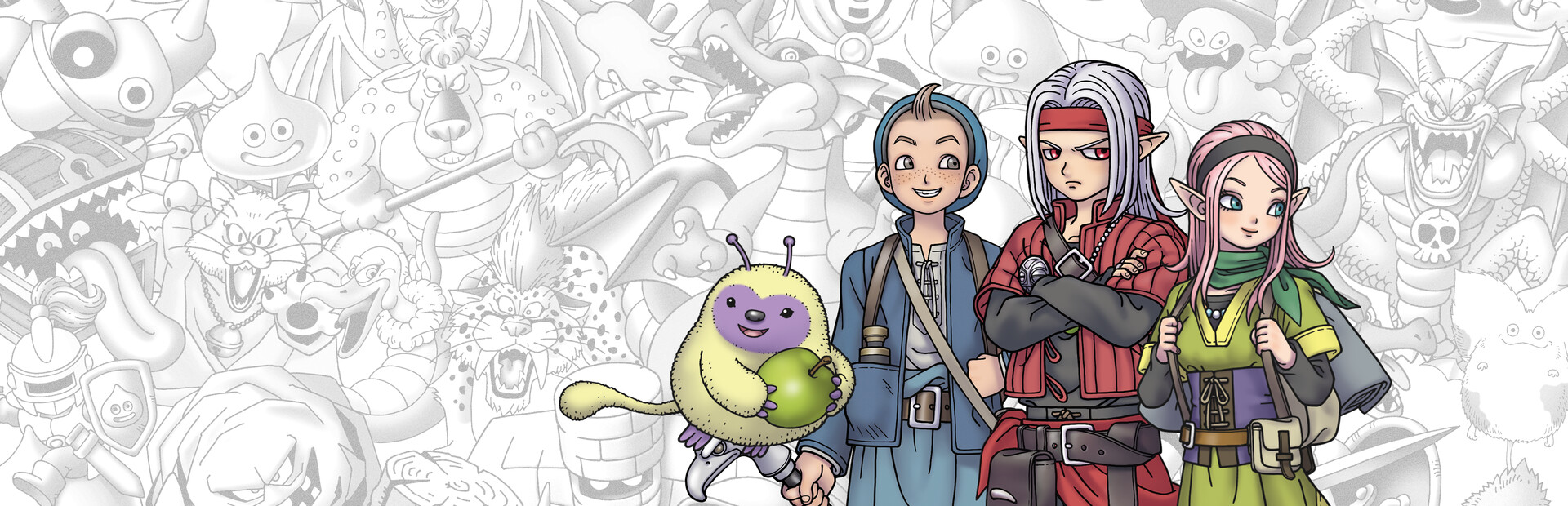
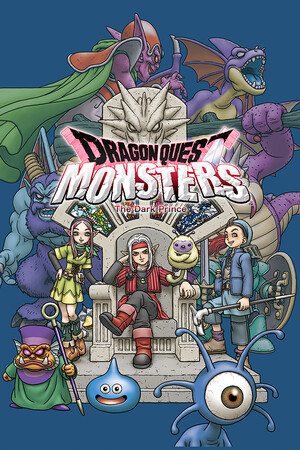
I went in half-expecting a Pokemon reskin dressed up in Toriyama slime costumes. What I got instead was something with considerably more mechanical depth, a surprisingly sympathetic villain protagonist, and a grinding problem serious enough to test my patience by the mid-game. Dragon Quest Monsters: The Dark Prince follows Psaro, a half-human cursed by his monstrous father Randolfo never to harm anything with monster blood. That premise, lifted from the world of Dragon Quest IV, forces Psaro to become a Monster Wrangler - recruiting creatures through a Scouting system, then fusing them through a multi-layered Synthesis chain to build the strongest team in Nadiria. The story itself is a prequel to DQ IV, and while it handles Psaro's arc with more nuance than you might expect from a spin-off, it stumbles when it tries to awkwardly recapitulate events from the parent game rather than chart its own course. The real hook is Synthesis, and it is genuinely more complex than anything you will find in a mainline monster-collecting rival. Two parent monsters combine at Monty's altar in Rosehill Tower, both disappearing permanently to produce a single offspring. That offspring inherits up to three Talents - effectively skill trees - carrying forward half the Skill Points the parents had accumulated. If you plan two generations ahead, running what the community calls four-monster synthesis chains, you can produce high-Rank S and X creatures that would otherwise be locked behind absurd scouting luck. A "shiny" version of any synthesized monster, with one stat ceiling raised by 100 points, adds a soft RNG layer for players who want to save-scum the altar. It is the kind of system that rewards players who think in spreadsheet columns, and quietly punishes everyone else with a wall of under-leveled monsters around hour 30. Combat is turn-based, and here is where the game shows its portable DNA most plainly. You cannot target specific enemies or issue individual move commands to your squad; instead you set behavioral tactics - offensive, defensive, focused healing - and let the AI interpret them. The AI is capable enough when your party composition is sound, but it makes boneheaded calls with alarming regularity when your tactics setup does not anticipate a new enemy type. The Colosseum and Maulosseum tournament structure, where ranked brackets gate story progress, give the combat real tension at specific moments, but the open-world exploration between those spikes leans heavily on repetitive field encounters that will feel like filler to anyone coming from a narrative-first RPG background. Nadiria itself is a semi-open world split into distinct biomes across five regions, each divided into three Echelons. The seasonal mechanic - where weather and time of year change the traversable map, freeze rivers, unlock hidden caves, and rotate which monsters appear - is genuinely clever and stops exploration from going stale as fast as it otherwise would. The PC port, which launched September 2024, resolves the significant performance problems that plagued the original Switch release; the game runs cleanly at uncapped frame rates and supports 4K output, making it far more technically stable than its handheld predecessor. All previously released DLC content is included in the PC version at no extra cost, which meaningfully improves value. One notable subtraction: competitive multiplayer has been removed entirely, reportedly due to rampant cheating and a badly imbalanced meta on Switch. Character-wise, the elf Rose and reluctant human companion Toilen Trubble carry more emotional weight than Psaro's revenge plot alone. Rose in particular avoids the passive-support trap that DQ companions sometimes fall into. The story is not going to haunt you the way Disco Elysium's prose does, and anyone hoping for Dragon Quest IV's layered chapter structure will find this a flatter, more linear ride. But as a monster-collecting RPG with one of the deepest fusion systems in its genre, over 500 recruitable monsters, and 40-plus hours of main story content, it delivers substantially more than a competent genre entry. Bring a tolerance for the grind, or be prepared to have the grind make the decisions for you.

RPGs
Tags
System Requirements
Minimum
- OS
- Windows® 10 64-bit / Windows® 11
- Memory
- 8 GB RAM
- DirectX
- Version 11
- Storage
- 10 GB available space
- Graphics
- AMD Radeon™ RX 460 / NVIDIA® GeForce® GTX 750
- Processor
- AMD A8-7600 / Intel® Core™ i3-3220
Recommended
- OS
- Windows® 10 64-bit / Windows® 11
- Memory
- 8 GB RAM
- DirectX
- Version 11
- Storage
- 10 GB available space
- Graphics
- AMD Radeon™ RX 560 / NVIDIA® GeForce® GTX 950
- Processor
- AMD Ryzen™ 3 1200 / Intel® Core™ i3-7100
Keep exploring
Community Discussion
Be the first to comment on DRAGON QUEST MONSTERS: The Dark Prince.
Reviews & Ratings
No ratings available
Game Info
- Developer
- Square Enix
- Publisher
- Square Enix
- Release Date
- Sep 11, 2024