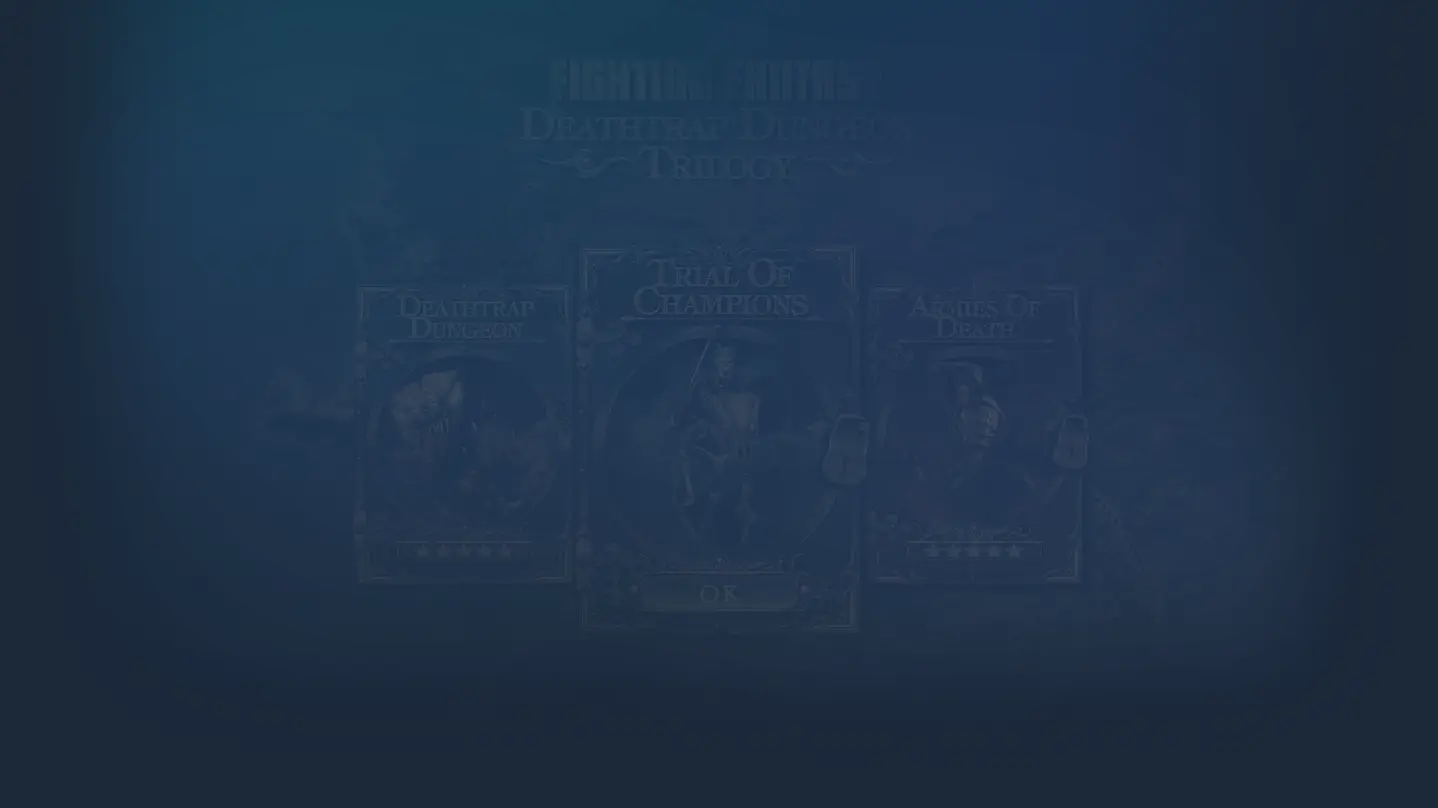
Deathtrap Dungeon Trilogy
A digital adaptation of Ian Livingstone's classic Fighting Fantasy gamebooks. Old-school dungeon-crawling with dice rolls, deadly traps, and zero hand-holding.
GamerScout Verdict
Worth it for Fighting Fantasy nostalgics and gamebook fans; too thin mechanically and narratively for players raised on modern CRPGs.
Compare Prices(5 stores)
Every store in this table quotes us in euros, so the EUR figure is the price the seller actually set, not our arithmetic — which is why EUR is also the currency we rank in. We only list an offer here when the store gives us its price in euros, so nothing in this table is a number we invented.
Pick USD, PLN, GBP, CAD or AUD in the header and we convert from EUR at the European Central Bank reference rate — converted amounts are prefixed with ~. Your bank or the store may apply a different rate at checkout. We never hide offers based on where you are: everyone sees this whole table.
We may earn a commission when you buy games through links on this page — at no extra cost to you. It never affects our rankings or verdicts.
Price History
Screenshots & Media
About Deathtrap Dungeon Trilogy
Deathtrap Dungeon Trilogy is a gamebook adaptation - meaning it is closer to an interactive novel with dice-based combat than a traditional RPG. Nomad Games has taken Ian Livingstone's iconic Fighting Fantasy entries (Deathtrap Dungeon, Trial of Champions, and Armies of Death) and converted them into a digital format where you read passages, make branching choices, and resolve combat through stat checks and random rolls. If you grew up dog-earing these books in the 1980s, the structure will feel immediately familiar. If you did not, prepare for a steep attitude adjustment: this is not a modern narrative RPG with polished UI and quest markers. It is faithful to the source material in ways that will delight some players and frustrate everyone else. The core loop across all three books is simple - you play as a novice adventurer working up through increasingly brutal gauntlets. Combat is abstracted through Skill, Stamina, and Luck stats, rolled at the start of each run. The dungeon is packed with traps, monsters, and branching passages, and a wrong turn can end your run in seconds. There is genuine tension in resource management: potions are scarce, your Stamina drains fast, and Luck is a depletable stat you spend on critical moments. Fans of old-school design who respect the idea that the dungeon wants to kill you will find that satisfying. Players expecting meaningful character builds or deep class variety will come away disappointed. Your "build" is essentially your starting dice roll. Narrative depth is also limited by the source format. These are gamebooks, not CRPGs. The writing is punchy and atmospheric in the Livingstone tradition - short, vivid passages that do a lot with a little - but do not expect Disco Elysium-style reactivity or choices that ripple through the story in complex ways. Most branching is binary and often lethal. Re-playability comes from trying different paths and surviving further into the dungeon rather than from meaningful narrative variation. For the first book especially, the dungeon layout rewards learning and memorization, which gives repeat runs a puzzle-box quality that I genuinely appreciated. The later entries in the trilogy are less tightly designed. The presentation is functional but unremarkable. Illustrated artwork pulls from the classic book aesthetic, which is charming, but the digital interface adds little beyond convenience. The Mixed Steam review score (64% positive from a small sample) tells the story honestly: this is a niche product built for a specific audience. Bugs have been reported by some players, and Nomad Games is a small studio with limited post-launch support. If you are expecting polish comparable to a major RPG release, look elsewhere. Who is this actually for? Gamebook enthusiasts, Fighting Fantasy collectors, and players who want to experience Livingstone's dungeon designs without hunting down physical copies. It is also a reasonable entry point for players curious about the Fighting Fantasy format before committing to the physical books. For everyone else, especially RPG players who want branching narratives with consequence and build depth that holds up past hour 40, this will feel thin. The trilogy covers a lot of dungeon floors but not a lot of ground in terms of mechanical evolution.

RPGs
Tags
System Requirements
Minimum
- Processor
- 1.6 GHz
- Memory
- 1 GB RAM
- Graphics
- 1024x600 resolution
- DirectX
- Version 9.0
- Storage
- 500 MB available space
Keep exploring
Community Discussion
Be the first to comment on Deathtrap Dungeon Trilogy.
Reviews & Ratings
Game Info
- Developer
- Nomad Games
- Publisher
- Nomad Games
- Release Date
- Jul 11, 2018