
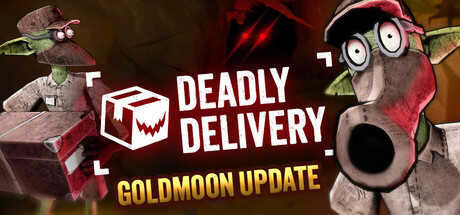
Deadly Delivery
Lethal Company's DNA, rebuilt from scratch for VR headsets - if your crew owns headsets and proximity voice chat hasn't wrecked a friendship yet, this goblin gig will fix that.
GamerScout Verdict
Essential for groups with headsets and a dark sense of humor; nearly pointless if you're flying solo or headset-friendless.
Compare Prices(3 stores)
Every store in this table quotes us in euros, so the EUR figure is the price the seller actually set, not our arithmetic — which is why EUR is also the currency we rank in. We only list an offer here when the store gives us its price in euros, so nothing in this table is a number we invented.
Pick USD, PLN, GBP, CAD or AUD in the header and we convert from EUR at the European Central Bank reference rate — converted amounts are prefixed with ~. Your bank or the store may apply a different rate at checkout. We never hide offers based on where you are: everyone sees this whole table.
We may earn a commission when you buy games through links on this page — at no extra cost to you. It never affects our rankings or verdicts.
Price History
Screenshots & Media
About Deadly Delivery
I'm usually the last person to hype up a co-op extraction loop dressed up as something new. I've played enough Lethal Company clones to spot the seams instantly. Deadly Delivery had me genuinely anxious ten minutes in, and I'm still thinking about the moment a doppelganger started calling out my squadmate's name in the tunnel ahead of us. That alone tells you Flat Head Studio understood the assignment. The core loop is simple enough: spawn in a corporate break room, buy gear, pick a biome, drop into procedurally generated haunted mines, haul parcels to marked doorsteps, ring the bell, and extract before the things in the dark decide you're the delivery. A three-day quota ticks overhead the whole time. The pressure is real, and the decision to sprint a high-value package through an unsafe corridor versus playing it slow and cautious is exactly the kind of micro-tension that keeps runs interesting. Six players can squad up with full PC-to-Quest crossplay, which is a genuine operational win for groups that aren't all on the same platform. The VR implementation is where this game separates itself from every flat-screen cousin. Parcels actually have weight. Ladders require hand-over-hand climbing. You can physically climb on a teammate to reach a doorbell, or shove them into a pit because the panic response kicked in. Spatial audio does real work - distant clanks and whispered monster sounds become actionable data, not just atmosphere. The proximity voice chat means your teammate's panicked shouting fades as they round a corner, which on its own creates more tension than most dedicated horror games manage with scripted scares. The bestiary pulls from Alpine folklore: Krampus-inspired brutes, doppelgangers that mimic your crew's voices, exploding skulls, ceiling-dwelling things that yank you upward. Each enemy type has readable tells if you stay calm enough to look for them, but the mines rarely give you that luxury. Performance on PC VR holds steady, and post-launch patches have smoothed out the roughest launch-week physics jank. Progression is functional rather than decorative. Credits earned per run go toward better flashlights, walkie-talkies, larger bags, and pets that genuinely help with hauling. There is also a gambling wheel in the lobby that pulls from the shared group fund, which is either hilarious or a squad-ending feature depending on how disciplined your teammates are. Cosmetics exist and are cosmetics-only, no pay-to-win friction. The weak spots are honest: randomized monster spawns occasionally punish smart play with bad luck rather than bad decisions, and physics edge cases still occur - a hand clipping a wall mid-sprint, a cart tipping for no visible reason. None of it is run-ending, but it reminds you this is an indie VR title on a tight scope. Solo play is not this game. Public lobbies exist and are reportedly functional, but the experience is clearly engineered around a known crew, proximity banter, and the shared memory of a run gone wrong. If you don't have two or three headset-owning friends ready to commit to shift work, the value drops significantly. For everyone else: the procedural mine variety, the folklore-rooted enemy design, and the physics system that turns every delivery into a small improvised disaster make each session feel different enough to justify repeated runs.

Shooters
Tags
System Requirements
Minimum
- OS
- Windows 10
- Memory
- 8 GB RAM
- Network
- Broadband Internet connection
- Storage
- 4 GB available space
- Graphics
- Nvidia GTX 1060 / AMD RX 480
- Processor
- Intel i5-9600 / AMD Ryzen 5 3600
- VR Support
- OpenXR, requires controllers, Quest, Index, Rift, others tdb
Recommended
- Memory
- 8 GB RAM
- Network
- Broadband Internet connection
- Storage
- 4 GB available space
- Graphics
- Nvidia GTX 1080 / AMD RX 6600
- Processor
- Intel i5-9600 / AMD Ryzen 5 3600
- VR Support
- OpenXR, requires controllers, Quest, Index, Rift, others tdb
Keep exploring
Community Discussion
Be the first to comment on Deadly Delivery.
Reviews & Ratings
No ratings available
Game Info
- Developer
- Flat Head Studio
- Publisher
- Flat Head Studio
- Release Date
- Dec 4, 2025