
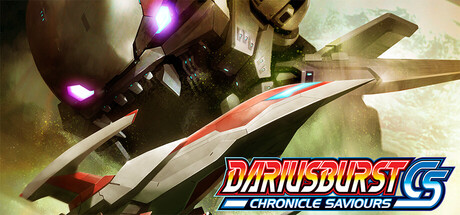
DARIUSBURST Chronicle Saviours
One of the most content-heavy horizontal shooters on PC, with a Burst beam mechanic that rewards frame-perfect timing and punishes anyone who just holds the fire button and hopes for the best.
GamerScout Verdict
Best for shmup veterans who want mechanical depth and volume; newcomers should brace for zero hand-holding and a rough single-monitor setup.
Compare Prices(5 stores)
Every store in this table quotes us in euros, so the EUR figure is the price the seller actually set, not our arithmetic — which is why EUR is also the currency we rank in. We only list an offer here when the store gives us its price in euros, so nothing in this table is a number we invented.
Pick USD, PLN, GBP, CAD or AUD in the header and we convert from EUR at the European Central Bank reference rate — converted amounts are prefixed with ~. Your bank or the store may apply a different rate at checkout. We never hide offers based on where you are: everyone sees this whole table.
We may earn a commission when you buy games through links on this page — at no extra cost to you. It never affects our rankings or verdicts.
Price History
Screenshots & Media
About DARIUSBURST Chronicle Saviours
I don't normally spend time with games where the primary threat is a giant robotic cuttlefish, but DARIUSBURST Chronicle Saviours pulled me in for longer than I expected, and the reason is mechanical depth that the surface look completely undersells. This is a horizontal scrolling shooter, yes, but the Burst system turns it into something more interesting than point-and-shoot. The Burst beam charges as you destroy enemies, fires a devastating concentrated laser, and can be detached into a fixed position while you fly independently and control the angle of the beam separately. When a boss winds up its own red counter-beam, you can time your Burst to collide with it and trigger a Counter Burst, a high-damage golden response shot that demands real timing precision. Get it right and you feel like a genius. Get it wrong and you're eating a face full of enemy fire. That feedback loop is the best thing the game has going for it. The ship roster across AC and CS modes gives you nine Silver Hawk variants, each playing noticeably differently. Legend is the straightforward burst ship and a solid starting point. Gaiden swaps the Burst Beam entirely for a black hole bomb that absorbs nearby bullets and scores big multipliers. Genesis deploys drone option units in three formations before consuming them to charge an Alpha Burst Beam. Murakumo, exclusive to CS mode, has four drones that shift between laser, missile, and wave shot configurations. Picking the wrong ship for a mission isn't a minor inconvenience, it changes the entire playstyle, which is the kind of build variety I respect in any shooter. The reverse-fire button also lets you flip direction mid-run, which matters most during multi-phase bosses that require attacking from both sides. Content volume is not a concern here. AC mode is a faithful port of the arcade original, running in a 32:9 ultra-wide format designed for a dual-monitor or super-ultrawide setup. On a standard 16:9 monitor it letterboxes badly, reducing the action to a narrow horizontal strip with black bars eating the top and bottom. CS mode, the home-exclusive campaign with around 186 stages laid across a branching hex map, is built for single screens and feels considerably more like a polished domestic release. Chronicle mode is the big number, loosely over 3,000 missions unlocked collaboratively by players across the community, many with handicap conditions like no power-ups or restricted continues. The sheer count inflates the content claim. A significant portion of these missions reuse the same stage and boss templates with modifier rules swapped in, and more than one critic and community member has called it out as filler. The no-online-multiplayer situation is the other thing that will bother certain people. Local co-op up to four players is there, and Chronicle mode technically relies on a shared global pool of players working through the same cabinet assignments, but you cannot sit down with a friend online and run missions together. Some Chronicle areas are explicitly locked until multiple players clear them, which is a real design problem if your social circle is not also running DBCS. The Zuntata soundtrack is legitimately excellent, stretching from hard rock to unsettling ambient electronics, and the boss designs are spectacular pieces of mecha work, massive mechanical sea creatures with destructible parts and phase transitions that demand pattern memorization. Environment art is weaker, sitting in dull grays and browns that do not match the score's ambition. For a shooter specialist, the Burst counter system is the closest thing this game has to a skill ceiling worth caring about. Pulling off a frame-tight counter against a boss beam is genuinely satisfying and the nine distinct ship types give the game more build variety than most shmups manage across an entire series. The content padding in Chronicle mode and the ugly letterbox on single monitors are real complaints, not nitpicks. If you are already a shmup player, this is one of the largest and most mechanically considered entries the genre has produced. If you are new to horizontal shooters, the CS mode is approachable enough to learn on, though the game's own tutorials explain almost nothing and you will be reading community guides.

Shooters
Tags
System Requirements
Minimum
- OS
- Windows Vista/7/8.1/10
- DirectX
- Version 9.0c
- Storage
- 1800 MB available space
- Graphics
- Shader Model 2.0 Compatible, GeForce 8600GT
- Processor
- Core 2 Duo E6400
- Sound Card
- DirectSound-compatible sound card
Recommended
Shader Model 2.0 Compatible, GeForce GT260X or better
Keep exploring
Community Discussion
Be the first to comment on DARIUSBURST Chronicle Saviours.
Reviews & Ratings
Game Info
- Developer
- Pyramid
- Publisher
- KOMODO
- Release Date
- Dec 3, 2015