
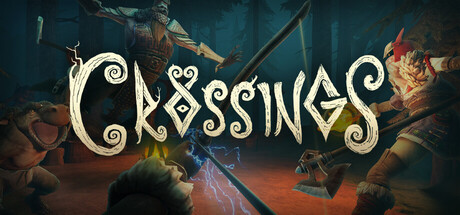
Crossings
A VR roguelite that actually punishes button-mashing: block timing and positional discipline matter more than your swing speed. Solo it holds up; the co-op pitch is interesting but rough at launch.
GamerScout Verdict
Pick it up for the solo melee loop; the co-op concept is interesting but needs polish before it earns top billing.
Compare Prices(4 stores)
Every store in this table quotes us in euros, so the EUR figure is the price the seller actually set, not our arithmetic — which is why EUR is also the currency we rank in. We only list an offer here when the store gives us its price in euros, so nothing in this table is a number we invented.
Pick USD, PLN, GBP, CAD or AUD in the header and we convert from EUR at the European Central Bank reference rate — converted amounts are prefixed with ~. Your bank or the store may apply a different rate at checkout. We never hide offers based on where you are: everyone sees this whole table.
We may earn a commission when you buy games through links on this page — at no extra cost to you. It never affects our rankings or verdicts.
Price History
Screenshots & Media
About Crossings
I came into Crossings skeptical of the "wordless co-op" angle, because in my experience that usually means the social system is half-baked and the studio is dressing up the absence of proximity voice chat as a design choice. The truth is somewhere in the middle, and the solo combat is good enough that it almost doesn't matter. Neat Corporation, the studio behind the Budget Cuts series, built this around a melee system where blocking is genuinely the core skill, not a fallback. You pick your starting weapon from a sword, axe, or club, and each has tiered damage stats plus gesture-based combo attacks that apply buffs or status ailments when executed correctly. Swords are fast, axes sit in the middle, and the community has already flagged that clubs are slow enough that the combo detection feels broken on them - worth knowing before you commit to a club build. You also carry a bow with scarce arrows and a gesture-driven spellcasting system that can swing fights when you use it at the right moment, or leave you wide open when you don't. Altar-born power upgrades let you push a build direction across a run, and weapon perks create genuine reasons to backtrack for a weapon you passed earlier. It is closer in pace to In Death than to something like Roboquest, so if you want sprint-and-shoot chaos, look elsewhere. The three procedurally remixed environments, forests, ruins, and caves, look better on PC than Quest but not by as much as you'd hope. The SteamVR version picked up volumetric fog, dynamic shadows, and improved lighting, but reviewers noted that the Quest build was clearly the visual priority. Performance is solid, with only occasional hitching reported in co-op sessions. Enemy variety is the main roughness point: by the third boss fight you will likely recognise the model from the first encounter wearing a new move set, which dulls the stakes late in a run. The co-op implementation is genuinely novel in concept. Other players can appear in your world organically through ambient matchmaking, no menus required, or you can deliberately link with a friend via a Runestone in the hub area. Communication is purely physical: body language, gestures, positioning. On paper that is atmospheric. In practice, shared upgrade statues are a friction point since one player selecting an upgrade locks out the other, and passing potions between players is clunky enough that reviewers singled it out. The solo experience is the stronger product right now, and the co-op loop needs another patch cycle to feel as intentional as the marketing suggests. Steam sits at around 68% positive from a small review pool, which tracks with "good core, rough edges" rather than anything alarming. If you own a VR headset and want a melee roguelite that respects your timing rather than rewarding arm flailing, Crossings delivers that. Go in solo first, learn the block windows, and treat the co-op as a bonus rather than the headline.

Shooters
Tags
System Requirements
Minimum
- OS
- Windows 10 (64-bit)
- Memory
- 5 GB RAM
- Network
- Broadband Internet connection
- Storage
- 2 GB available space
- Graphics
- NVIDIA GTX 970 / AMD RX 480
- Processor
- Intel i5-4590 / AMD Ryzen 5 1500X
- Sound Card
- Standard onboard audio
- VR Support
- OpenXR support for valve index, psvr2 and meta quest headsets
Recommended
Requires a 64-bit processor and operating system
Keep exploring
Community Discussion
Be the first to comment on Crossings.
Reviews & Ratings
No ratings available
Game Info
- Developer
- Neat Corporation
- Publisher
- Neat Corporation
- Release Date
- Feb 6, 2026