
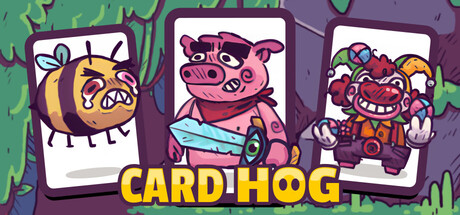
Card Hog
Swap your pig card around a grid, fight monsters, grab weapons, try not to die. Surprisingly tactical for something this cute, but do not expect deep deckbuilding.
GamerScout Verdict
Best for roguelite fans after a compact, low-commitment loop that rewards positional thinking over deep deckbuilding.
Compare Prices(6 stores)
Every store in this table quotes us in euros, so the EUR figure is the price the seller actually set, not our arithmetic — which is why EUR is also the currency we rank in. We only list an offer here when the store gives us its price in euros, so nothing in this table is a number we invented.
Pick USD, PLN, GBP, CAD or AUD in the header and we convert from EUR at the European Central Bank reference rate — converted amounts are prefixed with ~. Your bank or the store may apply a different rate at checkout. We never hide offers based on where you are: everyone sees this whole table.
We may earn a commission when you buy games through links on this page — at no extra cost to you. It never affects our rankings or verdicts.
Price History
Screenshots & Media
About Card Hog
I will be straight with you: Card Hog is about as far from my usual lane as it gets. No netcode to stress about, no ranked ladder, no TTK debates. What it does have is a genuinely clever little grid-crawl loop that held my attention longer than I expected from a game featuring cartoon pigs. The core mechanic is swapping your hog card with adjacent cards on a small grid, three-by-three or four-by-four depending on the mode. Every swap either rewards you or punishes you. Slide into a sword card and you arm yourself. Slide into a skeleton and you trade hits based on your current weapon damage. Slide into a spike trap and you eat chip damage for free. That constant read-the-board, pick-the-lesser-evil rhythm is what makes it tick, and it is more genuinely tense than it looks on paper. The Dungeon Loop mode is the main event: enemies scale up over time, boss cards drop in at intervals (a spider queen that activates every spider on the board is a memorable early wall), and rest-stop doors let you spend gold and gears on upgrades, card additions, or deletions before heading back in. The nine playable hogs are where the variety lives. Each one ships with a distinct weapon loadout and a passive ability that actually changes how you sequence your moves. The Ninja plays differently from the default hog, bringing a staff and a different approach to multi-enemy situations. The Flamemancer has obvious appeal if you want to watch the board burn. The Cowboy carries a gun. Passive abilities range from leaving a fire trail on every step to healing between combats via donut consumption, which, yes, is a real mechanic. Community sentiment is solidly positive, sitting at 93 percent on Steam across hundreds of reviews, and the developer has a reputation for being responsive and actually shipping requested features. The honest criticism: the deckbuilding label on this one is doing some heavy lifting. You unlock cards as you encounter them and can manipulate the pool at rest stops, but you are not building a deck in the Slay the Spire sense. Players expecting that layer of construction will hit a ceiling fast. The game also does a poor job explaining card interactions early on. Some mechanics require straight-up experimentation, and dying to something you did not understand is more common than it should be. Run length variance is wide too. One session might last thirty-plus minutes, the next could end in under five depending on the draw, which is either thrilling or frustrating depending on your mood. For a sub-five-dollar roguelite in a short-session format, the value proposition is real. It works well as a desk break, a second-monitor idle, or a couch share with local multiplayer. It is not going to replace anything in your main rotation, and chasing it as a deep strategy game will leave you cold. But if you want something that rewards paying attention without demanding two hours of unbroken focus, Card Hog delivers that in a compact, well-made package.

Shooters
Tags
System Requirements
Minimum
- OS
- Windows 7+
- Memory
- 512 MB RAM
- Storage
- 30 MB available space
- Graphics
- 128MB
- Processor
- Intel or AMD Dual Core CPU
Recommended
- OS
- Windows 7+
- Memory
- 512 MB RAM
- Storage
- 30 MB available space
- Graphics
- 128MB
- Processor
- Intel or AMD Dual Core CPU
Keep exploring
Community Discussion
Be the first to comment on Card Hog.
Reviews & Ratings
No ratings available
Game Info
- Developer
- SnoutUp
- Publisher
- SnoutUp
- Release Date
- Dec 4, 2023