
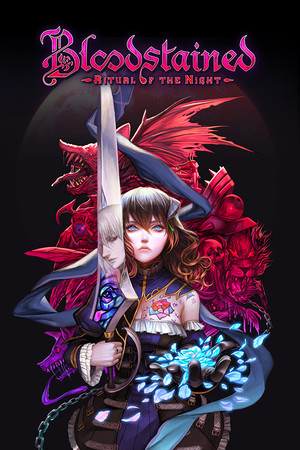
Bloodstained: Ritual of the Night
Koji Igarashi's castle-crawling comeback is the closest thing to a new Symphony of the Night the genre has seen, and its 93% Steam rating across 41,000 reviews makes a very clear case for your weekend.
GamerScout Verdict
Essential for Igavania faithful and a strong entry point for Metroidvania newcomers willing to accept some old-school obscurity in their level design.
Compare Prices(9 stores)
Every store in this table quotes us in euros, so the EUR figure is the price the seller actually set, not our arithmetic — which is why EUR is also the currency we rank in. We only list an offer here when the store gives us its price in euros, so nothing in this table is a number we invented.
Pick USD, PLN, GBP, CAD or AUD in the header and we convert from EUR at the European Central Bank reference rate — converted amounts are prefixed with ~. Your bank or the store may apply a different rate at checkout. We never hide offers based on where you are: everyone sees this whole table.
We may earn a commission when you buy games through links on this page — at no extra cost to you. It never affects our rankings or verdicts.
Price History
Screenshots & Media
About Bloodstained: Ritual of the Night
My first hour with Bloodstained felt like muscle memory from a game I hadn't touched in twenty years. The colour-coded map filling in room by room, the satisfying thud of a whip-adjacent weapon connecting, the creeping suspicion that a door I couldn't open yet was hiding something extraordinary. Koji Igarashi designed his Castlevania games with a very specific rhythm, and Ritual of the Night locks back into that rhythm so precisely it almost feels unfair to the rest of the genre. The centrepiece of Miriam's build is the Shard system, which consolidates what Symphony of the Night spread across spells, relics, and familiars into one unified, expandable framework. Enemies drop shards on death, each one granting a new power: Conjure shards summon creatures or weapons, Directional shards fire off attacks based on your stick input, Manipulative shards change Miriam's state in longer-lasting ways, Passive shards stack stats, and Familiar shards call a miniature demon companion to fight at your side. There are well over a hundred of them, and the RNG drop system means two playthroughs will rarely produce the same toolkit at the same time. Pair that with Miriam's absurd weapon variety - daggers, katanas, greatswords, rapiers, whips, spears, guns, clubs - and you have genuine build depth that holds past the midgame. The Technique system layers on top, rewarding players who bother to experiment rather than mash: weapon-specific moves learned through tomes or by simply practising give each weapon category its own fingerprint. None of that would matter if the castle itself were dull, and the map design is one of Bloodstained's quiet triumphs. Areas like the Dian Cecht Cathedral and the gable rooftops of Arvantville showcase the kind of theatrical Gothic grandeur the Igavania formula was always reaching for. The interconnected layout rewards patient exploration, and the three endings - including a proper true ending gated behind a smart mid-boss pivot involving the Zangetsuto sword - give completionists a concrete reason to see every corner. The game also shipped with and has since expanded via free updates that added Chaos Mode, a Boss Rush, Speed Run Mode, a Versus PvP mode, and even crossover playable characters like Aurora from Child of Light and the fan-favourite Bloodless. For a game that launched in 2019, the content volume now is genuinely impressive. But Bloodstained is not a spotless offering, and I'd be doing you a disservice to pretend otherwise. The story is pulpy Gothic melodrama delivered with a wink, which is fine - but the dialogue padding between action sequences can feel like a toll booth on a road you were enjoying. Some progression gates depend on shards whose environmental uses are nowhere near obvious from their descriptions; at one point you need a drain ability to empty a pool that the shard tooltip never hints it can affect. Veteran players will consult a wiki. Newcomers may just feel stuck and quietly annoyed. The crafting system, meanwhile, is deep on paper but often grindy in practice, with material drops stingy enough that most players wisely focus on one or two weapon lines rather than trying to build everything. Enemy variety is also the one area where the game noticeably trails its stated ambitions - you will see reskins, and their attack patterns rarely demand that you lean on the full arsenal you have been carefully assembling. For anyone who grew up with Symphony of the Night, Aria of Sorrow, or Order of Ecclesia, Bloodstained is the most direct continuation of that lineage that exists outside of the Castlevania IP itself. For newcomers to the Metroidvania format, the onboarding is gentler than the genre's reputation suggests, and adjustable difficulty settings mean you can tune the punishment to your tolerance. The filler side quests are easy to skip. The filler dialogue is less easy to skip. The dragons, though - I will not hear a word against the dragons.

RPGs
Tags
System Requirements
Minimum
- Memory
- 4 GB RAM
- Graphics
- AMD Radeon R9 280X / GeForce GTX 760
- Storage
- 10 GB available space
Recommended
- OS
- Windows 10 (64-bit)
- Processor
- AMD FX-6300 / Intel Core i5-4590
- Memory
- 8 GB RAM
- Graphics
- AMD Radeon R9 290 / GeForce GTX 1050 Ti
- Storage
- 10 GB available space
Keep exploring
Community Discussion
Be the first to comment on Bloodstained: Ritual of the Night.
Reviews & Ratings
Game Info
- Developer
- ArtPlay
- Publisher
- 505 Games
- Release Date
- Jun 18, 2019