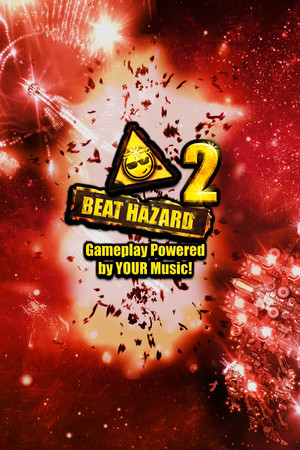
Beat Hazard 2
If your music library is your competitive edge, this twin-stick arcade shooter uses it as ammo. Your playlist literally runs the show, for better and worse.
GamerScout Verdict
Best for score-chasers who want their playlist to double as a difficulty slider, not for players expecting ranked depth or tight competitive structure.
Compare Prices(4 stores)
Every store in this table quotes us in euros, so the EUR figure is the price the seller actually set, not our arithmetic — which is why EUR is also the currency we rank in. We only list an offer here when the store gives us its price in euros, so nothing in this table is a number we invented.
Pick USD, PLN, GBP, CAD or AUD in the header and we convert from EUR at the European Central Bank reference rate — converted amounts are prefixed with ~. Your bank or the store may apply a different rate at checkout. We never hide offers based on where you are: everyone sees this whole table.
We may earn a commission when you buy games through links on this page — at no extra cost to you. It never affects our rankings or verdicts.
Price History
Screenshots & Media
About Beat Hazard 2
I don't usually reach for music-driven arcade shooters when I want a serious session, but Beat Hazard 2 does something specific that earned more of my time than expected: it makes the threat level your playlist's problem. Slow verse, enemies coast around like they forgot to spawn. Drop hits, and the screen turns into a bullet hell that legitimately asks something of your inputs. That cause-and-effect loop is tighter than it sounds, and picking songs specifically to engineer brutal combat windows is a genuinely interesting meta-game that no other twin-stick I know offers. The core loop is Galaga-adjacent but with more moving parts. You pilot a ship, fend off procedurally generated enemy waves and bosses, collect score multipliers, pick up secondary weapons, and spend cash on a perk system that covers defensive shields, micro missiles, drone satellites, and an EMP burst gun, among around 30 options. Four modes are present: Standard, Survival, Boss Rush, and the low-stakes Chill Out, which is exactly what it sounds like. Boss Rush with a drum-heavy track is the high point for me. The bosses themselves are procedurally generated per-song, meaning their size, loadout, and firing patterns shift based on what is playing when they spawn. That alone pushes replayability well past what you would expect from a sub-5 price tier game. The Open Mic system is the headline new feature, and it is mostly a win. It captures audio output from your PC, so Spotify, YouTube, or whatever else feeds directly into gameplay. Song recognition runs through an ACRCloud-style detection service that ties your score to global leaderboards. The catch is that detection fails occasionally, and when it does during a Daily Challenge or Lightning Challenge run, your score is voided. There is also a minor workaround required: muting the game's own sound effects in your volume mixer can help the detection engine hear the music cleanly. Small friction, but real friction. If you live in .mp3 files rather than streaming services, the older local file input still works fine, and frankly for leaderboard purposes that path is more reliable. Ship variety is a legitimate hook. Each song generates a new player ship using one of several fictional manufacturers, ranging from agile Mosquito-class frames to heavy Brute hulls with very different stat profiles. They each come with four attached challenges that unlock modular upgrades. The problem is the module bonuses are minor enough that most runs feel the same regardless of loadout, and comparing ships in the heat of gameplay is hard because the stats are not exactly surfaced cleanly. Steam Workshop support means the community has been filling the ship pool, which helps. Visually, cranking the intensity slider past 200% means you can genuinely lose your own ship in the light show, which is either atmosphere or a readability problem depending on your monitor brightness setup. Hard-HDR panels make this worse. The Steam community sits at Very Positive territory and that tracks. This is not a shooter that tests netcode or ranked ladders, and there is no online PvP in the traditional sense. Local co-op and local PvP are present for couch sessions. For anyone who wants a session-based arcade game where their own music provides infinite content variation, the value proposition is straightforward. For players who need tight competitive structure or progression that meaningfully changes how the ship handles, it will feel shallow past the first few hours. Go in expecting a score-chasing visualizer with teeth and you will not be disappointed.

Shooters
Tags
System Requirements
Minimum
- OS
- Windows Vista, 7, 8, 10
- Memory
- 512 MB RAM
- Network
- Broadband Internet connection
- Storage
- 250 MB available space
- Graphics
- Nvidia GeForce GTX 670
- Processor
- 2.5GHz processor
- VR Support
- SteamVR. Keyboard or gamepad required
Recommended
- OS
- Windows Vista, 7, 8, 10
- Memory
- 1 GB RAM
- Network
- Broadband Internet connection
- Storage
- 250 MB available space
- Graphics
- Nvidia GeForce GTX 690
- Processor
- 3.0GHz processor
Keep exploring
Community Discussion
Be the first to comment on Beat Hazard 2.
Reviews & Ratings
No ratings available
Game Info
- Developer
- Cold Beam Games
- Publisher
- Cold Beam Games
- Release Date
- Oct 16, 2019