BattleCore Arena
Gravity-physics PvP with a fun core loop, a thin player base, and a progression grind that will test your patience before you've even unlocked your second weapon.
GamerScout Verdict
Best with a dedicated friend group willing to overlook thin servers and a slow gear unlock curve.
Compare Prices(4 stores)
Every store in this table quotes us in euros, so the EUR figure is the price the seller actually set, not our arithmetic — which is why EUR is also the currency we rank in. We only list an offer here when the store gives us its price in euros, so nothing in this table is a number we invented.
Pick USD, PLN, GBP, CAD or AUD in the header and we convert from EUR at the European Central Bank reference rate — converted amounts are prefixed with ~. Your bank or the store may apply a different rate at checkout. We never hide offers based on where you are: everyone sees this whole table.
We may earn a commission when you buy games through links on this page — at no extra cost to you. It never affects our rankings or verdicts.
Price History
Screenshots & Media
About BattleCore Arena
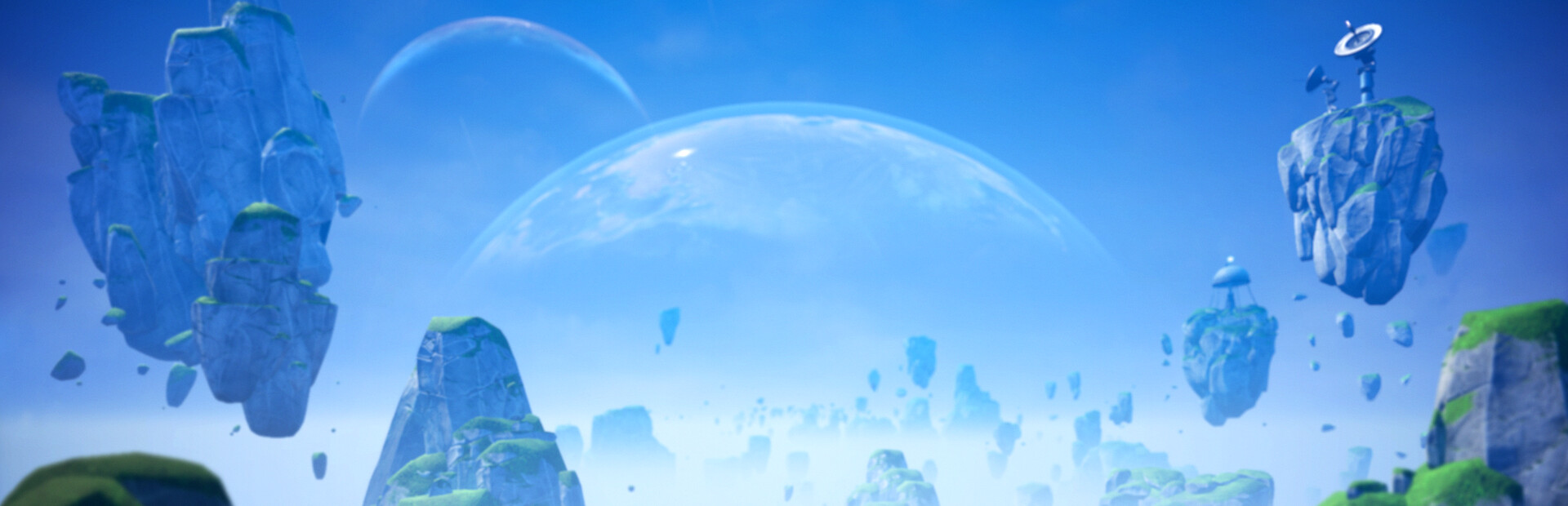
I went in cautiously optimistic and came out with mixed feelings, which is roughly where Steam's community landed too. BattleCore Arena started life as a three-person indie project that won a game festival in Bordeaux before Ubisoft picked it up for full production, and that scrappy origin actually shows in the best possible way: the core mechanical idea is genuinely clever. You control a spherical Core that rolls, jumps, double-jumps, and dashes across multi-tiered arenas where gravitational forces vary by zone, and the whole point is to blast opponents off the edge rather than reduce a health bar to zero. Think arena shooter crossed with Smash Bros. stock mechanics, rendered in a fast third-person perspective. When it clicks, it clicks. The weapon and ability selection is the main hook for loadout-minded players. Close-range mains can lean into the STORM or the PULSER for that aggressive, high-contact style, while anyone who prefers controlling space from distance will want the ORION or the VORTEX-5. On top of your ranged pick, you slot in an ability and a module, which gives you just enough build variance to feel like choices matter without drowning you in menus. The modes on offer are Backup (a 3v3 team deathmatch where your team shares a pool of lives), Q-Ball (a possession mode where keeping hold of the Core is the objective), and a free-for-all. Two of those three are interesting. Q-Ball in particular rewards movement tech and positional awareness in ways that feel closer to competitive play than a simple last-team-standing format. Here is where I have to be direct about the problems, because they are real. The netcode is peer-to-peer, not server-authoritative, which is a flag for anyone who takes competitive shooters seriously. Your experience lives and dies by whoever is hosting. The progression system is another friction point: new gear unlocks painfully slowly, and you will be grinding with your starter loadout long past the point where you want to experiment. Community feedback has called this out directly, and it is the kind of design decision that bleeds retention in a game that already has a small concurrent player count. The downtime-to-gameplay ratio inside a session has also drawn criticism, with some players describing it as closer to 50-50 between actual rounds and loading or lobby waiting. On a 144hz monitor with a light mouse, the movement feels responsive enough, but none of that matters if the lobby queue takes longer than the match. The population question is the one that should actually decide whether you try this right now. Peer-to-peer architecture means no official matchmaking servers to keep warm, and the active community is small. If you can drag a regular group of five or six friends in, BattleCore Arena becomes a legitimately fun party shooter with a movement system that rewards practice. Solo queuing into randoms is a gamble on whether you find a full lobby or get padded with bots. That context matters a lot.

Shooters
Tags
System Requirements
Minimum
- OS
- Windows 10 (64 bit only)
- Memory
- 8 GB RAM
- DirectX
- Version 11
- Network
- Broadband Internet connection
- Storage
- 4 GB available space
- Graphics
- NVIDIA GeForce GTX 960 (4GB) or AMD RX 5500XT (4GB)
- Processor
- Intel Core i3-7100 3.9 GHz, Ryzen3 1200 3.1 GHz
Recommended
- OS
- Windows 10, Windows 11 (64 bit only)
- Memory
- 8 GB RAM
- DirectX
- Version 11
- Network
- Broadband Internet connection
- Storage
- 4 GB available space
- Graphics
- NVIDIA GeForce GTX 1050TI (4GB) or AMD RX 5500XT (4GB)
- Processor
- Intel Core i5-7500 3.4 GHz, Ryzen5 1400 3.2 GHz
Keep exploring
Community Discussion
Be the first to comment on BattleCore Arena.
Reviews & Ratings
No ratings available
Game Info
- Developer
- Ubisoft Bordeaux
- Publisher
- Ubisoft
- Release Date
- Feb 4, 2025