Antihero
Worth a look if you want tight 1v1 mind games and have a friend to drag into an asynchronous match. The online pool is thin, so treat solo and friend play as the real draw.
GamerScout Verdict
Best for strategy fans who have a friend to challenge; solo is decent but the thin online pool limits the long-term PvP hook.
Compare Prices(8 stores)
Every store in this table quotes us in euros, so the EUR figure is the price the seller actually set, not our arithmetic — which is why EUR is also the currency we rank in. We only list an offer here when the store gives us its price in euros, so nothing in this table is a number we invented.
Pick USD, PLN, GBP, CAD or AUD in the header and we convert from EUR at the European Central Bank reference rate — converted amounts are prefixed with ~. Your bank or the store may apply a different rate at checkout. We never hide offers based on where you are: everyone sees this whole table.
We may earn a commission when you buy games through links on this page — at no extra cost to you. It never affects our rankings or verdicts.
Price History
Screenshots & Media
About Antihero
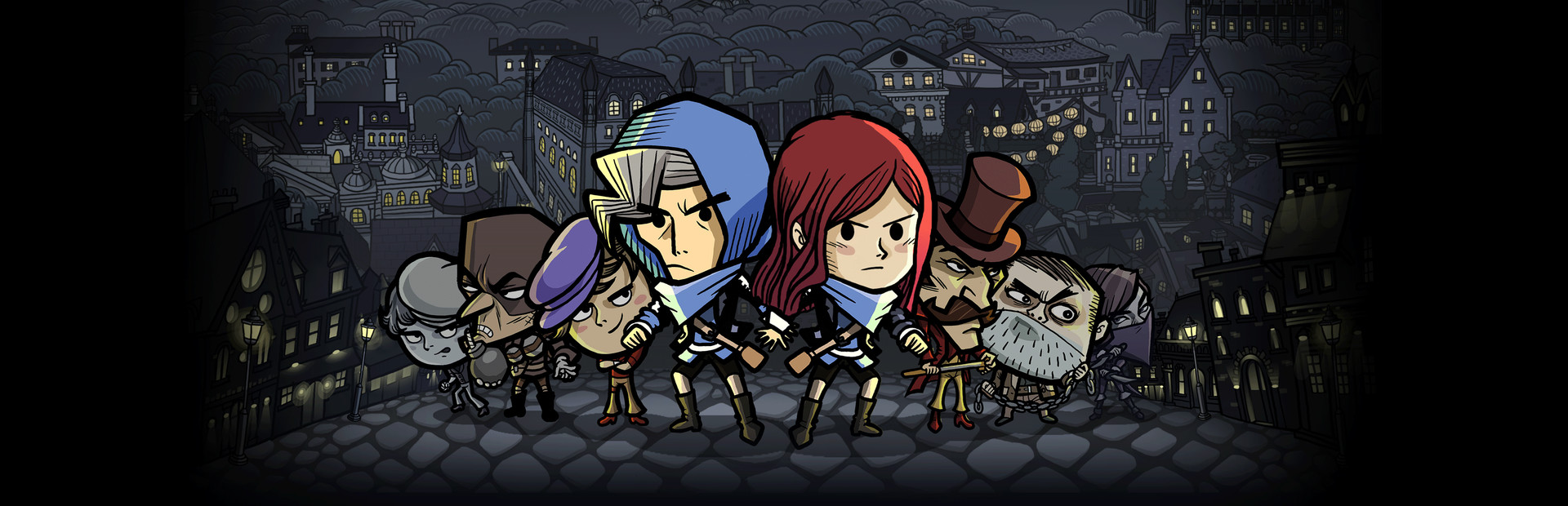
I came to Antihero expecting a gimmick with a Victorian hat on it, and I left impressed by how cleanly the whole system clicks together. The premise is pure board game logic transplanted into a gas-lit criminal underworld: you run a thieves guild, scout fog-covered city blocks with your Master Thief, and race a rival guild to earn enough Victory Points before they do. It sounds slight. It is not. The unit roster tells you most of what you need to know about where the real competition lives. Urchins infiltrate banks and churches for steady gold and lantern income, but a single Truant Officer sent by your opponent can evict all three from a building you spent turns setting up, nuking both the investment and the passive income. Thugs block movement lanes. Gangs fight and level up on kills but stay exposed between turns. Bombers plant traps that punish aggressive incursions. Assassins are single-use burst tools for clearing high-value targets or completing contracts. The upgrade tree splits into three branches, loosely labeled Sneakery, Stabbery, and Skullduggery, and you will never fully unlock all of them in a single match. That forced prioritization is the core tension: do you invest early in Urchin cost reduction to ramp income faster, or do you lock down territory with Thugs before your opponent beats you to the chokepoints? The answers shift every map, and every map randomizes its layout, which keeps the read-and-react loop feeling fresh across repeated sessions. The campaign runs roughly seven hours and doubles as an extended tutorial. It ramps reasonably, introduces one new wrinkle per mission, and has a difficulty spike or two that will slap you if you try to autopilot through it. Playable characters Lightfinger and Emma offer slightly different campaign angles, but neither pushes the narrative into must-see territory. The story is thin. What the campaign does well is build your mechanical fluency before shoving you into PvP, which is where the game earns its keep. There are two multiplayer modes: Live, where both players are online simultaneously and a per-turn timer keeps things moving, and Casual, which is fully asynchronous with email notifications on your turn. The asynchronous mode is surprisingly enjoyable as a slow-burn mind game with a friend across a few days. Skirmish lets you adjust starting gold, lanterns, win conditions, and unit availability before each match, which is a nice customization layer that can completely change how a session plays. Hotseat local multiplayer is also present, though it is the usual pass-the-mouse arrangement. Here is the honest problem: this game released in 2017 and the random online matchmaking pool has always been thin. Getting a live random match depends heavily on timing, and the community never grew to Call of Duty numbers. If you buy this and expect to queue into strangers at will, you may be waiting. Friend matches and asynchronous games with people you rope in personally are the reliable experience. The solo AI scales across difficulties and will punish you at Normal until you find a workable resource strategy, so it holds some replay value on its own. The art holds up well: thick-lined characters on a dark city grid read clearly at a glance, and the comic-panel chapter interludes give the campaign a charm that punches above its production budget. No launcher overhead, no battle pass, no live-service nonsense. It installs, it runs, and it does exactly what it says.

Shooters
Tags
System Requirements
Minimum
- OS
- Windows 7 or later
- Memory
- 2 GB RAM
- Storage
- 500 MB available space
- Graphics
- Integrated video (Intel HD 4000 or later), 1 GB shared memory
- Processor
- Core i5
Recommended
- OS
- Windows 7 or later
- Memory
- 4 GB RAM
- Storage
- 500 MB available space
- Graphics
- Dedicated video, 1 GB VRAM
- Processor
- Core i7
Keep exploring
Community Discussion
Be the first to comment on Antihero.
Reviews & Ratings
Game Info
- Developer
- Tim Conkling
- Publisher
- Versus Evil
- Release Date
- Jul 10, 2017