Compara los precios de Zipple World 2: The Sweet Chaos en tiendas de claves de confianza y encuentra la mejor oferta. Desarrollado por Alternative Dreams Studios. Publicado por Strategy First. Lanzado el 17/5/2016. Disponible en PC. Géneros: Action, Casual, Indie.

A procedurally generated frog-rescue arcade thing that nobody asked for but Alternative Dreams Studios made anyway. Worth exactly as much curiosity as its micro price tag suggests, and possibly not even that.

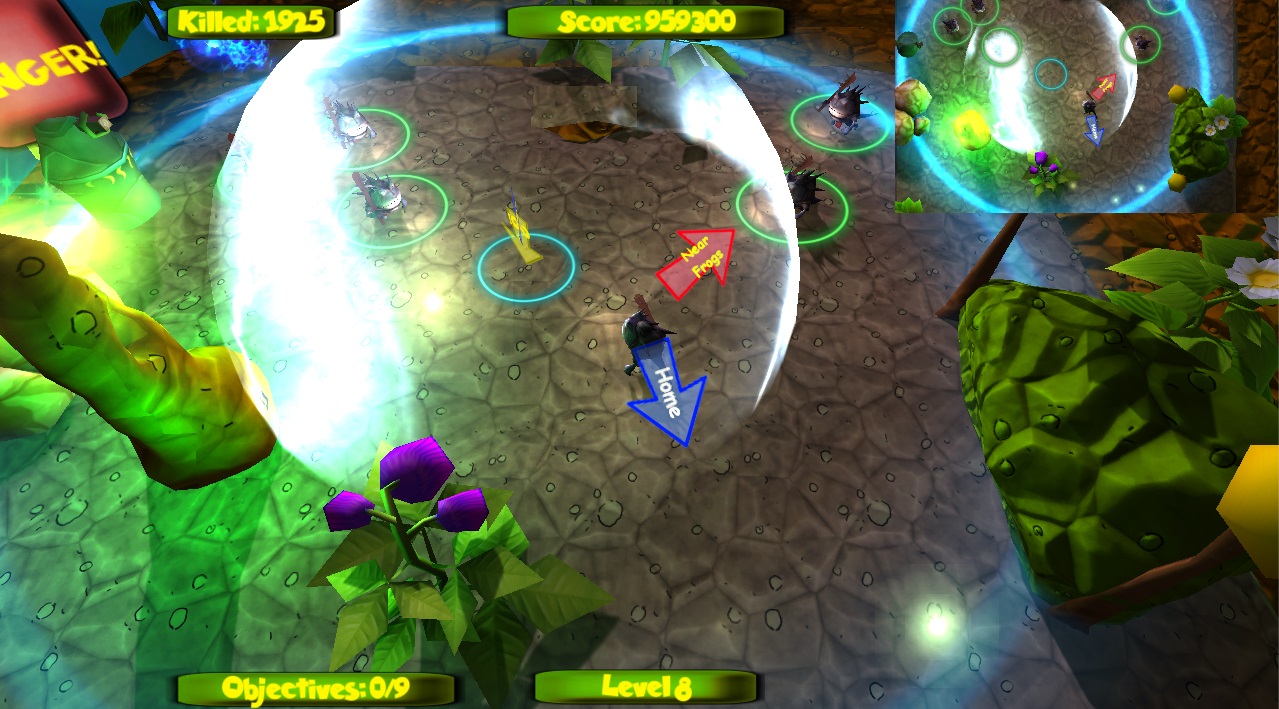
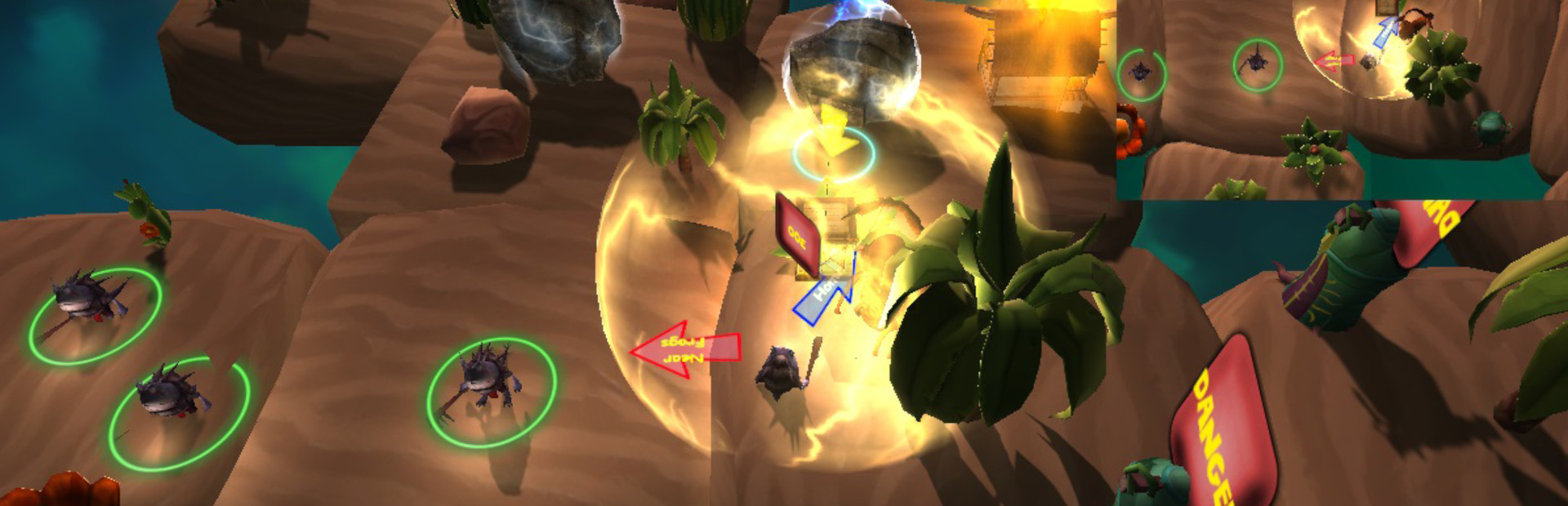
I spent longer reading the control instructions than I did enjoying the first three levels of Zipple World 2: The Sweet Chaos, and that tells you almost everything you need to know. The core premise is this: you are a frog warrior. You run around a procedurally generated playfield, kill enemies by jumping on them or sprinting through them in a brief God Mode burst, collect magic items dropped by defeated foes, and use those items to command your trapped frog companions toward houses labeled HOME. It sounds like an eccentric little puzzle-action hybrid. In practice, it feels like a Flash game that wandered onto Steam by accident and never found its way home. The mechanical loop is not without a certain lo-fi logic. Killing enemies is the prerequisite for rescuing anyone, because each defeated creature drops a magic item you need to issue movement commands to your fellow frogs. That creates a light economy of combat and herding that could, in a more polished version of itself, feel satisfying. The game also claims four distinct enemy types, three themed worlds spanning mud, desert, and rock-and-wood environments, adjustable difficulty, camera distance controls, and an effectively unlimited run of procedurally generated levels. On paper that sounds like content. In motion, the procedural generation produces levels that feel indistinguishable from one another, the obstacle placement rarely rises above random noise, and the controls carry enough friction that even simple redirections become a small ordeal of double-clicking and mouse-dragging through an interface that was not designed with any particular kindness toward the player. The visual presentation sits in that particular tier of early-to-mid 2010s indie where the assets have a hand-assembled quality that could charitably be called raw and uncharitably be called unfinished. The color palette is vivid in a slightly hallucinogenic way, which does give the world a certain odd personality. The sound design, however, is where my goodwill ran out fastest. The music is loud and abrasive in a way that feels less like a creative choice and more like a volume knob that was never tested at sensible levels. That is a real shame, because mood and soundscape matter enormously to me, and a game this strange could have leaned into its weirdness with something genuinely hypnotic. Instead it settles for chaos of the unintentional kind. I want to be fair to Alternative Dreams Studios because I do genuinely believe in small developers making peculiar things. There is something almost endearing about a game that puts this much earnest instruction text into explaining its frog-herding economy. The statistics tracker, which logs everything from jumps taken to levels failed, suggests a developer who cared about session data and replayability. The local high-score table saving up to 100 entries implies someone imagined this becoming a household leaderboard fixture. That sincerity is real. But sincerity alone cannot smooth over controls that fight you, audio that exhausts you, and a procedural engine that never generates a moment you would want to tell someone about. There is no version of this game that earns a recommendation for the majority of players. If you collect genuinely strange artifacts from the outer edges of the Steam catalog as a hobby, you already know who you are and you do not need me to stop you. Kai, Scout Team

Zipple World 2: The Sweet Chaos

Zipple World 2: The Sweet Chaos

17 may 2016Alternative Dreams StudiosStrategy First
GamerScout opina

A procedurally generated frog-rescue arcade thing that nobody asked for but Alternative Dreams Studios made anyway. Worth exactly as much curiosity as its micro price tag suggests, and possibly not even that.

PC
Mejor precio disponible
€0.00
en N/A
Mínimo histórico: €0.62

Comparar precios(0 tiendas)

Cargando precios...

We may earn a commission when you buy games through links on this page — at no extra cost to you. It never affects our rankings or verdicts.

Historial de precios

Historical low
€0.627 Jun 2026
Keyshops
€0.57€0.60€0.64€0.677 Jun12 Jun18 Jun23 Jun28 Jun
Tracking prices since 7 Jun 2026
Create alert

Capturas y multimedia

Captura

Acerca de Zipple World 2: The Sweet Chaos

I spent longer reading the control instructions than I did enjoying the first three levels of Zipple World 2: The Sweet Chaos, and that tells you almost everything you need to know. The core premise is this: you are a frog warrior. You run around a procedurally generated playfield, kill enemies by jumping on them or sprinting through them in a brief God Mode burst, collect magic items dropped by defeated foes, and use those items to command your trapped frog companions toward houses labeled HOME. It sounds like an eccentric little puzzle-action hybrid. In practice, it feels like a Flash game that wandered onto Steam by accident and never found its way home. The mechanical loop is not without a certain lo-fi logic. Killing enemies is the prerequisite for rescuing anyone, because each defeated creature drops a magic item you need to issue movement commands to your fellow frogs. That creates a light economy of combat and herding that could, in a more polished version of itself, feel satisfying. The game also claims four distinct enemy types, three themed worlds spanning mud, desert, and rock-and-wood environments, adjustable difficulty, camera distance controls, and an effectively unlimited run of procedurally generated levels. On paper that sounds like content. In motion, the procedural generation produces levels that feel indistinguishable from one another, the obstacle placement rarely rises above random noise, and the controls carry enough friction that even simple redirections become a small ordeal of double-clicking and mouse-dragging through an interface that was not designed with any particular kindness toward the player. The visual presentation sits in that particular tier of early-to-mid 2010s indie where the assets have a hand-assembled quality that could charitably be called raw and uncharitably be called unfinished. The color palette is vivid in a slightly hallucinogenic way, which does give the world a certain odd personality. The sound design, however, is where my goodwill ran out fastest. The music is loud and abrasive in a way that feels less like a creative choice and more like a volume knob that was never tested at sensible levels. That is a real shame, because mood and soundscape matter enormously to me, and a game this strange could have leaned into its weirdness with something genuinely hypnotic. Instead it settles for chaos of the unintentional kind. I want to be fair to Alternative Dreams Studios because I do genuinely believe in small developers making peculiar things. There is something almost endearing about a game that puts this much earnest instruction text into explaining its frog-herding economy. The statistics tracker, which logs everything from jumps taken to levels failed, suggests a developer who cared about session data and replayability. The local high-score table saving up to 100 entries implies someone imagined this becoming a household leaderboard fixture. That sincerity is real. But sincerity alone cannot smooth over controls that fight you, audio that exhausts you, and a procedural engine that never generates a moment you would want to tell someone about. There is no version of this game that earns a recommendation for the majority of players. If you collect genuinely strange artifacts from the outer edges of the Steam catalog as a hobby, you already know who you are and you do not need me to stop you.

Kai
Kai · Scout Team

Indie & narrative

Etiquetas

singleplayerachievementstier:sub-5Frog ProtagonistProcedural LevelsEnemy Loot LoopMouse-Driven ControlsScore AttackArcade InfiniteGod Mode SprintLocal LeaderboardCasual Chaos

Requisitos del sistema

Mínimos

OS
Windows XP/Vista/7
Memory
1 GB RAM
DirectX
Version 9.0c
Storage
100 MB available space
Graphics
3D graphics card DirectX 9.0c compatible
Processor
Intel Pentium 1.6 GHz or equivalent
Sound Card
Any Windows compatible sound device

Sigue explorando

Community Discussion

Be the first to comment on Zipple World 2: The Sweet Chaos.

Reseñas y valoraciones

No hay valoraciones disponibles

Información del juego

Desarrolladora
Alternative Dreams Studios
Distribuidora
Strategy First
Fecha de lanzamiento
17 may 2016

Alerta de precio

¡Recibe un aviso cuando el precio baje de tu objetivo!

Crear alerta

Compra mejor: guías útiles

Preguntas frecuentes sobre Zipple World 2: The Sweet Chaos

¿Cuánto cuesta Zipple World 2: The Sweet Chaos?

El precio de Zipple World 2: The Sweet Chaos cambia a menudo y varía según la tienda, la edición y la región. La tabla de precios en vivo de esta página compara las ofertas más baratas en stock de tiendas de claves de confianza como Eneba y Kinguin, para que siempre veas el precio más bajo actual antes de comprar.

¿Dónde puedo comprar Zipple World 2: The Sweet Chaos más barato?

Compara los precios de Zipple World 2: The Sweet Chaos en todas las tiendas verificadas en la tabla de precios de esta página. Listamos las ofertas de claves y tiendas más baratas en stock, actualizadas con frecuencia, para que siempre veas la mejor oferta actual antes de comprar.

¿En qué plataformas está disponible Zipple World 2: The Sweet Chaos?

Zipple World 2: The Sweet Chaos está disponible en PC.

¿Cuándo se lanzó Zipple World 2: The Sweet Chaos?

Zipple World 2: The Sweet Chaos se lanzó el 17 de mayo de 2016.

¿Quién desarrolló Zipple World 2: The Sweet Chaos?

Zipple World 2: The Sweet Chaos fue desarrollado por Alternative Dreams Studios y publicado por Strategy First.