
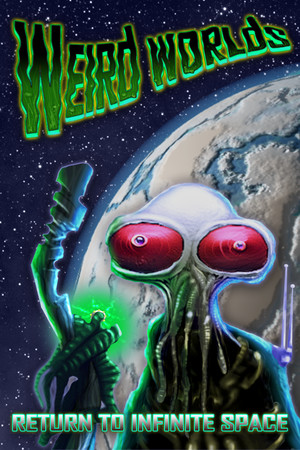
Compara los precios de Weird Worlds: Return to Infinite Space en tiendas de claves de confianza y encuentra la mejor oferta. Desarrollado por Digital Eel. Publicado por Digital Eel. Lanzado el 19/3/2013. Disponible en PC, Mac, Linux. Géneros: Adventure, Casual, Indie, Strategy. Puntuación Metacritic: 79/100.

Thirty minutes per run, permadeath, fully randomized galaxy: this is the roguelite that quietly inspired FTL, and it still scratches an itch that most modern space games overshoot entirely.

I pulled up the session timer, set the galaxy to maximum size, and immediately started arguing with myself about whether to chase that distant artifact cluster or consolidate near home base before the clock ran out. That tension, compressed into under thirty minutes, is the entire game, and it works. Weird Worlds: Return to Infinite Space is a roguelite space exploration title where every run generates a fresh region of the galaxy, the Purple Void, scattering alien homeworlds, black holes, derelict hulks, lifeforms, and artifacts across a star map you navigate using a turn-based movement system. Your score is determined by the value of whatever you haul back before your mission timer expires, with a stiff penalty for overstaying your welcome. The strategic layer is tighter than it first appears. You pick one of three starting ships, each with different scoring priorities. The Terran captain hunts alien ambassadors; other ships lean harder into raw cargo value or combat. Ship customization runs through traded equipment: weapons, shields, drives, and special systems that can cloak you, boost speed, or expand cargo capacity. The one-star-to-five-star rating on gear is intentionally opaque, which is a real friction point. Point defense and shield items in particular give almost no readable feedback on what they actually do until you are already in a fight you cannot afford to lose. Combat itself is real-time at a measured, naval pace, closer to Wrath of Khan than arcade twitch play. You reposition ships, watch automatic firing resolve, and pray your cloaking module does not fail at the wrong moment. Retreating is almost always the right call early. The game has a battle simulator mode that lets you pit any ships from any race against each other freely, which is genuinely useful for learning how different hull types perform without bleeding a full run. Here is the honest newcomer path: start on a small galaxy, play five or six runs just surviving and returning home with any score above zero. The tutorial exists and covers the basics, but it does not adequately prepare you for the opening aggression of some alien factions, and the gear opacity makes early combat a gamble. The learning happens through repetition, and because each run is under thirty minutes, repetition is cheap. Metacritic lands at 79, Steam sits at 77 percent positive, and both scores feel fair for what the game is. The complaint that carries the most weight from the community is that the quest pool is thin, and on small-to-medium maps the RNG occasionally generates a layout where nebula clusters physically block access to half the map, ending a run through geography rather than decision-making. Historically, this series matters more than its obscurity suggests. Digital Eel's Strange Adventures in Infinite Space is documented as one of the earliest roguelites, predating the term, and Subset Games co-founder Jay Ma acknowledged Weird Worlds as a direct influence on FTL. So if you have clocked hundreds of hours in FTL and want to go upstream, this is exactly that artifact. Mod support is built in and the community has produced content that reskins and expands encounters, which meaningfully extends variety beyond the base quest pool. Full-screen mode has a known bug on multi-monitor setups, so play in windowed mode and set a comfortable resolution before your first run. Diego, Scout Team

Weird Worlds: Return to Infinite Space

Weird Worlds: Return to Infinite Space

19 mar 2013Digital Eel
GamerScout opina

Thirty minutes per run, permadeath, fully randomized galaxy: this is the roguelite that quietly inspired FTL, and it still scratches an itch that most modern space games overshoot entirely.

PCMacLinux
Steam Deck Playable
Mejor precio disponible
€0.00
en N/A
Mínimo histórico: €0.23

Comparar precios(0 tiendas)

Cargando precios...

We may earn a commission when you buy games through links on this page — at no extra cost to you. It never affects our rankings or verdicts.

Historial de precios

Historical low
€0.2323 Jun 2026
Keyshops
€0.17€0.36€0.56€0.7510 Jun15 Jun19 Jun24 Jun28 Jun
Tracking prices since 10 Jun 2026
Create alert

Capturas y multimedia

Acerca de Weird Worlds: Return to Infinite Space

I pulled up the session timer, set the galaxy to maximum size, and immediately started arguing with myself about whether to chase that distant artifact cluster or consolidate near home base before the clock ran out. That tension, compressed into under thirty minutes, is the entire game, and it works. Weird Worlds: Return to Infinite Space is a roguelite space exploration title where every run generates a fresh region of the galaxy, the Purple Void, scattering alien homeworlds, black holes, derelict hulks, lifeforms, and artifacts across a star map you navigate using a turn-based movement system. Your score is determined by the value of whatever you haul back before your mission timer expires, with a stiff penalty for overstaying your welcome. The strategic layer is tighter than it first appears. You pick one of three starting ships, each with different scoring priorities. The Terran captain hunts alien ambassadors; other ships lean harder into raw cargo value or combat. Ship customization runs through traded equipment: weapons, shields, drives, and special systems that can cloak you, boost speed, or expand cargo capacity. The one-star-to-five-star rating on gear is intentionally opaque, which is a real friction point. Point defense and shield items in particular give almost no readable feedback on what they actually do until you are already in a fight you cannot afford to lose. Combat itself is real-time at a measured, naval pace, closer to Wrath of Khan than arcade twitch play. You reposition ships, watch automatic firing resolve, and pray your cloaking module does not fail at the wrong moment. Retreating is almost always the right call early. The game has a battle simulator mode that lets you pit any ships from any race against each other freely, which is genuinely useful for learning how different hull types perform without bleeding a full run. Here is the honest newcomer path: start on a small galaxy, play five or six runs just surviving and returning home with any score above zero. The tutorial exists and covers the basics, but it does not adequately prepare you for the opening aggression of some alien factions, and the gear opacity makes early combat a gamble. The learning happens through repetition, and because each run is under thirty minutes, repetition is cheap. Metacritic lands at 79, Steam sits at 77 percent positive, and both scores feel fair for what the game is. The complaint that carries the most weight from the community is that the quest pool is thin, and on small-to-medium maps the RNG occasionally generates a layout where nebula clusters physically block access to half the map, ending a run through geography rather than decision-making. Historically, this series matters more than its obscurity suggests. Digital Eel's Strange Adventures in Infinite Space is documented as one of the earliest roguelites, predating the term, and Subset Games co-founder Jay Ma acknowledged Weird Worlds as a direct influence on FTL. So if you have clocked hundreds of hours in FTL and want to go upstream, this is exactly that artifact. Mod support is built in and the community has produced content that reskins and expands encounters, which meaningfully extends variety beyond the base quest pool. Full-screen mode has a known bug on multi-monitor setups, so play in windowed mode and set a comfortable resolution before your first run.

Diego
Diego · Scout Team

Strategy & simulation

Etiquetas

singleplayertier:aaaRoguelite PioneerNaval CombatTurn-Based MovementLoot RoutingTimed RunGear OpacityBattle SimulatorScore AttackMod-FriendlyFTL Precursor

Requisitos del sistema

Mínimos

OS
Windows XP
Sound
16-bit stereo sound
Memory
128 MB RAM
Graphics
Intel GMA 950
DirectX®
8.0
Processor
Pentium II 600MHz
Hard Drive
45 MB HD space

Recomendados

OS
Windows Win7, Win8, Win 8.1, Win10
Sound
16-bit stereo sound
Memory
512 MB RAM
Graphics
NVidia GeForce 8 series or better
DirectX®
9.0
Processor
Intel Core2 duo or better
Hard Drive
60 MB HD space

Sigue explorando

Community Discussion

Be the first to comment on Weird Worlds: Return to Infinite Space.

Reseñas y valoraciones

Metacritic
79

Información del juego

Desarrolladora
Digital Eel
Distribuidora
Digital Eel
Fecha de lanzamiento
19 mar 2013

Alerta de precio

¡Recibe un aviso cuando el precio baje de tu objetivo!

Crear alerta

Compra mejor: guías útiles

¿Buscas más? Mira juegos como Weird Worlds: Return to Infinite Space →

Preguntas frecuentes sobre Weird Worlds: Return to Infinite Space

¿Cuánto cuesta Weird Worlds: Return to Infinite Space?

El precio de Weird Worlds: Return to Infinite Space cambia a menudo y varía según la tienda, la edición y la región. La tabla de precios en vivo de esta página compara las ofertas más baratas en stock de tiendas de claves de confianza como Eneba y Kinguin, para que siempre veas el precio más bajo actual antes de comprar.

¿Dónde puedo comprar Weird Worlds: Return to Infinite Space más barato?

Compara los precios de Weird Worlds: Return to Infinite Space en todas las tiendas verificadas en la tabla de precios de esta página. Listamos las ofertas de claves y tiendas más baratas en stock, actualizadas con frecuencia, para que siempre veas la mejor oferta actual antes de comprar.

¿En qué plataformas está disponible Weird Worlds: Return to Infinite Space?

Weird Worlds: Return to Infinite Space está disponible en PC, Mac, Linux.

¿Cuándo se lanzó Weird Worlds: Return to Infinite Space?

Weird Worlds: Return to Infinite Space se lanzó el 19 de marzo de 2013.

¿Quién desarrolló Weird Worlds: Return to Infinite Space?

Weird Worlds: Return to Infinite Space fue desarrollado por Digital Eel.

¿Merece la pena comprar Weird Worlds: Return to Infinite Space?

Weird Worlds: Return to Infinite Space tiene una puntuación Metacritic de 79/100, lo que lo convierte en uno de los títulos destacados de Adventure. Mira las reseñas completas, las valoraciones y los tiempos de duración en esta página para decidir.