Compara los precios de Warrior Kings: Battles en tiendas de claves de confianza y encuentra la mejor oferta. Desarrollado por Black Cactus. Publicado por Strategy First. Lanzado el 6/5/2014. Disponible en PC. Géneros: Strategy. Puntuación Metacritic: 64/100.

A fossil-era RTS with one of the cleverest faction systems ever designed, hiding genuine strategic depth behind dated visuals and a tutorial that barely tries.

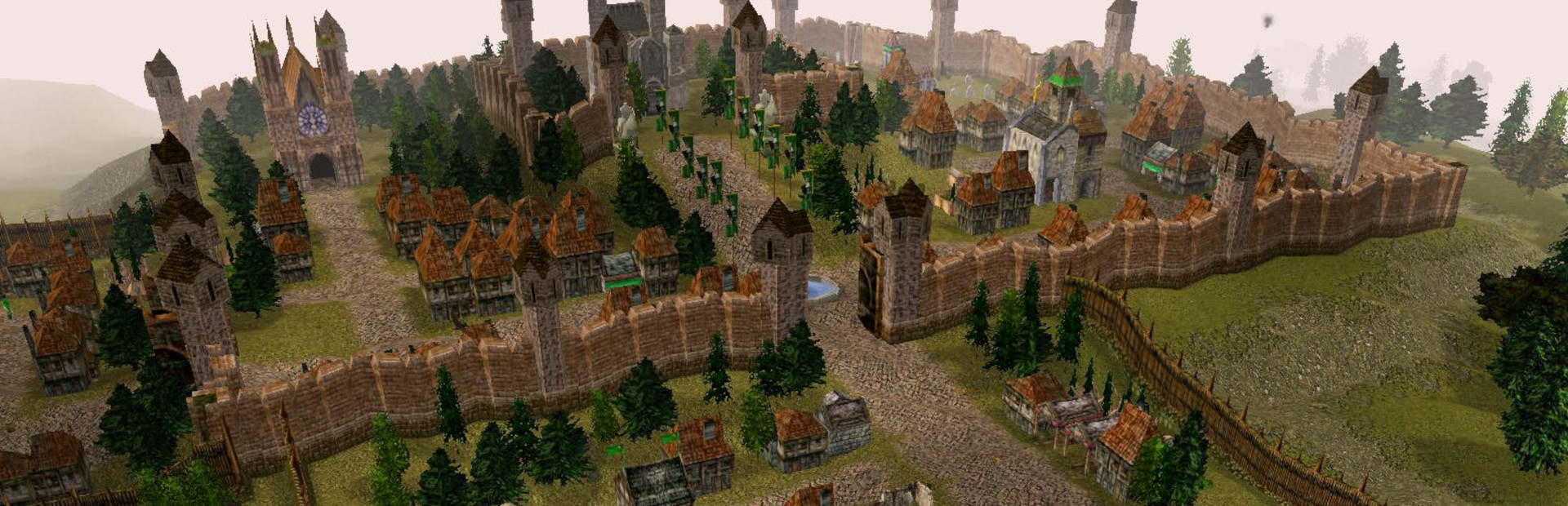
My spreadsheet instincts lit up the moment I understood what Warrior Kings: Battles actually does with its tech tree, because almost no other RTS before or since has handled faction identity this way. You do not pick a side at the lobby screen. You start as a generic peasant kingdom and your build order IS your allegiance. Construct a church early and you are sliding toward the armoured, faith-driven Imperials, whose priests and inquisitors call down Acts of God and whose heavy infantry can anchor a defensive line. Plant a maypole instead and the Pagan path opens: demon summons, Arch Druids who conjure elemental beasts, a Wicker Man that burns sacrifices to call forth Abaddon. Take a guildhall and you drift toward the Renaissance, a gunpowder faction built around riflemen, cannons, mortars, and rocket launchers, trading magic entirely for science. There are also two hybrid sub-paths, Imperial-Renaissance and Pagan-Renaissance, each with their own exclusive units like Dragoon cavalry or a legion of undead. The result is that in any multiplayer game, neither player knows what army they will face until the mid-game. That single design decision gives the skirmish and Valhalla modes replay value that most contemporaries never approached. The economy deserves a paragraph because it is genuinely unusual and the source of most early frustration. Three resources: food, materials, and gold. None of them land in your stockpile until a cart physically hauls them to your warehouse. Military units consume food proportional to army size, so fielding an oversized force bleeds your stores until units start taking damage from starvation. Every farm you build opens food-support slots, but also reduces per-farm output as the total army grows, which creates a tight feedback loop between expansion and attrition that most RTS players will not have seen outside of a Paradox title. Getting up the tech tree is slow. The campaign maps across 22 provinces all end the same way, destroy the opponent manor, with no carry-over of troops or research between missions, which is the main legitimate complaint against the game and one early reviewers flagged hard. The campaign is best understood as a long tutorial that unlocks generals and maps for skirmish, not a story experience. Where the game genuinely holds up in 2024 is the AI general system. The skirmish AI builds a functioning economy, manages unit formations, probes your perimeter for weak points, and uses AI diplomacy to play factions against each other. You can fight up to seven opponents simultaneously, and there is an editor to create custom generals with specific personalities and strategic tendencies. Unit variety is also wide: cavalry, war elephants, spies, supply wagons, catapults, golems, succubi, bishops that heal in the field. Formation and terrain matter more than they do in most RTS of this era. The Valhalla mode, which removes the economy entirely and tasks you with capturing and holding flag points with a pre-selected army, is a genuinely fast-paced side mode that strips the game to pure tactics. The honest caveats are significant. The developer went bankrupt, meaning pathfinding bugs will never be patched. Zoomed-in unit models are blocky by any standard. The in-game tutorial is largely passive, a multimedia demonstration rather than an interactive lesson, and the manual does more teaching than the game itself. The Steam user community is tiny, making multiplayer against humans a long-shot proposition. A small modding scene on Nexus and ModDB exists and covers rebalancing and new units, which helps longevity, but the game is still fundamentally a relic that requires patience and willingness to read documentation before it opens up. If you want a handholding onboarding flow, this is the wrong purchase. If you are the kind of player who runs the same skirmish map four times to test different alignment paths and takes notes on AI general behaviour, this will give you more than its bargain-bin price suggests. Diego, Scout Team

Warrior Kings: Battles

Warrior Kings: Battles

6 may 2014Black CactusStrategy First
GamerScout opina

A fossil-era RTS with one of the cleverest faction systems ever designed, hiding genuine strategic depth behind dated visuals and a tutorial that barely tries.

PC
ProtonDB Platinum
Mejor precio disponible
€0.00
en N/A
Mínimo histórico: €1.08

Comparar precios(0 tiendas)

Cargando precios...

We may earn a commission when you buy games through links on this page — at no extra cost to you. It never affects our rankings or verdicts.

Historial de precios

Historical low
€1.0823 Jun 2026
Keyshops
€1.05€1.14€1.24€1.3310 Jun15 Jun19 Jun24 Jun28 Jun
Tracking prices since 10 Jun 2026
Create alert

Capturas y multimedia

Acerca de Warrior Kings: Battles

My spreadsheet instincts lit up the moment I understood what Warrior Kings: Battles actually does with its tech tree, because almost no other RTS before or since has handled faction identity this way. You do not pick a side at the lobby screen. You start as a generic peasant kingdom and your build order IS your allegiance. Construct a church early and you are sliding toward the armoured, faith-driven Imperials, whose priests and inquisitors call down Acts of God and whose heavy infantry can anchor a defensive line. Plant a maypole instead and the Pagan path opens: demon summons, Arch Druids who conjure elemental beasts, a Wicker Man that burns sacrifices to call forth Abaddon. Take a guildhall and you drift toward the Renaissance, a gunpowder faction built around riflemen, cannons, mortars, and rocket launchers, trading magic entirely for science. There are also two hybrid sub-paths, Imperial-Renaissance and Pagan-Renaissance, each with their own exclusive units like Dragoon cavalry or a legion of undead. The result is that in any multiplayer game, neither player knows what army they will face until the mid-game. That single design decision gives the skirmish and Valhalla modes replay value that most contemporaries never approached. The economy deserves a paragraph because it is genuinely unusual and the source of most early frustration. Three resources: food, materials, and gold. None of them land in your stockpile until a cart physically hauls them to your warehouse. Military units consume food proportional to army size, so fielding an oversized force bleeds your stores until units start taking damage from starvation. Every farm you build opens food-support slots, but also reduces per-farm output as the total army grows, which creates a tight feedback loop between expansion and attrition that most RTS players will not have seen outside of a Paradox title. Getting up the tech tree is slow. The campaign maps across 22 provinces all end the same way, destroy the opponent manor, with no carry-over of troops or research between missions, which is the main legitimate complaint against the game and one early reviewers flagged hard. The campaign is best understood as a long tutorial that unlocks generals and maps for skirmish, not a story experience. Where the game genuinely holds up in 2024 is the AI general system. The skirmish AI builds a functioning economy, manages unit formations, probes your perimeter for weak points, and uses AI diplomacy to play factions against each other. You can fight up to seven opponents simultaneously, and there is an editor to create custom generals with specific personalities and strategic tendencies. Unit variety is also wide: cavalry, war elephants, spies, supply wagons, catapults, golems, succubi, bishops that heal in the field. Formation and terrain matter more than they do in most RTS of this era. The Valhalla mode, which removes the economy entirely and tasks you with capturing and holding flag points with a pre-selected army, is a genuinely fast-paced side mode that strips the game to pure tactics. The honest caveats are significant. The developer went bankrupt, meaning pathfinding bugs will never be patched. Zoomed-in unit models are blocky by any standard. The in-game tutorial is largely passive, a multimedia demonstration rather than an interactive lesson, and the manual does more teaching than the game itself. The Steam user community is tiny, making multiplayer against humans a long-shot proposition. A small modding scene on Nexus and ModDB exists and covers rebalancing and new units, which helps longevity, but the game is still fundamentally a relic that requires patience and willingness to read documentation before it opens up. If you want a handholding onboarding flow, this is the wrong purchase. If you are the kind of player who runs the same skirmish map four times to test different alignment paths and takes notes on AI general behaviour, this will give you more than its bargain-bin price suggests.

Diego
Diego · Scout Team

Strategy & simulation

Etiquetas

singleplayertier:sub-5Dynamic Faction SystemAlignment Tech TreeSkirmish-FocusedFormation CombatValhalla ModeAI General EditorThree-Resource EconomyMedieval Fantasy RTSNo Carry-Over Campaign

Requisitos del sistema

Mínimos

OS
Windows 98/2000/Me/Xp
Memory
128 MB RAM
DirectX
Version 8.1
Storage
800 MB available space
Graphics
16 MB 3D card
Processor
733 MHz

Sigue explorando

Community Discussion

Be the first to comment on Warrior Kings: Battles.

Reseñas y valoraciones

Metacritic
64

Información del juego

Desarrolladora
Black Cactus
Distribuidora
Strategy First
Fecha de lanzamiento
6 may 2014

Alerta de precio

¡Recibe un aviso cuando el precio baje de tu objetivo!

Crear alerta

Más de Black Cactus

Compra mejor: guías útiles

¿Buscas más? Mira juegos como Warrior Kings: Battles →

Preguntas frecuentes sobre Warrior Kings: Battles

¿Cuánto cuesta Warrior Kings: Battles?

El precio de Warrior Kings: Battles cambia a menudo y varía según la tienda, la edición y la región. La tabla de precios en vivo de esta página compara las ofertas más baratas en stock de tiendas de claves de confianza como Eneba y Kinguin, para que siempre veas el precio más bajo actual antes de comprar.

¿Dónde puedo comprar Warrior Kings: Battles más barato?

Compara los precios de Warrior Kings: Battles en todas las tiendas verificadas en la tabla de precios de esta página. Listamos las ofertas de claves y tiendas más baratas en stock, actualizadas con frecuencia, para que siempre veas la mejor oferta actual antes de comprar.

¿En qué plataformas está disponible Warrior Kings: Battles?

Warrior Kings: Battles está disponible en PC.

¿Cuándo se lanzó Warrior Kings: Battles?

Warrior Kings: Battles se lanzó el 6 de mayo de 2014.

¿Quién desarrolló Warrior Kings: Battles?

Warrior Kings: Battles fue desarrollado por Black Cactus y publicado por Strategy First.

¿Merece la pena comprar Warrior Kings: Battles?

Warrior Kings: Battles tiene una puntuación Metacritic de 64/100, lo que lo convierte en uno de los títulos destacados de Strategy. Mira las reseñas completas, las valoraciones y los tiempos de duración en esta página para decidir.