Compara los precios de Voltaire: The Vegan Vampire en tiendas de claves de confianza y encuentra la mejor oferta. Desarrollado por Digitality Games. Publicado por indie.io. Lanzado el 26/10/2023. Disponible en PC. Géneros: Action, Casual, Indie, RPG, Simulation.

Cute enough to disarm you, shallow enough to disappoint you by hour three. Worth a look for co-op couch sessions, not for anyone chasing depth.

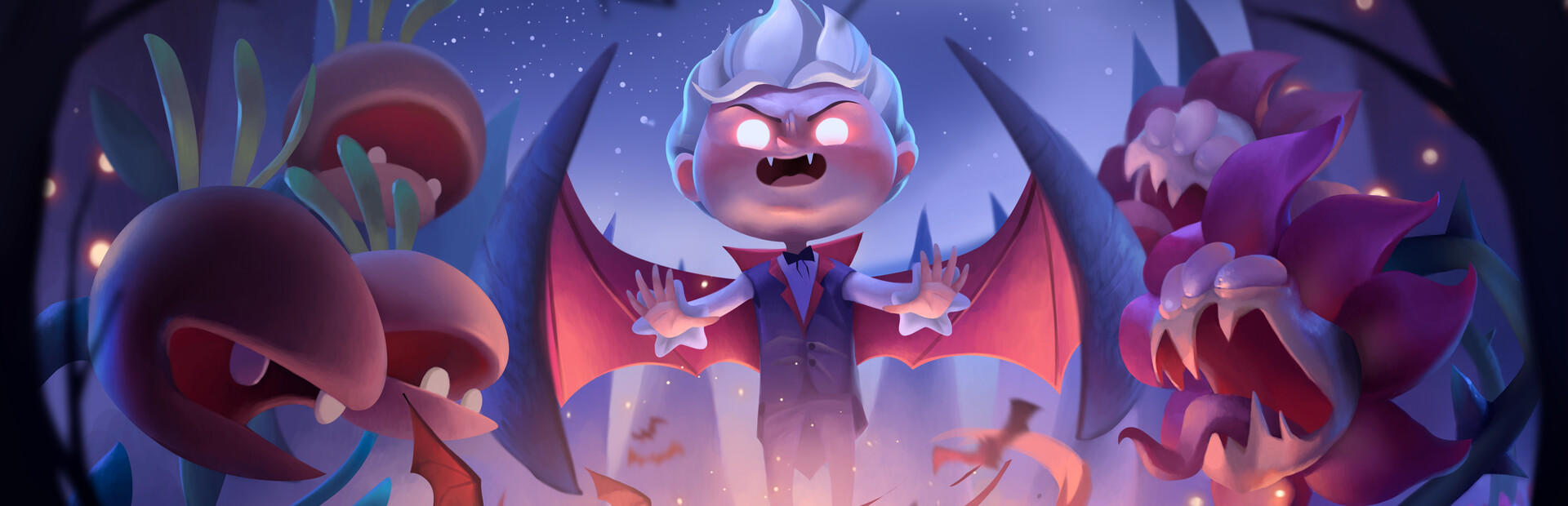
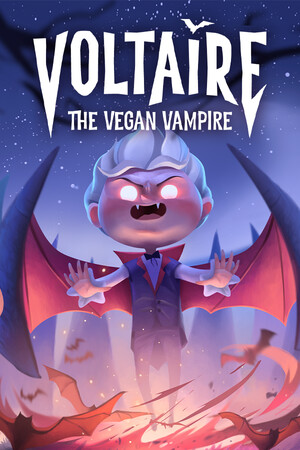
My first instinct with Voltaire: The Vegan Vampire was to map it against other games that blend farming sims with combat loops, and the comparison that kept surfacing was Plants vs Zombies stretched into three dimensions with a roguelite coat of paint slapped on top. The pitch is genuinely clever: you play Dracula's youngest son, a vegan rebel, who must farm crops by day to survive and then defend that same farm from Dracula's nightly minion waves. The structure splits neatly into two phases. During daylight, you plough plots, plant seeds, water them, and manage a hunger meter that drains with every action. At night, those same crops either feed you or fight for you, because two plant categories exist side by side: food plants like Crowberries and veggies that keep hunger down, and offensive plants like Vinemaws and Broodvines that pelt enemies with dark magic, fireballs, and caustic slime. Finding the split between food and firepower across your four garden plots is the game's central tension, and for the first couple of hours it works. The problem the community and most reviewers identify is that the difficulty curve collapses on itself. Early on, surviving a night feels genuinely precarious, especially when poorly managed hunger triggers the night cycle early and spawns tougher waves. Every seven nights a Grim Lord boss shows up, forces a harder fight, and then drops a portal to the next biome. Clearing a biome and moving to new territory should escalate pressure, but it largely does not. Once you learn that Crowberries can be upgraded to dramatically reduce hunger drain, the food management side becomes trivial, and once your XP-funded perk tree fills out, the combat side goes the same way. Steam reviewers note the difficulty swings from punishing at levels one and two to almost passive by level five, and that the upgrade system does not meaningfully counter-scale enemy strength. The roguelite label sits a bit awkwardly here too: in Story Mode, a destroyed house just resets the day rather than ending a run, which removes a lot of the tension that justifies the genre tag. On the structural side, the tutorial is delivered through letters from uncles Frank and Stein, which is light-touch and unobtrusive for newcomers. Controls are simple whether you are on a controller or keyboard, and local split-screen co-op is supported, mixing controller and keyboard inputs across two players. That co-op angle is probably the game's strongest selling point right now; the loop that gets repetitive solo becomes much more forgiving as a shared casual session. The art style is a genuine strength throughout: hand-drawn 2D sprites in an isometric 3D world, horror-comedy tone, and character designs that hold up across biomes. The soundtrack adds appropriate atmosphere without overstaying its welcome. What falls flat beyond the difficulty issues is the narrative. The story is surface-level by design, and while Frank and Stein deliver some genuinely funny puns via raven-mail, they are the only source of character interaction in the entire game. The Grim Lords that cap each biome are a missed opportunity for personality; most fight like slightly stronger regular enemies rather than distinct boss encounters with their own mechanics. The resource grind for crafting and the repetitive map traversal required to collect wood and seeds add padding that reviewers consistently flag as the session-killer. There is a skill tree and some cosmetic unlocks that technically support replayability, but without the difficulty to pressure-test different build choices, experimenting with perks loses urgency quickly. For a strategy or sim player like me, the decision space here is too thin to sustain interest past the initial setup. The food-vs-firepower crop split is a solid idea that never gets complicated enough to reward genuine optimization. If you are a casual player who wants a cozy-but-spooky session game to share with someone on the couch, the charm-to-effort ratio is reasonable. If you want a farming roguelite with the systemic depth of something like Hades or even Stardew Valley modded for challenge, this one will leave you hungry for substance well before Dracula sends his best. Diego, Scout Team

Voltaire: The Vegan Vampire

Voltaire: The Vegan Vampire

26 oct 2023Digitality Gamesindie.io
GamerScout opina

Cute enough to disarm you, shallow enough to disappoint you by hour three. Worth a look for co-op couch sessions, not for anyone chasing depth.

PC
Steam Deck VerifiedProtonDB Platinum
Mejor precio disponible
€0.00
en N/A
Mínimo histórico: €0.58

Comparar precios(0 tiendas)

Cargando precios...

We may earn a commission when you buy games through links on this page — at no extra cost to you. It never affects our rankings or verdicts.

Historial de precios

Historical low
€0.5822 Jun 2026
Keyshops
€0.55€0.65€0.75€0.8510 Jun15 Jun19 Jun24 Jun28 Jun
Tracking prices since 10 Jun 2026
Create alert

Capturas y multimedia

Acerca de Voltaire: The Vegan Vampire

My first instinct with Voltaire: The Vegan Vampire was to map it against other games that blend farming sims with combat loops, and the comparison that kept surfacing was Plants vs Zombies stretched into three dimensions with a roguelite coat of paint slapped on top. The pitch is genuinely clever: you play Dracula's youngest son, a vegan rebel, who must farm crops by day to survive and then defend that same farm from Dracula's nightly minion waves. The structure splits neatly into two phases. During daylight, you plough plots, plant seeds, water them, and manage a hunger meter that drains with every action. At night, those same crops either feed you or fight for you, because two plant categories exist side by side: food plants like Crowberries and veggies that keep hunger down, and offensive plants like Vinemaws and Broodvines that pelt enemies with dark magic, fireballs, and caustic slime. Finding the split between food and firepower across your four garden plots is the game's central tension, and for the first couple of hours it works. The problem the community and most reviewers identify is that the difficulty curve collapses on itself. Early on, surviving a night feels genuinely precarious, especially when poorly managed hunger triggers the night cycle early and spawns tougher waves. Every seven nights a Grim Lord boss shows up, forces a harder fight, and then drops a portal to the next biome. Clearing a biome and moving to new territory should escalate pressure, but it largely does not. Once you learn that Crowberries can be upgraded to dramatically reduce hunger drain, the food management side becomes trivial, and once your XP-funded perk tree fills out, the combat side goes the same way. Steam reviewers note the difficulty swings from punishing at levels one and two to almost passive by level five, and that the upgrade system does not meaningfully counter-scale enemy strength. The roguelite label sits a bit awkwardly here too: in Story Mode, a destroyed house just resets the day rather than ending a run, which removes a lot of the tension that justifies the genre tag. On the structural side, the tutorial is delivered through letters from uncles Frank and Stein, which is light-touch and unobtrusive for newcomers. Controls are simple whether you are on a controller or keyboard, and local split-screen co-op is supported, mixing controller and keyboard inputs across two players. That co-op angle is probably the game's strongest selling point right now; the loop that gets repetitive solo becomes much more forgiving as a shared casual session. The art style is a genuine strength throughout: hand-drawn 2D sprites in an isometric 3D world, horror-comedy tone, and character designs that hold up across biomes. The soundtrack adds appropriate atmosphere without overstaying its welcome. What falls flat beyond the difficulty issues is the narrative. The story is surface-level by design, and while Frank and Stein deliver some genuinely funny puns via raven-mail, they are the only source of character interaction in the entire game. The Grim Lords that cap each biome are a missed opportunity for personality; most fight like slightly stronger regular enemies rather than distinct boss encounters with their own mechanics. The resource grind for crafting and the repetitive map traversal required to collect wood and seeds add padding that reviewers consistently flag as the session-killer. There is a skill tree and some cosmetic unlocks that technically support replayability, but without the difficulty to pressure-test different build choices, experimenting with perks loses urgency quickly. For a strategy or sim player like me, the decision space here is too thin to sustain interest past the initial setup. The food-vs-firepower crop split is a solid idea that never gets complicated enough to reward genuine optimization. If you are a casual player who wants a cozy-but-spooky session game to share with someone on the couch, the charm-to-effort ratio is reasonable. If you want a farming roguelite with the systemic depth of something like Hades or even Stardew Valley modded for challenge, this one will leave you hungry for substance well before Dracula sends his best.

Diego
Diego · Scout Team

Strategy & simulation

Etiquetas

singleplayermultiplayercooplocal-coopachievementscontroller-supportcloud-savestier:sub-5Tower Defense HybridHunger ManagementCouch Co-opDay-Night CyclePerk TreeIsometric ActionHorror-ComedyWave Defense

Requisitos del sistema

Mínimos

OS
Windows Vista/Windows 7/Windows 8
Memory
2 GB RAM
Storage
3 GB available space
Graphics
Radeon HD5450 or better; 256 MB or higher
Processor
1.7+ GHz or better
Sound Card
100% DirectX9.0c compatible sound card and drivers

Recomendados

OS
Windows 10
Memory
8 GB RAM
Storage
3 GB available space
Graphics
Radeon HD5450 or better; 256 MB or higher
Processor
1.7+ GHz or better
Sound Card
100% DirectX9.0c compatible sound card and drivers

Sigue explorando

Community Discussion

Be the first to comment on Voltaire: The Vegan Vampire.

Reseñas y valoraciones

No hay valoraciones disponibles

Información del juego

Desarrolladora
Digitality Games
Distribuidora
indie.io
Fecha de lanzamiento
26 oct 2023

Alerta de precio

¡Recibe un aviso cuando el precio baje de tu objetivo!

Crear alerta

Más de Digitality Games

Compra mejor: guías útiles

¿Buscas más? Mira juegos como Voltaire: The Vegan Vampire →

Preguntas frecuentes sobre Voltaire: The Vegan Vampire

¿Cuánto cuesta Voltaire: The Vegan Vampire?

El precio de Voltaire: The Vegan Vampire cambia a menudo y varía según la tienda, la edición y la región. La tabla de precios en vivo de esta página compara las ofertas más baratas en stock de tiendas de claves de confianza como Eneba y Kinguin, para que siempre veas el precio más bajo actual antes de comprar.

¿Dónde puedo comprar Voltaire: The Vegan Vampire más barato?

Compara los precios de Voltaire: The Vegan Vampire en todas las tiendas verificadas en la tabla de precios de esta página. Listamos las ofertas de claves y tiendas más baratas en stock, actualizadas con frecuencia, para que siempre veas la mejor oferta actual antes de comprar.

¿En qué plataformas está disponible Voltaire: The Vegan Vampire?

Voltaire: The Vegan Vampire está disponible en PC.

¿Cuándo se lanzó Voltaire: The Vegan Vampire?

Voltaire: The Vegan Vampire se lanzó el 26 de octubre de 2023.

¿Quién desarrolló Voltaire: The Vegan Vampire?

Voltaire: The Vegan Vampire fue desarrollado por Digitality Games y publicado por indie.io.