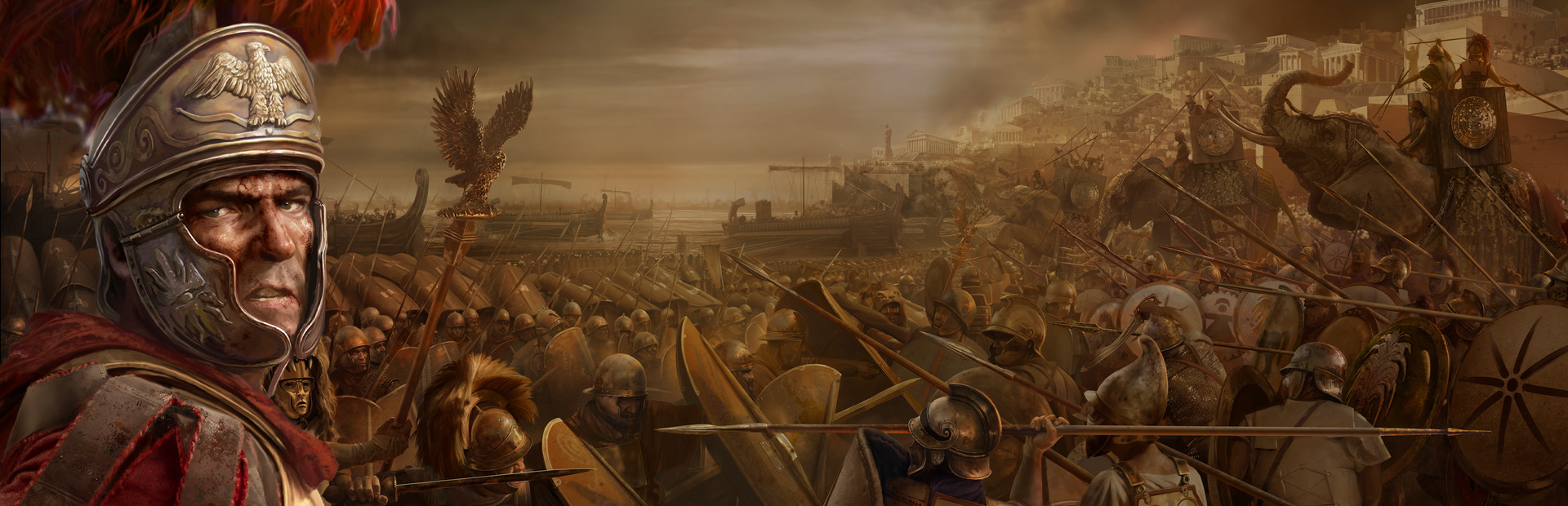
Total War: ROME II - Emperor Edition
A redemption arc a decade in the making: Rome II's Emperor Edition is the patched, politics-deepened grand strategy that the 2013 launch should have been, and it still draws a crowd for a reason.
Comparar precios(0 tiendas)
Cargando precios...
We may earn a commission when you buy games through links on this page — at no extra cost to you. It never affects our rankings or verdicts.
Historial de precios
Capturas y multimedia
Acerca de Total War: ROME II - Emperor Edition
I've tracked a lot of strategy releases that shipped broken and never recovered. Rome II is the rare counter-example. The launch in September 2013 was, by most accounts, a disaster - AI that barely functioned, a politics system with no real teeth, and sieges that were practically comedic. Creative Assembly spent the better part of a year issuing substantial patches, and the Emperor Edition is the product of all that work bundled into a single release. The result sits at 85% positive across over 31,000 Steam reviews, which is a remarkable turnaround for a title that generated so much early hostility. So what are you actually buying? At its core this is the classic Total War split: a turn-based campaign layer where you manage provinces, build chains, move armies, and wrestle with an internal politics system that can - and will - trigger civil wars if you neglect it, paired with a real-time battle layer where you command thousands of soldiers across historically inspired maps. The campaign map stretches from the British Isles to Persia. Faction rosters vary meaningfully: Roman legions play nothing like Barbarian warbands or the naval-heavy Greek city-states. The included Imperator Augustus campaign, set in 42 BC during the chaos of the Second Triumvirate, offers a tighter, more focused scenario than the sprawling Grand Campaign and is a genuinely smart starting point for newcomers. Building chains reward controlling territories with specific natural resources - iron provinces matter for unit quality, which means your early expansion choices have genuine downstream consequences. The AI critique that hounded the launch has been addressed, though not entirely erased. On the campaign map it will attack weakly held borders and protect its own supply lines with reasonable competence. In battle, enemy generals occasionally launch suicidal cavalry charges away from their main force - a long-running Total War quirk - and naval engagements still feel clunkier than land combat. Autoresolve calculations are also notoriously conservative and will sometimes recommend retreat when you hold a clear advantage, so learn to override it. The tutorial, bluntly put, covers the bare minimum. It shows you formations and basic movement and then essentially waves you off. Strategy veterans will be fine; players coming in cold should expect to spend a few hours in lower-difficulty sandbox runs before the Grand Campaign's systems click. The Total War Academy linked from the main menu is more useful than the in-game tutorial, and community guides on Steam fill the remaining gaps well. The mod ecosystem is where Rome II's long-term value lives. Divide et Impera, the community's flagship overhaul, rebuilds unit morale and population mechanics from the ground up and adds a layer of simulation depth that puts vanilla to shame - though fair warning, it is not for first-timers. Radious Total War is a more approachable overhaul that rebalances units and campaign AI without rebuilding the whole structure. Even without mods, the combination of over a dozen base factions, multiple DLC campaigns (Caesar in Gaul, Hannibal at the Gates, Empire Divided), and the sheer geographic scale of the Grand Campaign means the game can absorb hundreds of hours before it repeats itself meaningfully. There are legitimate concerns for buyers in 2025 and beyond. Some players on Windows 11 report crashes and launch instability, and Creative Assembly's active patch support for this title is effectively finished. If you hit technical problems, community fixes and config tweaks are your primary recourse. The Mac version has further compatibility caveats, particularly on Intel-based machines. None of this is a dealbreaker for most PC players on modern hardware, but it is worth knowing before you commit. For anyone who bounced off the 2013 release, the Emperor Edition genuinely is a different game. For newcomers to Total War, start with the Imperator Augustus campaign on normal difficulty, read one community guide on the politics system before you start, and let the first thirty hours teach you the rest. The depth is there. The mod support keeps it relevant. The AI is imperfect but no longer embarrassing.

Strategy & simulation
Etiquetas
Requisitos del sistema
Mínimos
- Processor
- 2 GHz Intel Dual Core processor / 2.6 GHz Intel Single Core processor
- Memory
- 2GB RAM
- Graphics
- 512 MB DirectX 9.0c compatible card (shader model 3, vertex text…
Recomendados
- Processor
- 2nd Generation Intel Core i5 processor (or greater)
- Memory
- 4GB RAM
- Graphics
- 1024 MB DirectX 11 compatible graphics card. DirectX®:11 Hard Drive:35 GB HD space Addi…
Sigue explorando
Community Discussion
Be the first to comment on Total War: ROME II - Emperor Edition.
Reseñas y valoraciones
Información del juego
- Desarrolladora
- CREATIVE ASSEMBLY
- Distribuidora
- SEGA
- Fecha de lanzamiento
- 2 sept 2013