Compara los precios de Tinboy en tiendas de claves de confianza y encuentra la mejor oferta. Desarrollado por Interactive Stone. Publicado por Interactive Stone. Lanzado el 31/8/2015. Disponible en PC, Mac, Linux. Géneros: Casual, Indie.

Sixty physics-puzzle levels built around a bow with three arrow types, a genuinely steep difficulty curve, and controls that community guides exist specifically to help you survive.

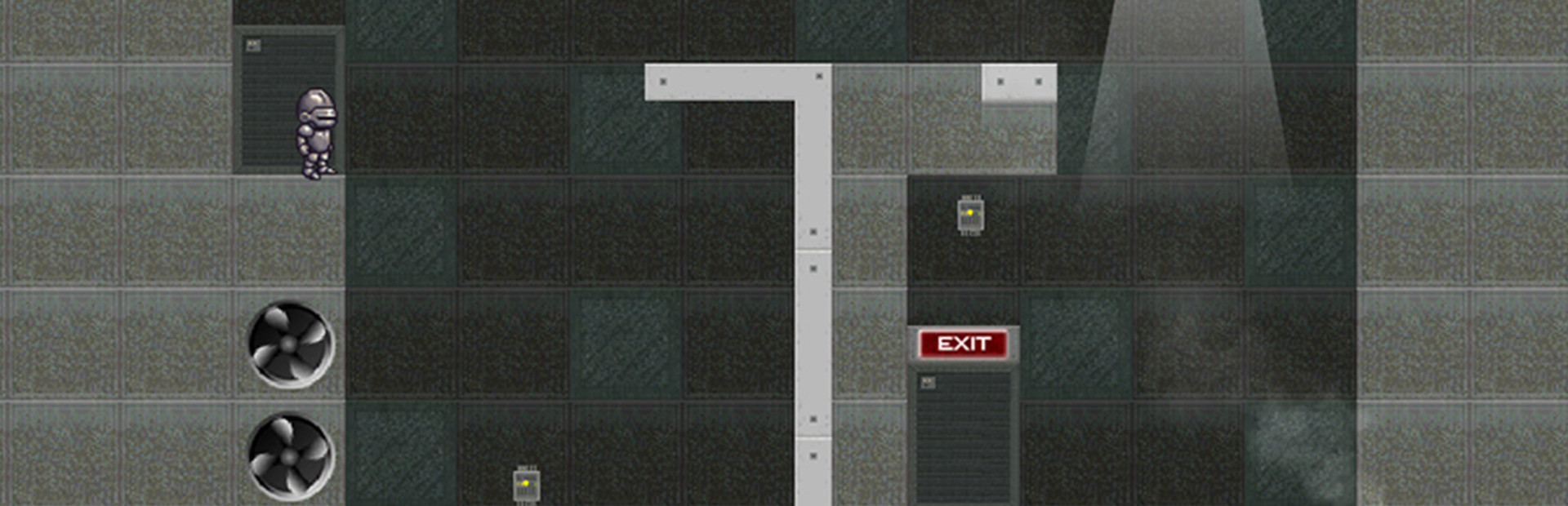
I want to like Tinboy. Genuinely. A small robot armed only with a bow, dropped into sixty increasingly devious puzzle rooms, reaching for the exit through creative use of three arrow types: a simple projectile, a rope for swinging and climbing, and an explosive for blasting your way through obstacles. That core concept has real charm, and for a micro-budget solo-developer release from 2015, the ambition is worth acknowledging. The bow mechanic is the whole game. You aim, you fire, and the interaction between your shot and the physics of each room is supposed to be the puzzle. Rope arrows let you latch onto geometry and swing across gaps or haul objects. Explosive arrows double as bombs you can detonate to catapult the Tinboy upward or shift heavy crates. Simple arrows can be fired into walls to form improvised ledges you then stand on. On paper that is clever layering. In practice, the aiming reticle spins wildly when you try to place precise shots, the hitbox for swapping between arrow types sits right on top of your firing control, and the physics engine treats object weight inconsistently enough that community members had to build picture guides spanning over 120 screenshots just to communicate what the intended solutions actually look like. Difficulty is advertised upfront, and that honesty deserves credit. Stages escalate fast, and the game does allow you to skip levels from the main menu if a particular room is eating you alive. That is a merciful concession. But there is a meaningful difference between hard-because-clever and hard-because-the-controls-disagree-with-you, and Tinboy lands uncomfortably in the second camp for too many of its sixty levels. The Steam community consensus sits at a mixed 65 percent positive across a few hundred reviews, which tracks: there are people who found the low price worth the puzzle hunt, and people who bounced off the jank inside ten levels and never returned. Both reactions are completely understandable. For badge collectors and trading card enthusiasts this gets easier to recommend. The game ships with Steam achievements, five trading cards, and full controller support. The average playtime hovers around four hours, meaning even a determined run through all sixty puzzles is not a huge time investment. If you treat it as a compact, occasionally maddening physics toy rather than a precision platformer with rigorous design, the experience becomes more forgiving. Go in expecting rough edges and you will find a game that at least commits to its single mechanical idea all the way to the end. Kai, Scout Team

Tinboy

Tinboy

31 ago 2015Interactive Stone
GamerScout opina

Sixty physics-puzzle levels built around a bow with three arrow types, a genuinely steep difficulty curve, and controls that community guides exist specifically to help you survive.

PCMacLinux
Steam Deck Playable
Mejor precio disponible
€0.00
en N/A
Mínimo histórico: €0.42

Comparar precios(0 tiendas)

Cargando precios...

We may earn a commission when you buy games through links on this page — at no extra cost to you. It never affects our rankings or verdicts.

Historial de precios

Historical low
€0.426 Jun 2026
Keyshops
€0.39€0.41€0.43€0.456 Jun12 Jun17 Jun23 Jun28 Jun
Tracking prices since 6 Jun 2026
Create alert

Capturas y multimedia

Captura

Acerca de Tinboy

I want to like Tinboy. Genuinely. A small robot armed only with a bow, dropped into sixty increasingly devious puzzle rooms, reaching for the exit through creative use of three arrow types: a simple projectile, a rope for swinging and climbing, and an explosive for blasting your way through obstacles. That core concept has real charm, and for a micro-budget solo-developer release from 2015, the ambition is worth acknowledging. The bow mechanic is the whole game. You aim, you fire, and the interaction between your shot and the physics of each room is supposed to be the puzzle. Rope arrows let you latch onto geometry and swing across gaps or haul objects. Explosive arrows double as bombs you can detonate to catapult the Tinboy upward or shift heavy crates. Simple arrows can be fired into walls to form improvised ledges you then stand on. On paper that is clever layering. In practice, the aiming reticle spins wildly when you try to place precise shots, the hitbox for swapping between arrow types sits right on top of your firing control, and the physics engine treats object weight inconsistently enough that community members had to build picture guides spanning over 120 screenshots just to communicate what the intended solutions actually look like. Difficulty is advertised upfront, and that honesty deserves credit. Stages escalate fast, and the game does allow you to skip levels from the main menu if a particular room is eating you alive. That is a merciful concession. But there is a meaningful difference between hard-because-clever and hard-because-the-controls-disagree-with-you, and Tinboy lands uncomfortably in the second camp for too many of its sixty levels. The Steam community consensus sits at a mixed 65 percent positive across a few hundred reviews, which tracks: there are people who found the low price worth the puzzle hunt, and people who bounced off the jank inside ten levels and never returned. Both reactions are completely understandable. For badge collectors and trading card enthusiasts this gets easier to recommend. The game ships with Steam achievements, five trading cards, and full controller support. The average playtime hovers around four hours, meaning even a determined run through all sixty puzzles is not a huge time investment. If you treat it as a compact, occasionally maddening physics toy rather than a precision platformer with rigorous design, the experience becomes more forgiving. Go in expecting rough edges and you will find a game that at least commits to its single mechanical idea all the way to the end.

Kai
Kai · Scout Team

Indie & narrative

Etiquetas

singleplayerachievementscontroller-supporttrading-cardstier:sub-5Physics PuzzlerBow MechanicsLevel Skip OptionShort PlaytimeSteam Badge HunterPrecision RequiredController Compatible

Requisitos del sistema

Mínimos

OS
Windows XP/Windows Vista/Windows 7/8
Memory
128 MB RAM
Graphics
256 Mb
Processor
1.6 GHz

Sigue explorando

Community Discussion

Be the first to comment on Tinboy.

Reseñas y valoraciones

No hay valoraciones disponibles

Información del juego

Desarrolladora
Interactive Stone
Distribuidora
Interactive Stone
Fecha de lanzamiento
31 ago 2015

Alerta de precio

¡Recibe un aviso cuando el precio baje de tu objetivo!

Crear alerta

Más de Interactive Stone

Compra mejor: guías útiles

¿Buscas más? Mira juegos como Tinboy →

Preguntas frecuentes sobre Tinboy

¿Cuánto cuesta Tinboy?

El precio de Tinboy cambia a menudo y varía según la tienda, la edición y la región. La tabla de precios en vivo de esta página compara las ofertas más baratas en stock de tiendas de claves de confianza como Eneba y Kinguin, para que siempre veas el precio más bajo actual antes de comprar.

¿Dónde puedo comprar Tinboy más barato?

Compara los precios de Tinboy en todas las tiendas verificadas en la tabla de precios de esta página. Listamos las ofertas de claves y tiendas más baratas en stock, actualizadas con frecuencia, para que siempre veas la mejor oferta actual antes de comprar.

¿En qué plataformas está disponible Tinboy?

Tinboy está disponible en PC, Mac, Linux.

¿Cuándo se lanzó Tinboy?

Tinboy se lanzó el 31 de agosto de 2015.

¿Quién desarrolló Tinboy?

Tinboy fue desarrollado por Interactive Stone.