Compara los precios de Timberborn en tiendas de claves de confianza y encuentra la mejor oferta. Desarrollado por Mechanistry. Publicado por Mechanistry. Lanzado el 15/9/2021. Disponible en PC, Mac. Géneros: Indie, Simulation, Strategy, Early Access. Puntuación Metacritic: 85/100.

Water management so deep it'll ruin your sleep schedule: Timberborn makes dam-building feel like genuine systems engineering, wrapped in a post-apocalyptic beaver colony that somehow stays charming the whole way through.

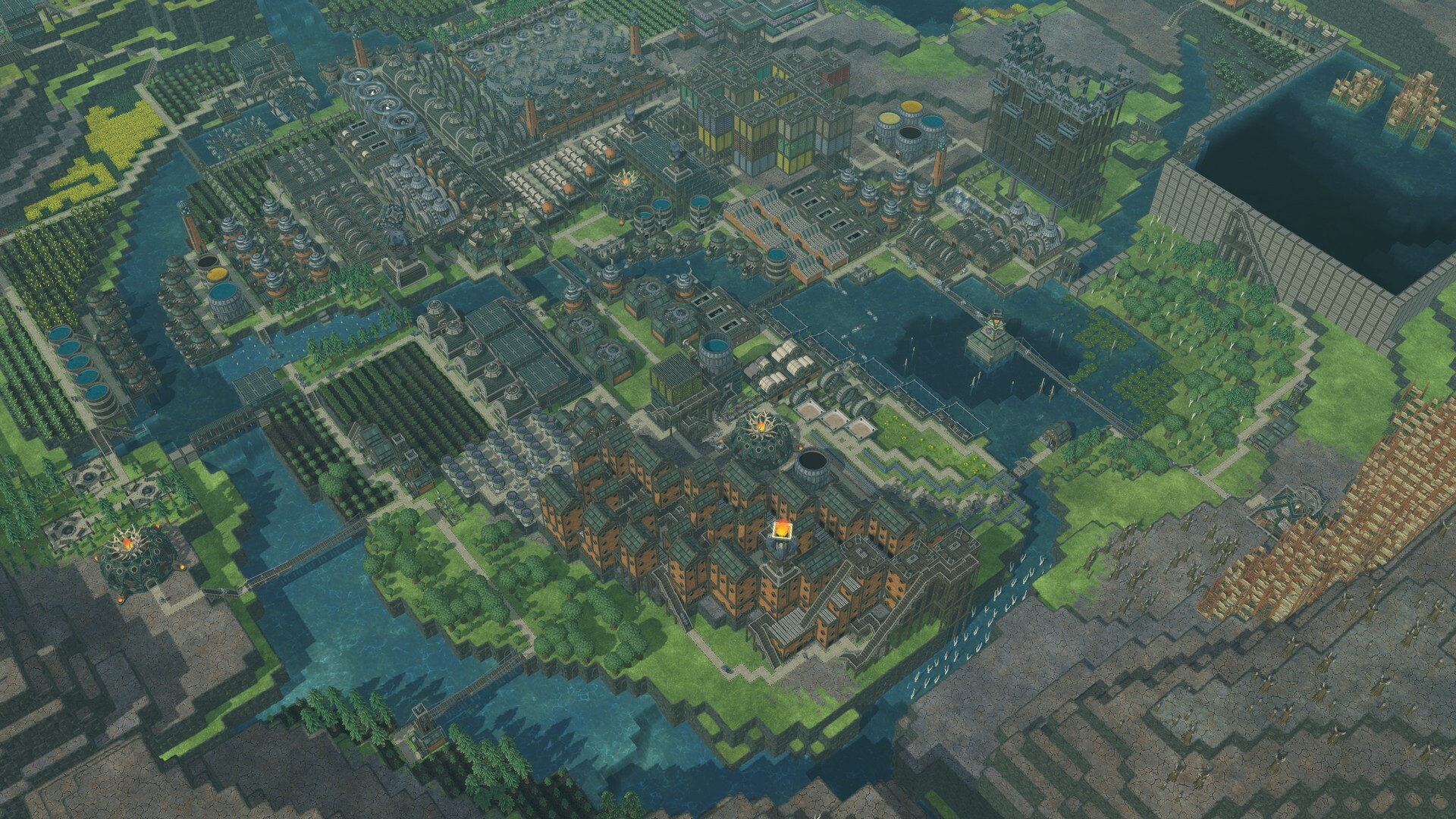
I pulled up Timberborn expecting a cosy city-builder with a cute gimmick. Twelve hours later I was sketching reservoir diagrams on a notepad because my seasonal lake wasn't wide enough to survive a badwater cycle. That pivot from "cute beaver game" to "actual hydraulic planning problem" is exactly what makes Timberborn worth your attention. At its core this is a colony-builder where every decision eventually traces back to water. You place farms, sawmills, and lodges on a grid, stack buildings vertically using the Solid-block system to save precious ground space, and route hydro-power through water wheels to run your production chains. So far, fairly standard. Then the drought timer kicks in. Water sources shut off, rivers drain, crops die, and suddenly every dam you skipped and every reservoir you undersized comes back to bite you. Later, badwater events introduce contaminated flood cycles that kill crops and poison trees on contact, demanding you build containment barriers and rerouting infrastructure before the wave arrives. The difficulty curve is honest: the game warns you these mechanics are coming, and the tension of watching your preparation either hold or fail is where most of the real satisfaction lives. Faction choice matters more than it initially appears. Folktails are the nature-oriented starting option: windmill power (free but weather-dependent), natural breeding through housing, and an irrigation tower that waters a massive field radius. Iron Teeth run wood-burning engines for rock-steady power output, use Breeding Pods to control population growth on demand, and have access to a deep-water pump capable of reaching reservoirs six tiles down. Folktails reward sprawling, organic colony layouts; Iron Teeth reward tight, vertical industrial packing. Neither is objectively stronger, but they play differently enough that a second run with the opposing faction feels genuinely fresh rather than cosmetic. The 1.0 update also added automation: manual levers, water sensors, logical relays, and bots let you wire up conditional systems that would feel at home in a light version of Factorio, giving the late game a second layer of depth for players who want to min-max colony efficiency. The legitimate criticisms are real. The science-point unlock tree is slow in the early game, and some players will find the waiting pace frustrating between decisions. The tutorial covers the basics but leaves complex systems like district management and automation largely unexplained, so expect to spend time in community guides or the Steam Workshop. Speaking of which, Workshop support is active and healthy, with mods covering everything from behavior tweaks to entirely new mechanics. End-game direction is thin if you need external goals to stay motivated: once droughts are solved and your production chains are humming, there is no enemy faction or scenario timer pushing back. For sandbox-minded players that is a feature; for goal-driven players it is a real limitation worth knowing before buying. For strategy and sim fans this is a well-constructed machine with a low entry floor and a surprisingly high ceiling. Start with Folktails on normal difficulty, spend your first few hours building the dam before you think you need it, and resist the urge to skip the irrigation tower research. The game rewards the kind of forward-planning headspace that will feel immediately familiar to anyone who colour-codes their Paradox save files. Diego, Scout Team

Timberborn

Timberborn

15 sept 2021Mechanistry
GamerScout opina

Water management so deep it'll ruin your sleep schedule: Timberborn makes dam-building feel like genuine systems engineering, wrapped in a post-apocalyptic beaver colony that somehow stays charming the whole way through.

PCMac
Steam Deck PlayableProtonDB Platinum
Mejor precio disponible
€0.00
en N/A
Mínimo histórico: €10.94

Comparar precios(0 tiendas)

Cargando precios...

We may earn a commission when you buy games through links on this page — at no extra cost to you. It never affects our rankings or verdicts.

Historial de precios

Historical low
€10.9426 Jun 2026
Keyshops
€10.84€11.19€11.53€11.885 Jun11 Jun17 Jun22 Jun28 Jun
Tracking prices since 5 Jun 2026
Create alert

Capturas y multimedia

Captura

Acerca de Timberborn

I pulled up Timberborn expecting a cosy city-builder with a cute gimmick. Twelve hours later I was sketching reservoir diagrams on a notepad because my seasonal lake wasn't wide enough to survive a badwater cycle. That pivot from "cute beaver game" to "actual hydraulic planning problem" is exactly what makes Timberborn worth your attention. At its core this is a colony-builder where every decision eventually traces back to water. You place farms, sawmills, and lodges on a grid, stack buildings vertically using the Solid-block system to save precious ground space, and route hydro-power through water wheels to run your production chains. So far, fairly standard. Then the drought timer kicks in. Water sources shut off, rivers drain, crops die, and suddenly every dam you skipped and every reservoir you undersized comes back to bite you. Later, badwater events introduce contaminated flood cycles that kill crops and poison trees on contact, demanding you build containment barriers and rerouting infrastructure before the wave arrives. The difficulty curve is honest: the game warns you these mechanics are coming, and the tension of watching your preparation either hold or fail is where most of the real satisfaction lives. Faction choice matters more than it initially appears. Folktails are the nature-oriented starting option: windmill power (free but weather-dependent), natural breeding through housing, and an irrigation tower that waters a massive field radius. Iron Teeth run wood-burning engines for rock-steady power output, use Breeding Pods to control population growth on demand, and have access to a deep-water pump capable of reaching reservoirs six tiles down. Folktails reward sprawling, organic colony layouts; Iron Teeth reward tight, vertical industrial packing. Neither is objectively stronger, but they play differently enough that a second run with the opposing faction feels genuinely fresh rather than cosmetic. The 1.0 update also added automation: manual levers, water sensors, logical relays, and bots let you wire up conditional systems that would feel at home in a light version of Factorio, giving the late game a second layer of depth for players who want to min-max colony efficiency. The legitimate criticisms are real. The science-point unlock tree is slow in the early game, and some players will find the waiting pace frustrating between decisions. The tutorial covers the basics but leaves complex systems like district management and automation largely unexplained, so expect to spend time in community guides or the Steam Workshop. Speaking of which, Workshop support is active and healthy, with mods covering everything from behavior tweaks to entirely new mechanics. End-game direction is thin if you need external goals to stay motivated: once droughts are solved and your production chains are humming, there is no enemy faction or scenario timer pushing back. For sandbox-minded players that is a feature; for goal-driven players it is a real limitation worth knowing before buying. For strategy and sim fans this is a well-constructed machine with a low entry floor and a surprisingly high ceiling. Start with Folktails on normal difficulty, spend your first few hours building the dam before you think you need it, and resist the urge to skip the irrigation tower research. The game rewards the kind of forward-planning headspace that will feel immediately familiar to anyone who colour-codes their Paradox save files.

Diego
Diego · Scout Team

Strategy & simulation

Etiquetas

singleplayercloud-savessteamCity-BuilderWater PhysicsDrought SurvivalFaction ChoiceTerraformingVertical ConstructionSandbox SurvivalWorkshop SupportWater ManagementAutomation SystemsColony ManagementBadwater EventsFaction ReplayabilityGravity BatteryLumberpunkScience Tree

Requisitos del sistema

Mínimos

OS
64-bit Windows 7 or newer
Processor
2-core 1.7 GHz or better
Memory
4 GB RAM
Graphics
GeForce GTX 660, Radeon RX 460 or similar
DirectX
Version 11
Storage
3 GB a…

Sigue explorando

Community Discussion

Be the first to comment on Timberborn.

Reseñas y valoraciones

Metacritic
85
Steam
96%(39,492)

Información del juego

Desarrolladora
Mechanistry
Distribuidora
Mechanistry
Fecha de lanzamiento
15 sept 2021

Modos de juego

singleplayer

Idiomas

Subtítulos (15)
EnglishFrenchGermanSpanish - SpainPolishPortuguese - Brazil+9 más

Características

Cloud Saves

Alerta de precio

¡Recibe un aviso cuando el precio baje de tu objetivo!

Crear alerta

Compra mejor: guías útiles

Timberborn en directo en Twitch

¿Buscas más? Mira juegos como Timberborn →

Preguntas frecuentes sobre Timberborn

¿Cuánto cuesta Timberborn?

El precio de Timberborn cambia a menudo y varía según la tienda, la edición y la región. La tabla de precios en vivo de esta página compara las ofertas más baratas en stock de tiendas de claves de confianza como Eneba y Kinguin, para que siempre veas el precio más bajo actual antes de comprar.

¿Dónde puedo comprar Timberborn más barato?

Compara los precios de Timberborn en todas las tiendas verificadas en la tabla de precios de esta página. Listamos las ofertas de claves y tiendas más baratas en stock, actualizadas con frecuencia, para que siempre veas la mejor oferta actual antes de comprar.

¿En qué plataformas está disponible Timberborn?

Timberborn está disponible en PC, Mac.

¿Cuándo se lanzó Timberborn?

Timberborn se lanzó el 15 de septiembre de 2021.

¿Quién desarrolló Timberborn?

Timberborn fue desarrollado por Mechanistry.

¿Merece la pena comprar Timberborn?

Timberborn tiene una puntuación Metacritic de 85/100, lo que lo convierte en uno de los títulos destacados de Indie. Mira las reseñas completas, las valoraciones y los tiempos de duración en esta página para decidir.