Compara los precios de The Wandering Village en tiendas de claves de confianza y encuentra la mejor oferta. Desarrollado por Stray Fawn Studio. Publicado por Stray Fawn Publishing. Lanzado el 17/7/2025. Disponible en PC, Mac, Linux, Xbox. Géneros: Simulation, Strategy.

City-building on the back of a living, breathing creature sounds like a gimmick until the trust system kicks in and you realize you've been neglecting Onbu for 20 minutes to squeeze out one more food chain.

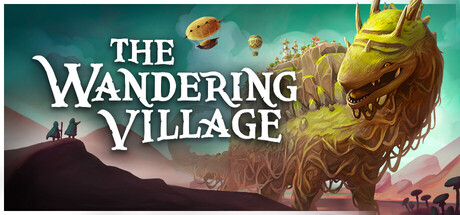
I went into The Wandering Village with the usual sim-head skepticism: novel premise, probably shallow execution. That read was only half right. The Onbu mechanic is not window dressing. It is a second management layer running parallel to every production chain decision you make, and ignoring it has real consequences. Build up enough trust with your creature host and you gain the ability to influence Onbu's route across the world map, steering away from toxic spore zones and into resource-rich biomes. Neglect that relationship by pulling out back spines for extra build space, draining blood for emergency medicine, or over-harvesting the flora growing on his back, and your mobile home starts making its own decisions. That tension between village optimization and creature welfare is where the game earns its identity. The core city-builder loop is familiar territory: house your villagers, assign jobs, manage food and water production chains, push research up a branching tech tree. What keeps it fresh is that your build footprint is physically finite and constantly in motion. Each biome Onbu walks through changes temperature and humidity, which in turn throttles which crops survive and how fast your water supply depletes. A desert crossing demands advanced moisture tech; a toxic storm means your herb stockpiles need to cover both villager medicine and Onbu treatment simultaneously. Reviewers praised the way these systems interlock, though the granular resource prioritization falls short when your villagers cheerfully drain herb stockpiles while Onbu sits poisoned ten meters away. A proper supply-chain lock system is missing, and you will feel that gap. The inability to rotate buildings compounds layout frustration on a grid-based map that already punishes inefficient placement. These are solvable quality-of-life gaps, not fundamental design failures, but they nag. For newcomers to city-builders, this is actually a good entry point. The skill floor is accessible: the research tree is laid out cleanly, resource variety is modest enough to internalize quickly, and the tutorial walks you through the basics without a three-hour onboarding lecture. What you will not find is the late-game mechanical density of a Timberborn or a Surviving the Aftermath. The skill ceiling is relatively low, and the roughly 15-16 hour Story Mode run can feel complete rather than endless. Challenge Mode adds hostility modifiers (accelerated Onbu hunger, harder weather patterns) for players who want replayability stress, and Sandbox Mode strips the pressure out entirely for those who want to just watch their little storybook village tick along. The procedurally generated biome layouts give each run some variety, but the core loop stays consistent enough that a second full campaign will feel familiar. The presentation lands. The 2.5D art style mixes hand-drawn 2D villager sprites against a 3D Onbu model, and the creature himself is the visual highlight of every session. Watching him lumber through a frozen tundra while your mushroom farms hum behind a row of insulated storage huts is the kind of screenshot-worthy moment the genre usually reserves for sunset panoramas in city-builders set on static terrain. The soundtrack leans into a peaceful, tribal register that fits the pacing. One real limitation for PC players: no building rotation and restricted camera angles mean you will sometimes fight the view to click the resource node you actually want. The UI gets cluttered under pressure, particularly when juggling Onbu health alerts alongside production shortfalls. Steam user reviews currently sit at 92% positive across nearly 4,000 reviews, which tracks with the consensus: there is something genuinely special here, even if genre veterans will find the depth taps out sooner than they might like. Diego, Scout Team

The Wandering Village

The Wandering Village

17 jul 2025Stray Fawn StudioStray Fawn Publishing
GamerScout opina

City-building on the back of a living, breathing creature sounds like a gimmick until the trust system kicks in and you realize you've been neglecting Onbu for 20 minutes to squeeze out one more food chain.

PCMacLinuxXbox
Steam Deck VerifiedProtonDB Platinum
Mejor precio disponible
€0.00
en N/A
Mínimo histórico: €10.99

Comparar precios(0 tiendas)

Cargando precios...

We may earn a commission when you buy games through links on this page — at no extra cost to you. It never affects our rankings or verdicts.

Historial de precios

Historical low
€10.9926 Jun 2026
Keyshops
€10.26€12.78€15.31€17.838 Jun13 Jun18 Jun23 Jun28 Jun
Tracking prices since 8 Jun 2026
Create alert

Capturas y multimedia

Acerca de The Wandering Village

I went into The Wandering Village with the usual sim-head skepticism: novel premise, probably shallow execution. That read was only half right. The Onbu mechanic is not window dressing. It is a second management layer running parallel to every production chain decision you make, and ignoring it has real consequences. Build up enough trust with your creature host and you gain the ability to influence Onbu's route across the world map, steering away from toxic spore zones and into resource-rich biomes. Neglect that relationship by pulling out back spines for extra build space, draining blood for emergency medicine, or over-harvesting the flora growing on his back, and your mobile home starts making its own decisions. That tension between village optimization and creature welfare is where the game earns its identity. The core city-builder loop is familiar territory: house your villagers, assign jobs, manage food and water production chains, push research up a branching tech tree. What keeps it fresh is that your build footprint is physically finite and constantly in motion. Each biome Onbu walks through changes temperature and humidity, which in turn throttles which crops survive and how fast your water supply depletes. A desert crossing demands advanced moisture tech; a toxic storm means your herb stockpiles need to cover both villager medicine and Onbu treatment simultaneously. Reviewers praised the way these systems interlock, though the granular resource prioritization falls short when your villagers cheerfully drain herb stockpiles while Onbu sits poisoned ten meters away. A proper supply-chain lock system is missing, and you will feel that gap. The inability to rotate buildings compounds layout frustration on a grid-based map that already punishes inefficient placement. These are solvable quality-of-life gaps, not fundamental design failures, but they nag. For newcomers to city-builders, this is actually a good entry point. The skill floor is accessible: the research tree is laid out cleanly, resource variety is modest enough to internalize quickly, and the tutorial walks you through the basics without a three-hour onboarding lecture. What you will not find is the late-game mechanical density of a Timberborn or a Surviving the Aftermath. The skill ceiling is relatively low, and the roughly 15-16 hour Story Mode run can feel complete rather than endless. Challenge Mode adds hostility modifiers (accelerated Onbu hunger, harder weather patterns) for players who want replayability stress, and Sandbox Mode strips the pressure out entirely for those who want to just watch their little storybook village tick along. The procedurally generated biome layouts give each run some variety, but the core loop stays consistent enough that a second full campaign will feel familiar. The presentation lands. The 2.5D art style mixes hand-drawn 2D villager sprites against a 3D Onbu model, and the creature himself is the visual highlight of every session. Watching him lumber through a frozen tundra while your mushroom farms hum behind a row of insulated storage huts is the kind of screenshot-worthy moment the genre usually reserves for sunset panoramas in city-builders set on static terrain. The soundtrack leans into a peaceful, tribal register that fits the pacing. One real limitation for PC players: no building rotation and restricted camera angles mean you will sometimes fight the view to click the resource node you actually want. The UI gets cluttered under pressure, particularly when juggling Onbu health alerts alongside production shortfalls. Steam user reviews currently sit at 92% positive across nearly 4,000 reviews, which tracks with the consensus: there is something genuinely special here, even if genre veterans will find the depth taps out sooner than they might like.

Diego
Diego · Scout Team

Strategy & simulation

Etiquetas

singleplayerachievementscontroller-supporttrading-cardscloud-savestier:aaaCreature ManagementBiome AdaptationTrust SystemReal-Time PauseProduction ChainsFinite Build SpacePost-Apocalyptic SurvivalStory ModeSandbox ModeChallenge Mode

Requisitos del sistema

Mínimos

OS
Windows® 7, Windows® 10
Memory
4 GB RAM
DirectX
Version 11
Storage
2 GB available space
Graphics
GeForce GTX 660, Radeon RX 460 or similar dedicated graphics card
Processor
Quad Core Processor

Recomendados

OS
Windows® 10
Memory
8 GB RAM
DirectX
Version 11
Storage
2 GB available space
Graphics
GeForce RTX 2070, Radeon RX 5700 or similar dedicated graphics card
Processor
Quad Core Processor

Sigue explorando

Community Discussion

Be the first to comment on The Wandering Village.

Reseñas y valoraciones

No hay valoraciones disponibles

Información del juego

Desarrolladora
Stray Fawn Studio
Distribuidora
Stray Fawn Publishing
Fecha de lanzamiento
17 jul 2025

Alerta de precio

¡Recibe un aviso cuando el precio baje de tu objetivo!

Crear alerta

Más de Stray Fawn Studio

Compra mejor: guías útiles

¿Buscas más? Mira juegos como The Wandering Village →

Preguntas frecuentes sobre The Wandering Village

¿Cuánto cuesta The Wandering Village?

El precio de The Wandering Village cambia a menudo y varía según la tienda, la edición y la región. La tabla de precios en vivo de esta página compara las ofertas más baratas en stock de tiendas de claves de confianza como Eneba y Kinguin, para que siempre veas el precio más bajo actual antes de comprar.

¿Dónde puedo comprar The Wandering Village más barato?

Compara los precios de The Wandering Village en todas las tiendas verificadas en la tabla de precios de esta página. Listamos las ofertas de claves y tiendas más baratas en stock, actualizadas con frecuencia, para que siempre veas la mejor oferta actual antes de comprar.

¿En qué plataformas está disponible The Wandering Village?

The Wandering Village está disponible en PC, Mac, Linux, Xbox.

¿Cuándo se lanzó The Wandering Village?

The Wandering Village se lanzó el 17 de julio de 2025.

¿Quién desarrolló The Wandering Village?

The Wandering Village fue desarrollado por Stray Fawn Studio y publicado por Stray Fawn Publishing.